Story
 October 6, 2026
Commentary: Ghana Poverty Shapes Path From Girlhood To Motherhood
Country:

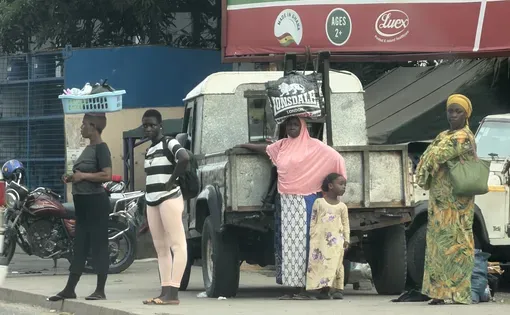
How expectations can shape what adulthood looks like for girls.
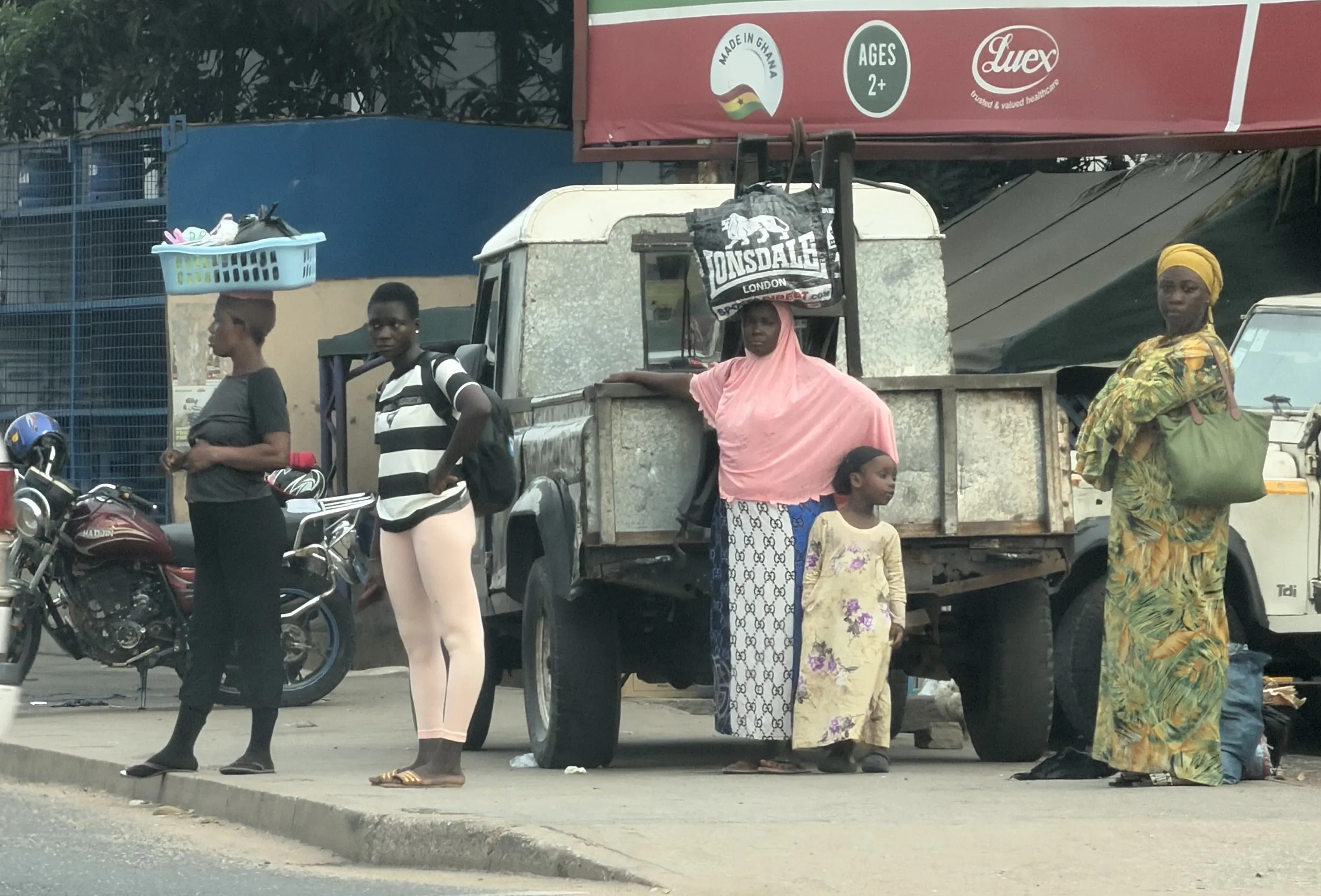
The poverty-to-pregnancy pipeline in Ghana is fed by a persistent, causal, and cyclical interplay of structural inequality, limited education and healthcare, gendered expectations, and economic vulnerability.
DOBORO, Ghana—The road into Doboro narrows until it is no longer paved, just a stretch of red earth that dusts the ankles of women walking barefoot toward the stream. It is early morning, before the heat settles fully into the day on January 1, 2026. Children trail behind their mothers, plastic buckets balanced on their heads, while older girls move with practiced ease, already carrying the quiet responsibilities of adulthood.
Comfort Kumiwaa, 73, sits as her children take care of her home, resting her feet in the hot sun. She was 17 when she gave birth to her first child here in 1970. There was no hospital. No clinic. Her father prepared herbs, and a village midwife, trained not by certification but by experience, guided the child into the world.
“We didn’t call it healthcare,” Comfort says. “We called it life.”

As a nonprofit journalism organization, we depend on your support to fund more than 170 reporting projects every year on critical global and local issues. Donate any amount today to become a Pulitzer Center Champion and receive exclusive benefits!
Across Ghana, the circumstances surrounding adolescent pregnancy have changed since Comfort was a teenager, but the conditions that shape girls’ choices remain uneven. Poverty can determine whether a girl stays in school, how far she must travel for healthcare, whether her family can afford basic necessities and what opportunities exist when she leaves childhood.
A 2024 analysis found that 12.3% of girls in Ghana 15 to 19 years old had already given birth. The researchers identified education, economic status, and region among the factors associated with adolescent childbearing.
The scale of the issue is larger still. According to Ghana Health Service data cited by the United Nations Population Fund (UNFPA), Ghana recorded more than 542,000 pregnancies among girls 15 to 19 years old and another 13,444 pregnancies among girls ages 10 to 14 between 2016 and 2020. This occurs within a broader global context: the global adolescent birth rate is approximately 41.3 births per 1,000 girls ages 15 to19, according to the World Health Organization (WHO). Together, these figures show that adolescent pregnancy is both a global issue and a significant concern in Ghana, where thousands of girls experience pregnancy during adolescence.
The numbers describe a national problem. Comfort’s story shows what that problem can look like on the ground.
When healthcare is far away
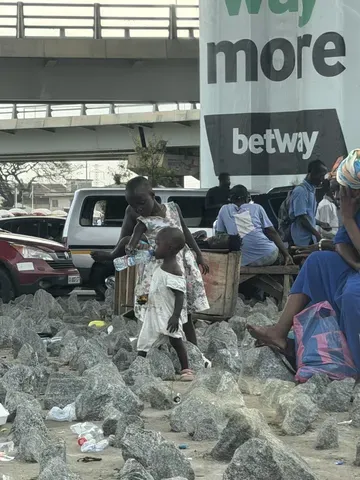
In rural Ghana, geography can determine what healthcare means.
Women in communities like Doboro may live hours from major hospitals. Community Health Planning and Services (CHPS) facilities bring basic healthcare closer to rural residents, but they are designed primarily as first points of contact. When pregnancy becomes complicated, women may still need to reach facilities with greater capacity.
Recent research from the Volta Region, a predominantly rural area in eastern Ghana, illustrates how uneven adolescent pregnancy can be across communities. Researchers analyzing Ghana Health Service data from 2019 to 2023 found that 13.5% of pregnancies reported by health facilities in the Volta Region were among adolescents. By comparison, the prevalence of teenage pregnancy in the Greater Accra region, a densely urbanized area where the capital of Ghana is located, is 6%, according to research from 2026.
The numbers are not representative of all of Ghana, but they show how geography can produce very different realities within the same country.
In communities where formal healthcare is distant, traditional knowledge can become part of the healthcare system families actually have access to. Herbal remedies, home births, and community midwives have long played roles in pregnancy and childbirth.
UNFPA has also reported that some pregnant adolescents in communities it visited sought care from prayer camps, traditional healers and herbalists, including during pregnancy and delivery.
For Comfort, this was simply the world she knew.
Her father prepared the herbs. A village midwife delivered her child. There was no expectation that another system would arrive.
For girls today, however, the existence of formal healthcare doesn’t necessarily mean equal access to it.
The question isn’t only whether a hospital exists. It is whether a girl can reach it, afford the journey, and receive the care she needs when she gets there.
When school competes with survival
In the villages in Ghana, education is rarely rejected outright. It is often outcompeted by survival.
School requires uniforms, books, transportation, and time. Girls may also be expected to fetch water, cook, clean, care for younger siblings, and contribute to household labor.
Liberta Odoi, 65, from Gomoa Nkoranza, never attended school. She began working at 15 to support her family. For her, education wasn’t presented as a realistic path into adulthood.
Research supports the connection between educational opportunity and adolescent childbearing.


The 2024 Ghana study found that girls whose highest level of education was junior high school (JHS/JSS) were 59% less likely to have engaged in adolescent childbearing than girls whose education stopped at the primary level. Girls with senior secondary education were 90% less likely.
The same study found that economic status mattered. Girls in the fourth wealth quintile, which represents the second-wealthiest 20% of the population, were 48% less likely to engage in adolescent childbearing than girls in the poorest quintile. Those in the richest wealth quintile were 66% less likely.
This doesn’t mean that poverty automatically leads to pregnancy or that education alone prevents it. It shows something more complicated: The circumstances surrounding a girl can change the range of choices available to her.
UNFPA has documented similar patterns in communities across Ghana, reporting that some girls leave school early amid family and social pressures, and that poverty, limited sexual and reproductive health education, and social conditions can increase vulnerability.
Education therefore represents more than a classroom. It represents time.
Time to remain a child. Time to develop skills. Time to imagine work beyond subsistence labor. Time to understand reproductive health and make decisions about the future.
When that time disappears, adulthood arrives early.
Gender, marriage, and expectations
Education is only one part of the equation.
In some Ghanaian communities, gender roles begin shaping girls’ futures long before pregnancy. Domestic labor, caregiving, and expectations surrounding marriage and motherhood can become part of girlhood itself.
In parts of the communities I visited, marriage was described not only as family formation but as an economic arrangement. Women contribute labor through farming, cooking, childcare, and household work. In some households, that labor is essential to survival.
These expectations can make motherhood appear less like a disruption and more like a continuation of an established role.
UNFPA reported that in some communities it visited, young women described motherhood at 16 or 17 as expected. One 18-year-old interviewed by the agency already had four children and described wanting to become a grandmother while still young.
These experiences shouldn’t be treated as representative of every Ghanaian community. Ghana isn’t culturally or economically uniform. Expectations differ by region, household, religion, class, and individual circumstance.
But where early motherhood becomes socially normalized, the distinction between what a girl wants and what her environment expects can become difficult to separate.
When poverty changes what choice means
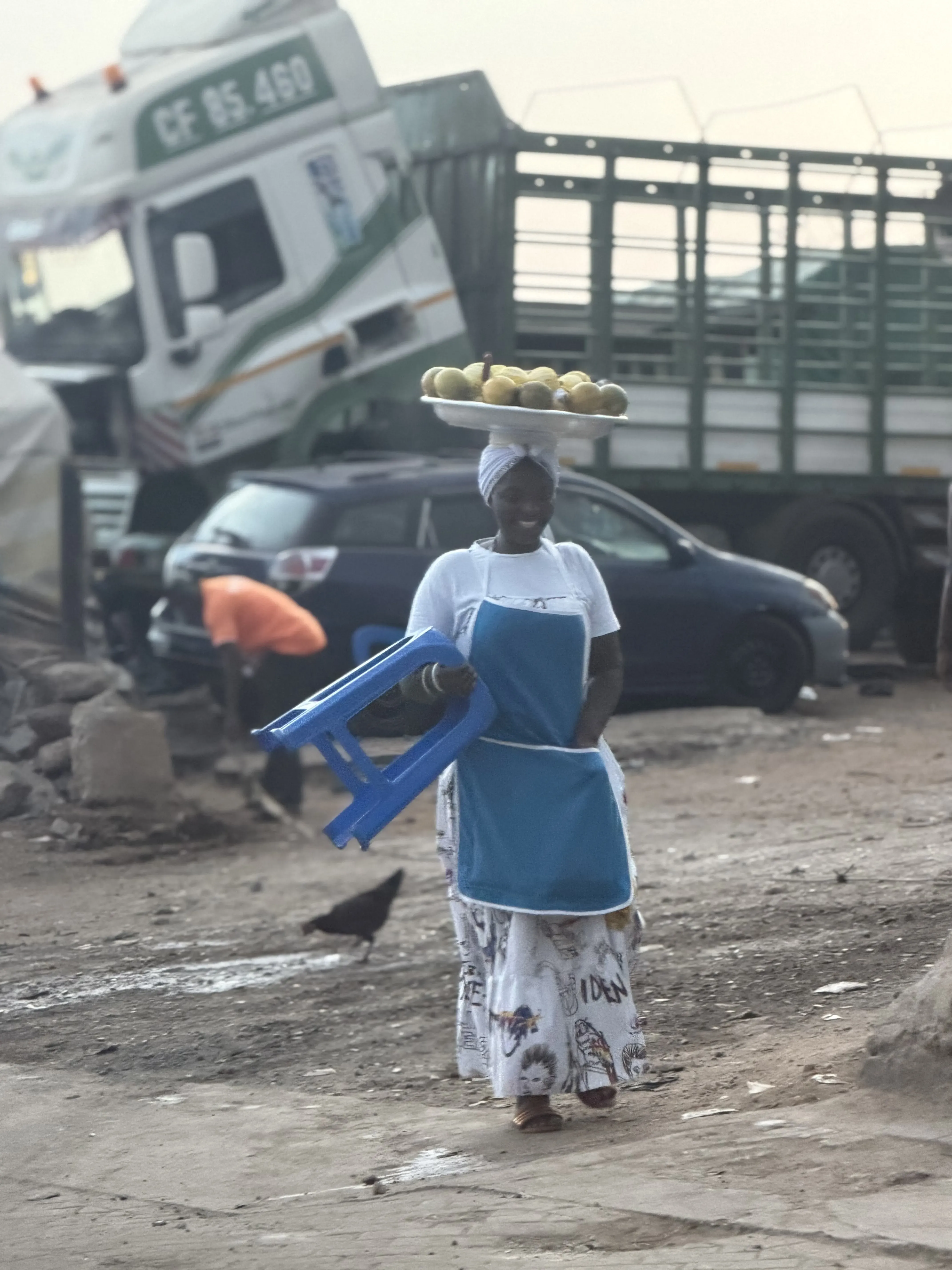
Economic vulnerability can also reshape the circumstances surrounding sexual relationships.
UNFPA has reported that some adolescent girls experience sexual exploitation by men and boys who take advantage of their need for basic necessities, including food, school fees, menstrual hygiene products, and uniforms.
In these circumstances, consent cannot be understood separately from material conditions.
A girl who needs money for transportation to school, food at home or menstrual supplies may be navigating choices that are constrained long before pregnancy occurs.
Once pregnancy happens, economic dependence can deepen.
UNFPA describes adolescent pregnancy as having consequences that can include interrupted education, livelihood challenges, discrimination, and the reinforcement of generational poverty.
The 2024 study offers another way of seeing the same relationship. Girls from the richest wealth quintile were 66% less likely to engage in adolescent childbearing than those from the poorest quintile.
Poverty doesn’t make pregnancy inevitable. It can, however, narrow the alternatives surrounding it.
The pipeline continues
The consequences of early pregnancy don’t end with childbirth.
In Bongo District in Ghana’s Upper East Region, UNICEF reported 522 registered cases of teenage pregnancy in 2025 alone.
One of those young mothers is Beatrice, a 19-year-old who left junior high school and later moved to Accra with her aunt to look for work. She became pregnant at 18. After the father of her child stopped communicating with her, she returned to Zorkor, where she now lives with her mother and grandmother.
Beatrice has no trade or formal skill and depends on her family for food and shelter, according to the UNICEF report. She sometimes struggles to afford sanitary pads.
Her story mirrors the pipeline from a different generation.
Comfort became a mother at 17 in a village where there was no hospital.
Beatrice became a mother at 18 after leaving school and migrating in search of economic opportunity.
Their circumstances are separated by more than five decades. The systems around them are different. Yet both stories reveal how limited opportunity can shape the transition from girlhood to motherhood.
Beatrice still has ambitions. She wants to open a small grocery shop and support her son.
“I know my life isn’t over,” she told UNICEF.
A community is more than its hardship
Yet rural Ghana cannot be understood only through what it lacks.
During my time in Doboro and Gomoa Nkoranza, hardship existed alongside humor, music, storytelling, family, and community.
Children played together. Older generations passed down knowledge. People worked alongside one another. Music and conversation filled spaces where formal infrastructure was limited.
There is a danger in telling stories about poverty as though deprivation is the entirety of a community's identity.
Comfort’s generation built lives with the resources available to them. Their knowledge of the land, food, childbirth, farming, and community survival is part of Ghana’s history.
The goal of examining the poverty-to-pregnancy pipeline isn’t to portray rural communities as broken.
It’s to understand why girls with potential can have their futures narrowed by circumstances they did not create.
Survival is not the ceiling
In communities like Doboro and Gomoa Nkoranza, girls still wake before sunrise.
They still carry water. They still help prepare food, care for younger children, and contribute to household labor. They still learn the responsibilities of adulthood while they are young.
But the statistics show that these realities aren’t evenly distributed.
The poorest girls, and those with less education, face greater risk of adolescent childbearing. Geography matters. Economic opportunity matters. Access to healthcare and reproductive health information matters.
And the consequences can extend beyond pregnancy itself, into education, employment, health, and economic independence.
The poverty-to-pregnancy pipeline is therefore not one event. It is a series of conditions that build upon one another.
Poverty can limit education. Limited education can narrow employment opportunities. Economic vulnerability can increase dependence. Early pregnancy can interrupt education and deepen that dependence. The cycle can then continue into the next generation.
Comfort was 17 when she gave birth.
More than five decades later, girls in Ghana are still becoming mothers while they are teenagers.
The question is no longer whether girls can survive these conditions.
They already do.
The question is whether survival is all they should be asked to achieve.