Story
 July 10, 2026
Big Game Guides Have Mixed Feelings on Alaska’s Bear Cull
Country:

Project
Alaska’s Predator Control Gamble
Wildlife officials credit a program for a caribou rebound, but critics call it reckless.

Some of the hunters who know bears best think the helicopter gunning could be doing more harm than good.
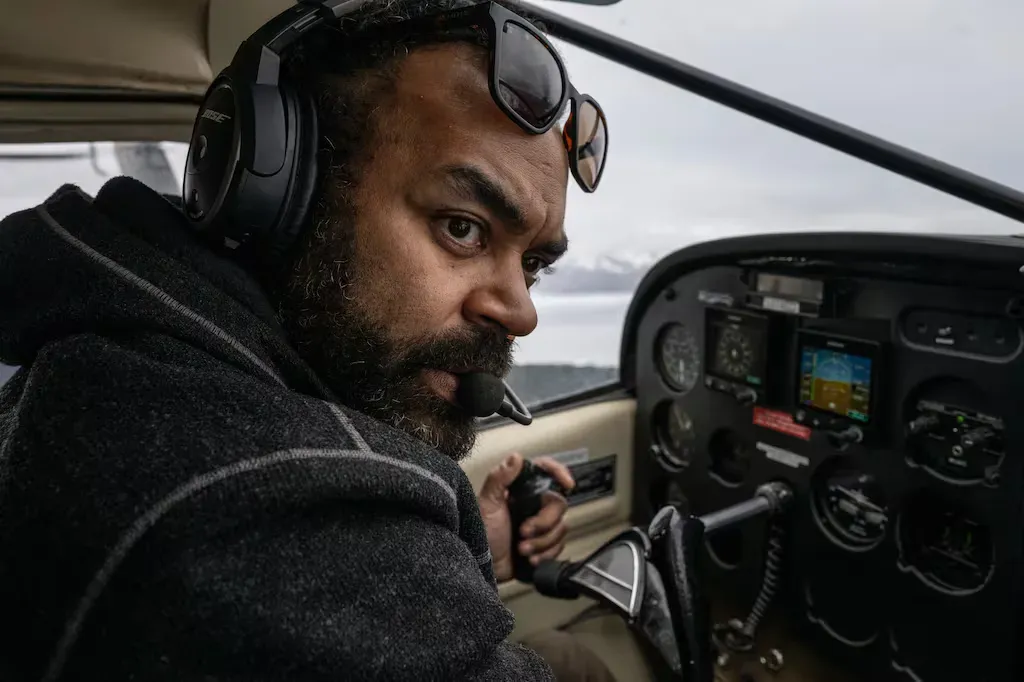
BRISTOL BAY—Gabe Davis wasn’t out to hunt for bears. But, flying past the snowed-on hills by Bristol Bay, he couldn’t resist bending his plane toward a ridgeline.
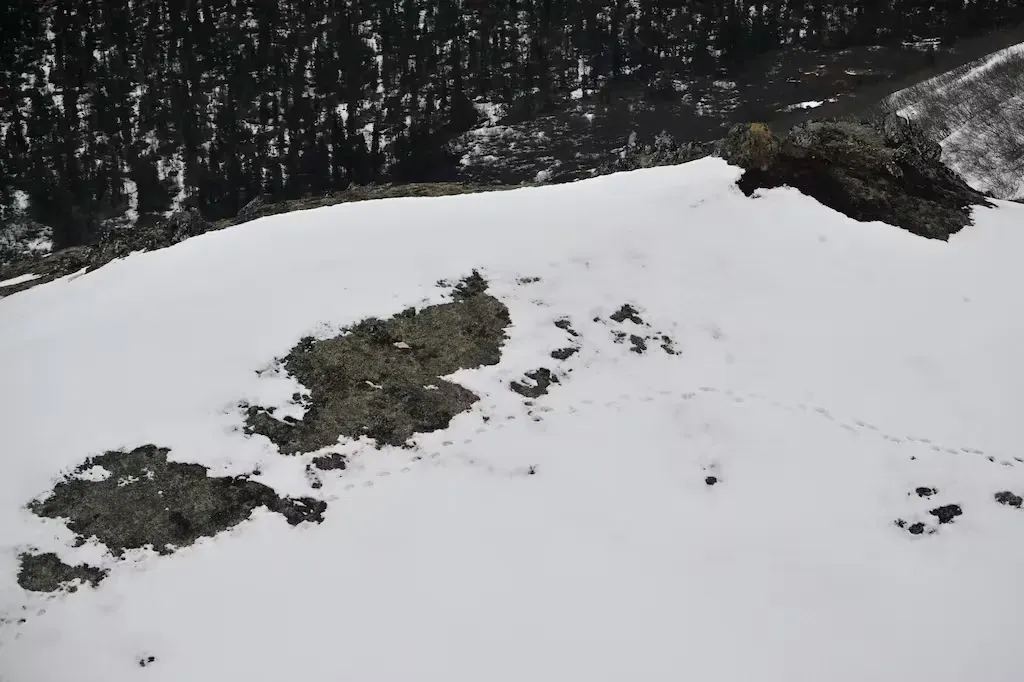
“See those zig-zagging tracks in the snow? Those are bear tracks,” Davis hollered over his headset. “That’s a big one, too.”
He flew a tight, nauseating pass around the peak looking for any big brown boars that might still be around. But no luck. And this was not why Davis, a hunting guide based in Dillingham, was out in his Cessna.

As a nonprofit journalism organization, we depend on your support to fund more than 170 reporting projects every year on critical global and local issues. Donate any amount today to become a Pulitzer Center Champion and receive exclusive benefits!
Guides like Davis sell clients the opportunity to shoot a large animal — chiefly bear and moose — in some of the most remote parts of Alaska, and as a result know their quarry more intimately than most. Amid Alaska’s unprecedented bear cull in the southwestern part of the state to try reviving the Mulchatna caribou herd, the guides have conflicted attitudes toward the program as they see the effects in their work. And on their income.
Davis set the plane down on a beach beside a bay crammed with rotting pack ice (he declined to share the bay’s name, wanting to keep the spot secret from competing hunters). He grabbed a sleeping pad and tromped toward a solitary hunting camp dug into a sand dune, a delivery to a regular client he referred to just as “Wolfie” whom he wanted to keep comfortable, albeit in spartan field conditions consisting of just an orange tent overlooking a lagoon. Wolfie’s lone luxury was a propane tank fueling a small heater in the tent.
Davis’ livelihood as a hunting guide is imperiled. For four years now, the Alaska Department of Fish and Game has been using aircraft to shoot brown bears in an area inland from Bristol Bay where the Mulchatna caribou herd calves each spring. The program is controversial, challenged almost continuously since its adoption for a variety of reasons, ranging from public process violations to accusations of politics trumping science.
For hunting guides in the region, whose business depends on being able to credibly escort clients to game to kill as trophies, the Mulchatna bear control program is a mixed bag.
Not so for Davis. His guiding operation, Davis Outfitters, centers on much of the exact same land where the caribou have congregated in recent years to birth their calves, and as a consequence it’s the same area where the state has focused on exterminating any and all brown bears it can find with tools and techniques not available to sport hunters or game guides.
“Spring is a loss now,” Davis said of the hunting calendar. “After taxes, I guarantee I didn’t make more than $1,500.”
‘They’ve definitely thinned out’
Davis came to Western Alaska as a pilot, and began work as an assistant guide in 2010. When he started a business of his own, he looked for a location with plenty of big prey that was hard to get to and would see little competing pressure from other outfits. He homed in on an area about a hundred miles north of Dillingham and built a tiny cabin there to use as a base of operations.
“To make a long story long, I’m the only one who operates within a 50-mile radius of where I am,” Davis said during an interview inside the Sea Inn Bar, a Dillingham tavern where regulars gathered to throw darts and shout over the jukebox as a pod of belugas plundered the shoals of the nearby harbor. “Logistically, no one else has the resources to make it work out there.”
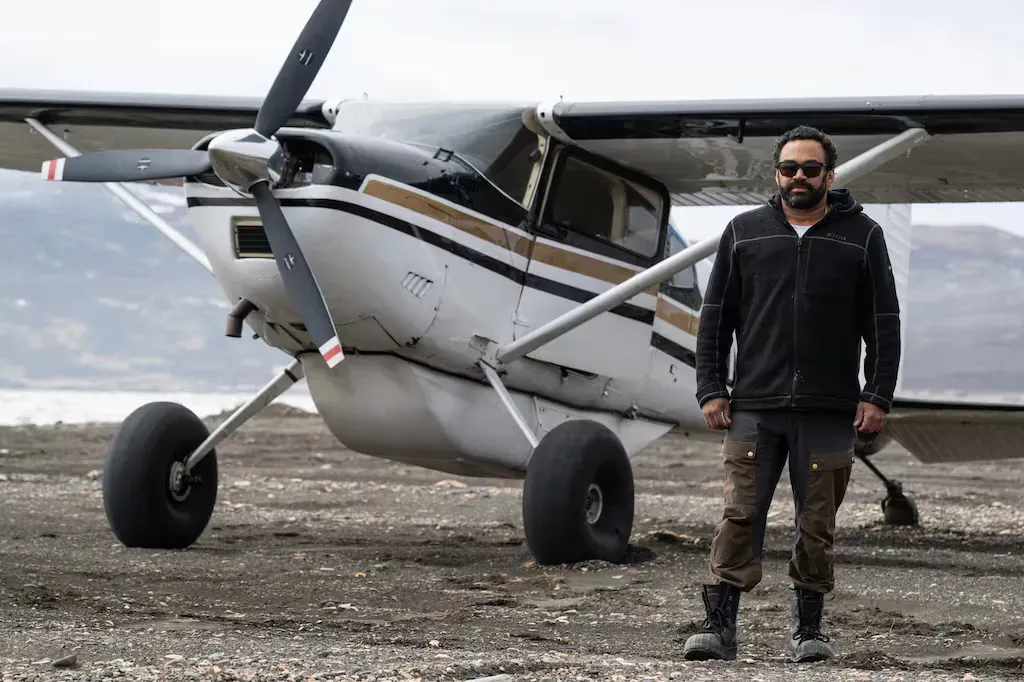
Providing that service depends on having an extensive, expensive logistics operation to ferry clients out to the hunting grounds with planes, boats and snowmachines, supplying them with enough food, fuel and shelter to spend days at a time stalking rugged country. Davis, a small operator offering a comparatively no-frills experience, charges around $30,000 for a bear hunt. Clients staying in cushier accommodations with larger outfits pay far more.
“Because of where I am, it’s really expensive, one, to get fuel there, and two, you have to have infrastructure there to guide out of there,” he said.
A good spring season, he said, is booking five bear hunts. This year, unconfident he could find bears for clients, he did two.
“They are going to cost me a lot of money over the next 10 years,” Davis said of bear control proponents.
A 2021 report by the McDowell Group prepared for the Alaska Professional Hunters Association determined that the state’s guided hunt industry generated $91.8 million in economic activity in Alaska in 2019, much of it coming in from Outside hunters.
There were 1,593 licensed big game guides and transporters in 2025, according to figures from the state’s Department of Commerce, Community and Economic Development. Though numbers are not broken down by region, Davis said the hunting area between Dillingham and Bethel has just a few guides, with around 60 trophy bear hunters coming in each year. More popular bear hunting destinations like Kodiak will see 500 or 600 annually, Davis said.
The state asserts the bear control program is so concentrated in one relatively small area around the Mulchatna caribou calving grounds that its annual cull will not harm the region’s overall bear population.
“There’s a lot of bears in that area, and I’m not concerned yet that we’re diminishing the number of bears in the area,” Alaska Department of Fish and Game Commissioner Doug Vincent-Lang said in a May interview. “People are still hunting bears out there. We’re not seeing reduced numbers of bears taken by those people. We’re talking to the guides out there. … We’re taking bears out of a very small area of this big (game management unit).”
Vincent-Lang said the Department of Fish and Game is required by state statute to manage Alaska’s wildlife to maximize the availability of prey species like moose and caribou for humans to hunt, be it for food or sport. Under that interpretation of state rules, he said, targeting bears for removal in the interest of boosting the Mulchatna herd’s health is not only justified, it is legally required of him and the department.
While some residents might find shooting bear sows and cubs from a helicopter unpalatable, Vincent-Lang emphasized there is no evidence it is causing the region’s broader bear population to decline.
But that is not how it looks to Davis and other guides living in the region, who say that since aerial gunning started in 2023, they see far fewer bears in their familiar hunting grounds.
“You can fly around for a week and not see a bear,” Davis said, adding that in hundreds of miles of spring travel by plane and snowmachine this year, he “only saw three bear tracks. Whereas there are years where I’ll see five or six bear tracks in a day. So they’ve definitely thinned out. It’s measurable.”
Guides in other parts of the Bristol Bay region are seeing that, too.
“I’ve had the same issue where I was bear hunting,” said Joe Kazimirowicz, a guide who lives in his hometown of Ekwok about 40 miles northeast of Dillingham, and a little more than a hundred miles from the predator control area. “I quit doing the fall bear hunt because it wasn’t worth it.”
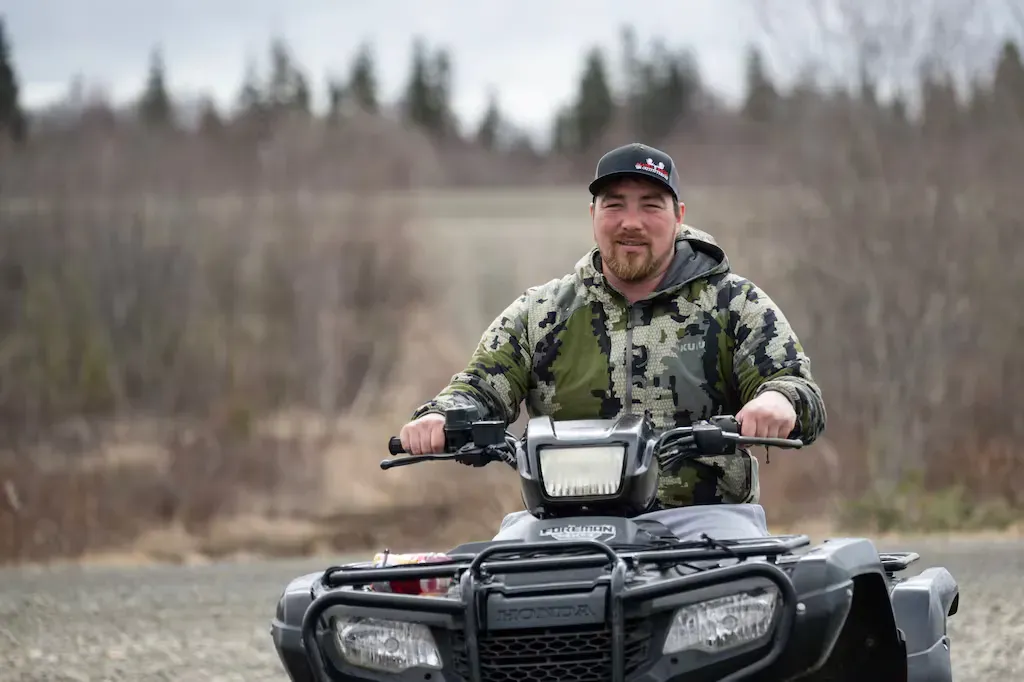
Ekwok is a tidy, wooded town of around a hundred people midway up the Nushagak River. Kazimirowicz, 34, grew up hunting and has worked as a guide for half his life, and now runs Alaska Rigid Outfitters. The other guides he speaks with up and down the river are likewise seeing a decline in brown bears they suspect is connected to the state cull.
“They don’t hardly see any bears anymore. Not like it used to be,” Kazimirowicz said.
Kazimirowicz said he isn’t necessarily opposed to the state’s predator control efforts. He hopes they work enough to bring Mulchatna numbers back up to the level where subsistence hunters living on the river can put caribou meat away, or even reopen the herd to sport hunters who carry commerce and cash into the local economy.
Bears don’t range especially far. Which is why, Kazimirowicz said, he doesn’t understand how the state shooting animals a hundred miles away in the control area could impact brown bear abundance this far beyond. It shouldn’t. And yet, since intensive removal began, there seem to be fewer.“Definitely I would say there’s less bears, I’ve noticed,” Kazimirowicz said.

Across town, guide Mike Vanstrom is likewise confounded.
“My bear hunting has been in the toilet,” Vanstrom said in his office at the back of a bunkhouse, which doubles as his bedroom. “If they’re doing what they say they’re doing, it should not affect me down here, in my eyes.”
Vanstrom lives in Minnesota for much of the year but runs his guiding operation, Alaska Elite Outfitters, out of a rambling compound in Ekwok from spring through fall. He started guiding on the Nushagak for a friend two decades ago. Now, his operation’s revenue is split between moose and brown bear.
“Moose is the big draw here. But bear is 40%, moose is 60%, and fishing anymore is pretty much down to zero,” Vanstrom said. As in many other rivers across Alaska, the once-prized chinook runs have dwindled in recent years.
Price-wise, a 10-day brown bear hunt starts at $25,000, with Vanstrom assuring prospective clients that historically their success rate is as high as 80%. The combo package to go out for a moose and bear for up to 15 days in the fall is $48,500.
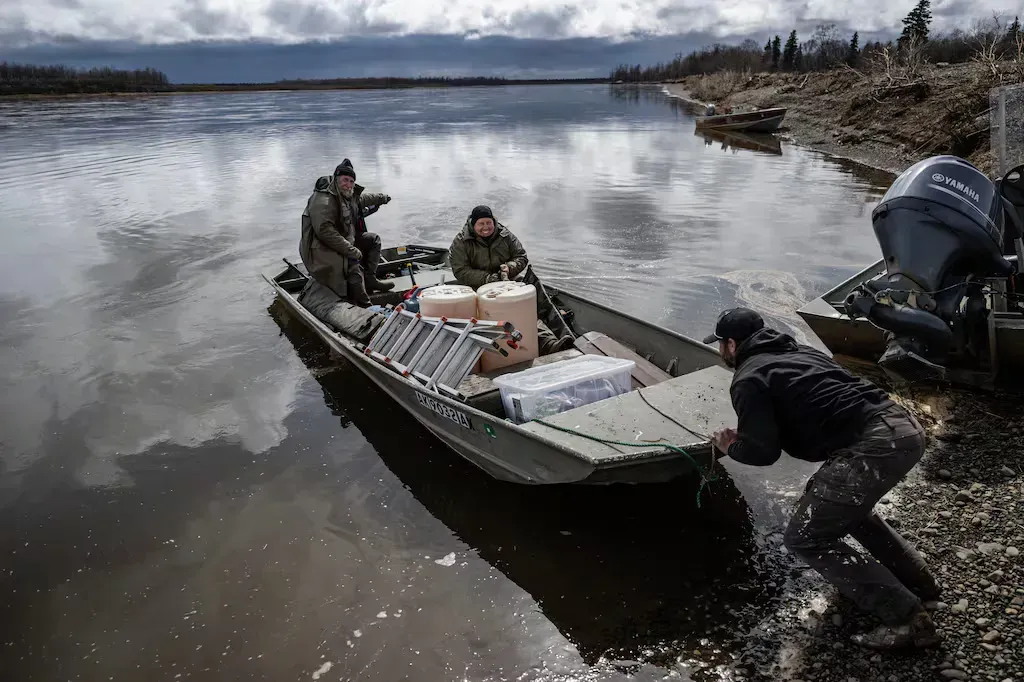
One of his clients was pushing off that afternoon in a flat-bottom boat laden with fuel and supplies.
“I’ve always wanted to do bear hunting, and so I just decided to take a trip out here. But it’s pretty remote,” said Ed McNee of Columbiana, Ohio, bundled up for river travel. He hoped to kill a boar, though so far he’d only seen moose, which are off limits until the fall season.
“A bad day of hunting is better than a good day of work,” yelled guide Brad Baron, throwing a wave back to shore and speeding away up the river.
Vanstrom said that as the largest guiding operation in the area, he thinks the state ought to have approached him ahead of implementing its bear control program to try finding ways outfitters could remove more bears in ways that benefit the local economy.
“I get why they’re doing it,” he said. “I have mixed emotions on it, because it just happens to coincide with some of the worst hunting down here.”
But pieces of the program trouble him.
“There’s something about them flying a helicopter and shooting sows and cubs and anything that’s out there, and just letting them lay,” Vanstrom said, shaking his head.
Because trophy hunters overwhelmingly aim to shoot big boars, it’s not clear what the state’s broader removal of sows and cubs will do to the population balance, he added.
Vanstrom doesn’t believe the state’s prior claim that it skins each bear carcass in the field, or that “hide removal averaged roughly one-half hour per bear using 2 staff,” as stated in a 2024 state memorandum on the program.
Photographs taken by the Alaska Wildlife Alliance, an advocacy group that has sued the state over the Mulchatna bear program, contradict some of the state’s assertions. Members of the group found two bears during a day flying over the control area, a cub and a boar, which the state said were likely killed during its predator control efforts. Neither had been skinned out. The boar’s head and front paws were gone. The cub was fully intact.
Ryan Scott, director of the state’s Division of Wildlife Conservation, wrote in an email that there had been some miscommunication between the department and its field staff, and that in instances of juvenile animals or when adults are molting, the hides are not skinned off.
“You can’t shoot a hundred bears and skin them all out,” Vanstrom said. “A little cub, if they’re shooting little cubs, maybe they can skin that out in an hour.”
It takes two of his experienced employees around four hours to get the hide off a large brown bear.
Saved a lot of moose lives
Despite the grisly nature of their occupation, guides are not necessarily the most enthusiastic or callous bear hunters. Vanstrom said he doesn’t personally like hunting bears, in part because he finds the flayed carcasses look “too freaking like humans.”
That same similarity was noted by the authors of a 2003 research paper on changing views of predator management in the 21st century. The authors, two of whom are veterans of the Alaska Department of Fish and Game, wrote that bears share many attributes with people: “Omnivorous, generalists, intelligent animals … when they stood erect or were skinned out, they shared physical similarities to humans.” They speculated that these and other commonalities partially explain why so many early cultures revered bears in myth and customs.
Vanstrom’s neighbor was torn over the state bear cull, too. Past a small dog lot and a yard packed with more than a dozen river boats was Buck Williams’ door, which he opened wearing sweatpants and house sandals, game to chat about animal hunting over coffee.
“I’m sure not a biologist, I’m just a retired old man now,” Williams said, muting Fox News on the TV and taking a seat in his living room. On the coffee table was a neatly laid black pistol, its barrel pointed toward the front door.
Williams, 73, has lived in different parts of rural Alaska most of his life. He came to Ekwok, his wife’s hometown, decades ago, and knows the land intimately through running a trapline by dog team and hunting throughout the year. Though still technically registered as a game guide, he gave it up five years ago after injuring his back.
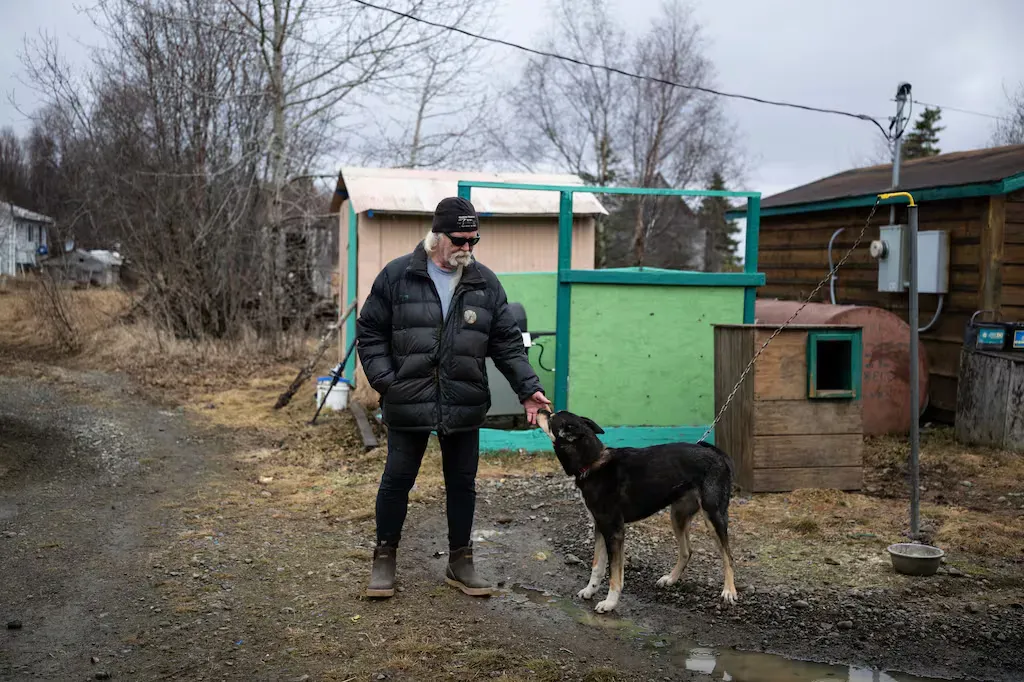
Williams is no bleeding heart bear lover, but he’s no fan of the state’s methods for killing them, either.
“I don’t like anything that’s aerial. I’m sorry, I’m fair chase,” he said, referring to a sportsmanship ethic grounded in balancing hunters’ skills and equipment with wild quarry’s ability to escape.
Hunters in Alaska, he noted, are barred from using aircraft to spot game and go after it the same day.
While he’s not opposed to predator control efforts focused on bears, he suggested it is misguided.
“Bears don’t eat a lot of caribou,” Williams said. “I know they eat ‘em, but I don’t think it’s their mainstay, either. Now wolves, whole different ballgame. They’ll go for any caribou … wolves were the ones that put the whipping on caribou.
”The ursine-on-ungulate predation is most intense in the springtime, Williams said, when bears will stalk pregnant moose to the riverine islands they favor for birthing calves, and ambush them. If the bear cull has helped anything, he said, it is moose.
“You were asking about bears. Nah, I don’t know if there’s any more or any less bears. But I would say it’s saved a whole bunch of moose’s lives,” Williams said.
He recalled times when this part of the Nushagak had so many caribou moving through that Ekwok families would call their kids indoors as animals ambled through yards. For a while, caribou were a subsistence mainstay for people here, he said, but now that’s shifted back over to moose. Williams thinks the herd crashed because it grew so unsustainably large that the animals ate up all of their forage across vast swaths of the region.
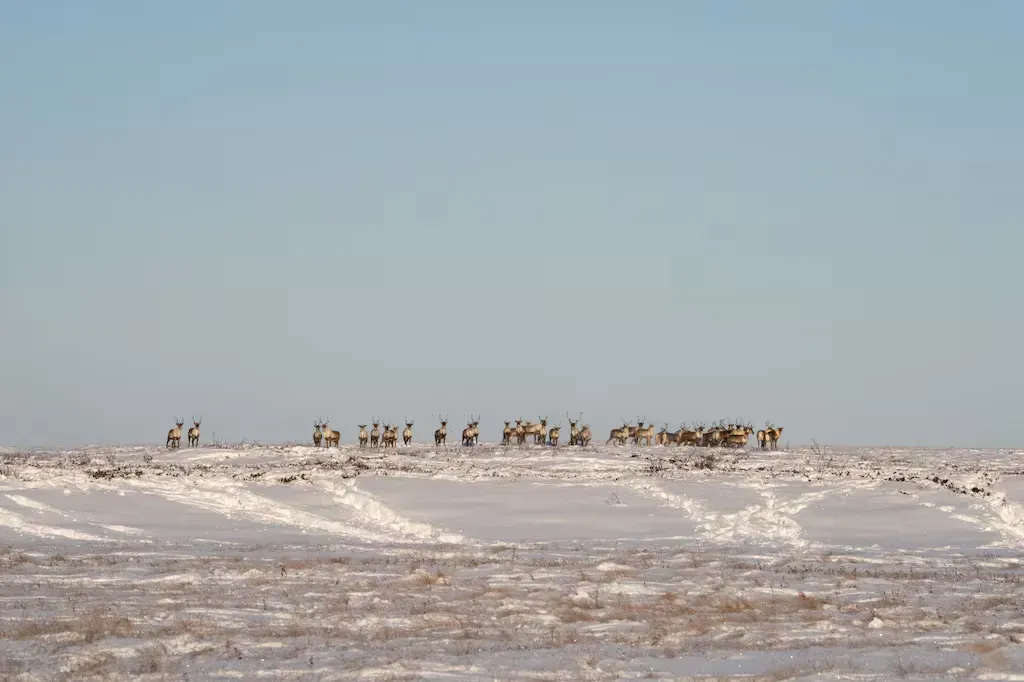
A substantial publication from the state’s Division of Subsistence sourcing traditional ecological knowledge from the region about the Mulchatna herd reached the same conclusion. The population boom in the 1990s led to the herd “overgrazing” on lichen and degraded the terrain. More shrubs and taller trees have since encroached on swaths of tundra, most of which is driven by climate change.
“As the climate warms, permafrost thawing will deepen the active ground layer, allowing stands of spruce to colonize these disturbed areas and expand into tundra habitats. Respondents noted that (Mulchatna) caribou will travel through forested country but that they will generally not inhabit the forest,” wrote authors of the 2018 report.
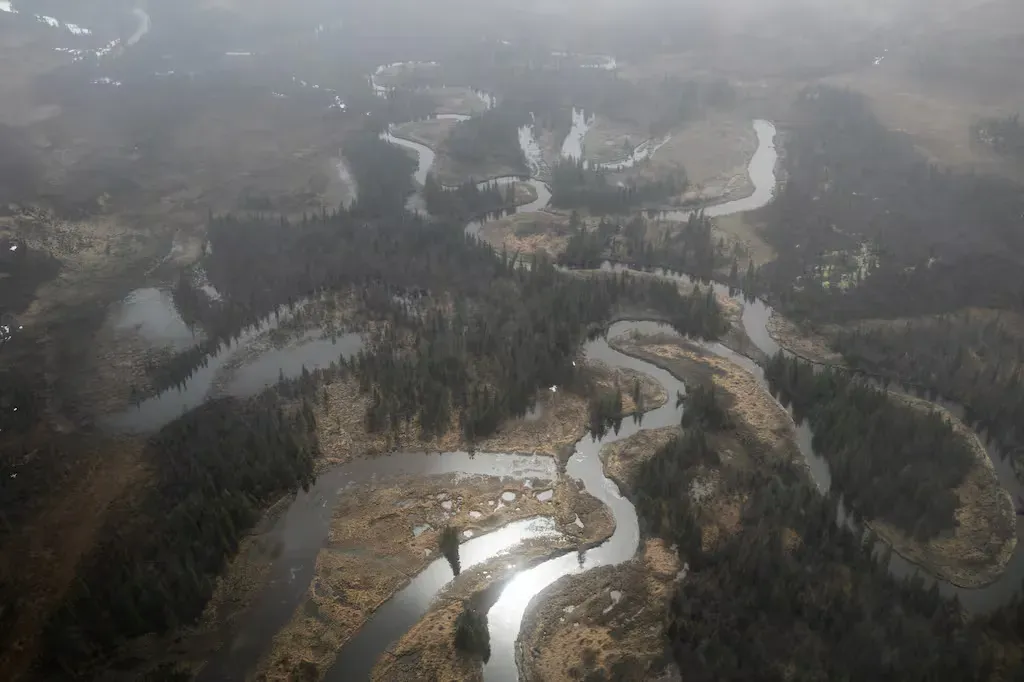
Because the hunting grounds around Ekwok and Dillingham yield a fraction of the number of trophy brown bears as more popular destinations like Kodiak and the Alaska Peninsula, there are fewer operators and services being affected by the state’s predator control program, said Gabe Davis, the Dillingham-based guide. That is why, he thinks, there has not been much of an outcry about the program from other outfitters or sportsmen’s groups in Alaska.
He estimates he’s lost around $100,000 in revenue from hunts he’s not been able to book since the bear downturn in his area. He is angry about the state bear cull for how he believes it is sinking the business he built. But also because, to him, the science underpinning the policy appears weak to nonexistent, an auspice to kill a lot of bears and figuring out afterward if it’s helping other species.
“I think you’ll have little to no effect on the caribou population, but it’ll take 20 to 30 years to get the bear population back,” said Davis, a man who has spent more time than most trying to figure out the ways of bears.