

Students report on various issues around the world.


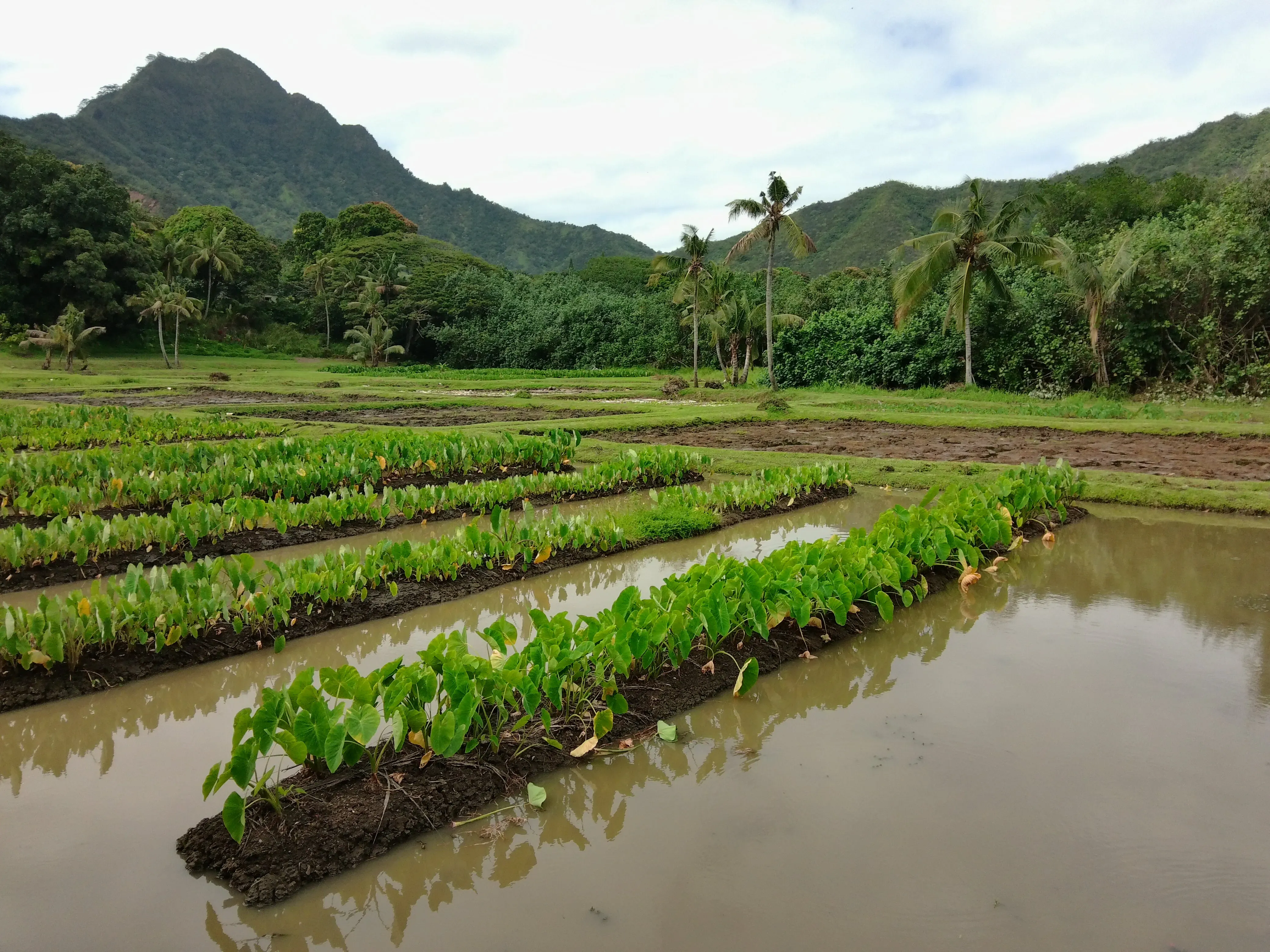
In Heʻeia, organizations are testing whether restoring the full watershed using ancient methods can improve water quality and increase food production.
In Heʻeia, on the windward side of Oʻahu, forest, farm, and ocean are not separate systems. They are connected through the ahupuaʻa, a traditional Hawaiian land division that runs from the island’s inland mountains and stream systems to the surrounding ocean, linking upland watersheds to coastal fisheries.
Today, that system is being restored. Across Hawaii, declining freshwater flow, invasive species, and stressed nearshore fisheries are straining both ecosystems and local food systems. Habitat loss has devastated the island, with only 40% of Hawaii’s vegetation being native today. Despite making up less than 1% of the United States’ land mass, Hawaii contains 44% of the nation’s endangered and threatened plant species.
Native Hawaiian-led organizations in Heʻeia are rebuilding the ahupuaʻa as a working model, testing whether restoring the full watershed, from forest to fishpond, using ancient methods can improve water quality, increase food production, and support more resilient coastal environments.

As a nonprofit journalism organization, we depend on your support to fund more than 170 reporting projects every year on critical global and local issues. Donate any amount today to become a Pulitzer Center Champion and receive exclusive benefits!
Mountain
The importance of interconnectedness is echoed by Uncle Scotty, a community elder in the Kalihi Valley who has spent years working in forest restoration.
“Water starts up here,” he said, gesturing toward the lush upper slopes of the surrounding Koʻolau Mountain Range. “Everything downstream depends on what happens in the forest.”
His words reflect the ecological logic guiding restoration efforts across the ahupuaʻa. Forest restoration reduces erosion and sediment runoff. Healthy streams carry clean, nutrient-balanced water into estuaries. Fishponds, in turn, depend on that balance to sustain marine life.
The Koʻolau Mountains watershed replenishes the underground aquifers that provide the majority of Oʻahu’s fresh water—an estimated 133 billion gallons each year. A healthy functioning forest retains soils and nutrients, slows erosion, prevents flooding in lowland areas, maintains water quality in streams, and reduces sedimentation of nearshore reef environments.
“Forest restoration takes generations,” Uncle Scotty emphasized.
That long timeline defines the conservation work in Heʻeia, where rebuilding stone fishpond walls, restoring native vegetation, and training future stewards are part of a process measured over decades, not years.
“If you take care of the land,” he added, “the land takes care of you.”
Upstream
In the upper reaches of Heʻeia, that system begins in the streams.
One community workday can find a dozen people knee-deep in an upland stretch, pulling weeds from the banks to make sure fresh water can flow efficiently downstream. The volunteers are a mix of visiting tourists, school-aged children, and local families.
Once they have finished with the stream, the volunteers move to a more forested area of Papahana Kuaola’s 63 acres. This task is much lighter: picking fiddlehead ferns for a post-work Pohole salad. The younger volunteers shine here, as they dart through the sparse forest to find the low-growth plants.
Back at the gathering area, volunteers take turns blanching, cutting, and combining the ingredients to a traditional Pohole salad (ferns, onions, tomatoes, and dried shrimp). It is served as a side dish to a hearty stew made by an off-duty employee, who came in just to feed the volunteers.
Papahana Kuaola is an environmental education organization focused on food sovereignty through Native Hawaiian growing practices and youth education. Since 2006, it has worked in Heʻeia to restore native food systems and train the next generation of stewards. After Western contact in 1778, taro acreage in Hawaii decreased from about 35,000 acres to 310 acres. Today, less than 400 acres of taro are harvested annually statewide—compared to an estimated 20,000 acres at the crop’s peak.
Ayla Lum’s job title is “groundskeeper,” but the term barely captures the scope of her work. A longtime practitioner of ʻāina (land) stewardship, Lum tends taro patches, clears invasive species, rebuilds rock walls, and monitors the health of the upland stream that feeds Heʻeia’s watershed. She is part of a small ʻāina team managing the site. With more than a decade of experience, she describes water, soil, and food as parts of a single system.
“We take care of our fresh water by essentially just making sure it’s clean,” she said, describing the daily maintenance required to keep streams flowing and sediment out of native habitats.
All of it, Lum said, comes back to water and food.
“If our streams dry up, the fish pond will not be able to get water,” she said. “They won’t be able to grow their food.”
Her explanation reflects the ahupuaʻa system at work in Heʻeia, where conditions upstream shape everything downstream. “If you think about an ahupuaʻa system,” Lum said, “everything started on the tops of the mountains, and they were managing their resources all through and through.”
Downstream
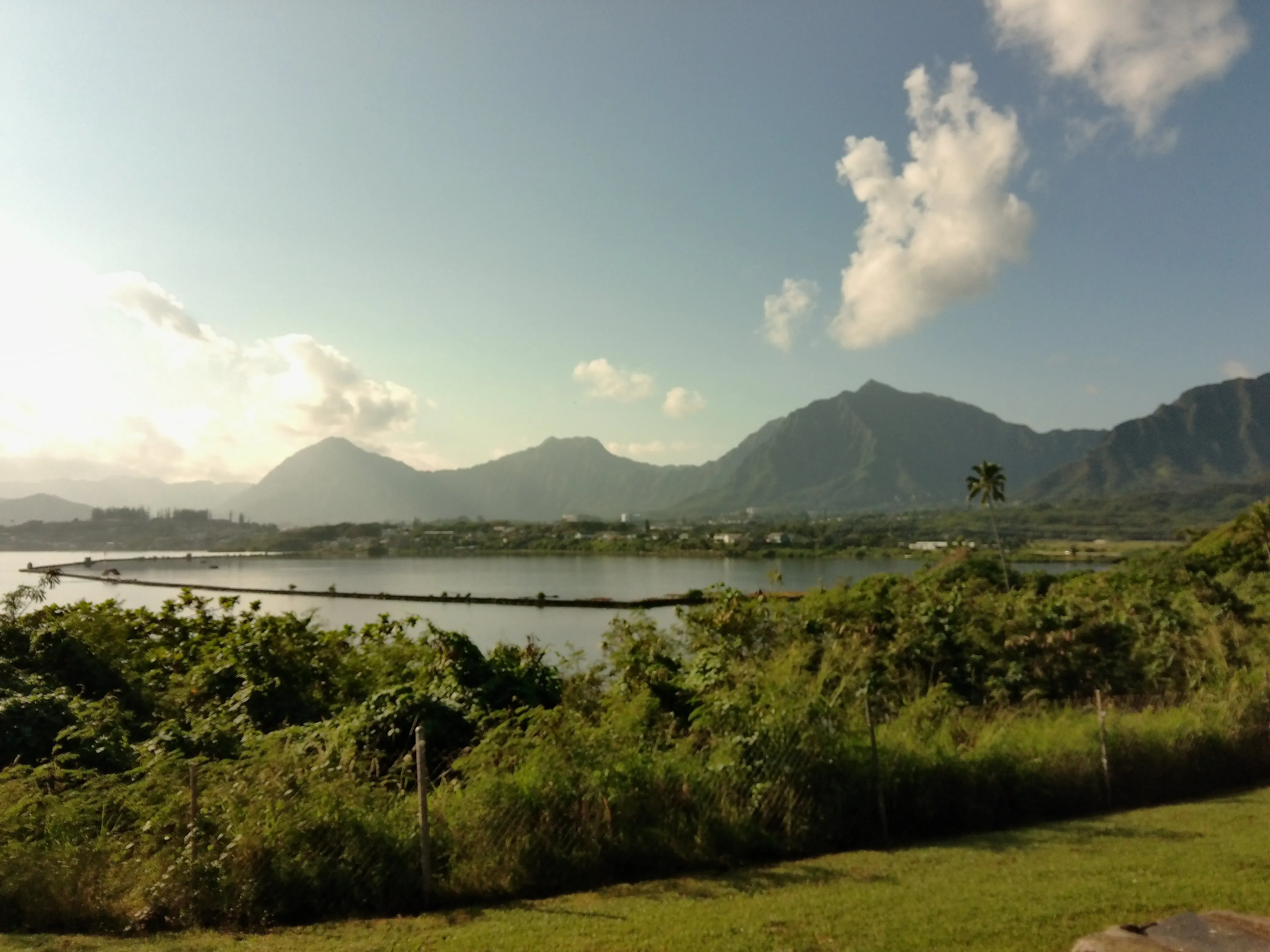
On December 13, 2025, more than 2,500 volunteers gathered at the edge of Kāneʻohe Bay to close the final 300-foot breach in the wall of Heʻeia fishpond. The volunteer day marked the culmination of 24 years of collective labor—and the closing of a wound that had been open for six decades. A devastating flood on May 2, 1965, destroyed more than 200 feet of the fishpond’s wall, and the pond went mostly unused for nearly 25 years as invasive mangroves took hold and sediment built up within it.
Volunteers were served a meal sourced entirely from the fishpond and surrounding agricultural patches. For an organization founded on reviving traditional Hawaiian aquaculture and community engagement and education, this meal—and the volunteer day itself—was an impressive proof of concept.
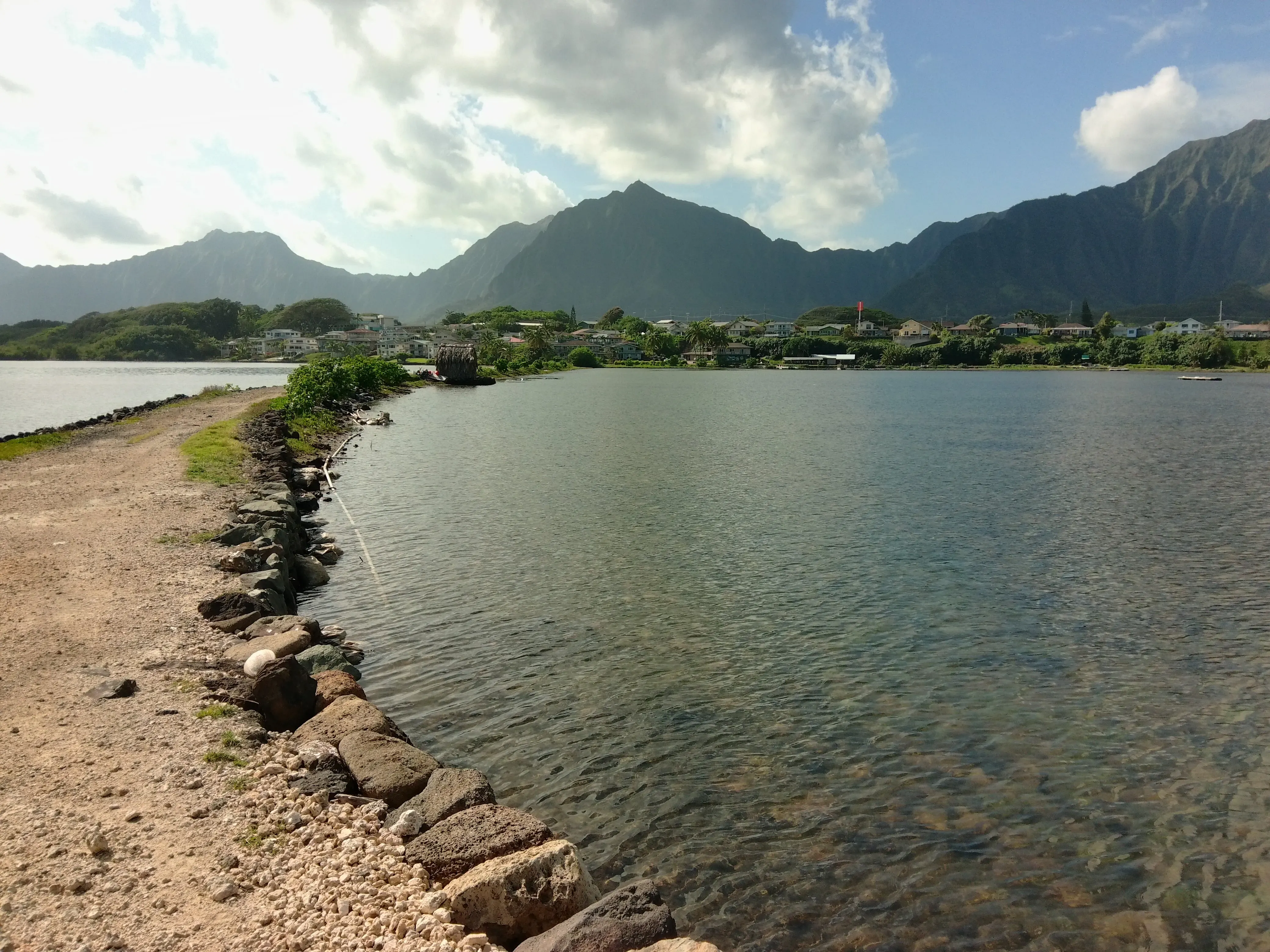
Established in 2001, Paepae o Heʻeia has spent more than two decades rebuilding the nearly 800-year-old loko iʻa using traditional techniques. The 88-acre fishpond system is one of the largest remaining in Hawaii. It is the second largest of at least 20 fishponds that once lay along the shore of Kāneʻohe Bay alone.
Community support for the project has grown alongside the wall itself. When the project began in the early 2000s, skeptics questioned its feasibility. Now the rebuilt fishpond is visible from the highway, and the community response has shifted to pride.
Walking the length of the wall with Hi‘ilei Kawelo, founder and executive director of Paepae o Heʻeia, requires careful footing. In several stretches, the stones are slick with the slimy remains of upside-down jellyfish. Just days earlier, another group of volunteers had waded into the brackish water to remove the invasive species by hand, one of the many ongoing maintenance efforts necessary to keep the fishpond functional.
“We had to dismantle the entire wall all the way down to the foundational stones and rebuild it from the ground up,” Kawelo said.
Some sections retained original stone. Others required entirely new volcanic rock, sourced from the west side of Oʻahu and placed by hand.
The wooden sluice gates built into the wall (called mākāhā) regulate the exchange of water between the pond and the wider Kāneʻohe Bay. Juvenile fish enter through these openings to feed and mature. As they grow, they become too large to exit. With this system, fishponds maintain teeming marine organism populations, providing easy fishing grounds for Hawaiians.
With the final wall segment completed, Paepae o Heʻeia has shifted its language from “restoration” to “maintenance.” Yet, the completion of the physical construction doesn’t mean ecological restoration is finished. Fresh water, Kawelo explains, is the limiting factor.
“The amount of fish that you have in your fish pond or in your nearshore fisheries is directly related to fresh water,” she said.
Reduced stream flow, sedimentation, invasive species, and declining offshore populations all affect what happens inside the pond. Partnerships with the Hawaii Institute of Marine Biology and the Heʻeia National Estuarine Research Reserve help monitor water quality and ecosystem health.
Education remains central to Paepae o Heʻeia’s mission. School groups visit nearly every weekday. Most students, Kawelo said, arrive with little knowledge of traditional Hawaiian fishponds. For many, this is their first exposure to the Indigenous aquacultural systems that once fed entire island communities.
If there is one lesson she hopes students leave with it is to mālama ʻāina (to care for the land).
“We’re an island state surrounded by ocean,” Kawelo said. “The resources here are very much finite. This is your home. You should be giving back and bettering the land.”
Ocean
Just beyond the wall at Paepae o Heʻeia, the fishpond opens into Kāneʻohe Bay, where its influence becomes harder to see—but no less significant.
Research from the Hawaii Institute of Marine Biology suggests that the impacts of traditional fishpond systems extend well beyond their boundaries. Studies have found that taro plants can function as nursery habitats, increasing fish populations not only within the pond but in surrounding coastal waters. Some juvenile fish raised in the protected environment of the pond move eventually outward, contributing to nearshore fisheries.
That dynamic reflects what Indigenous practitioners in Heʻeia describe on the ground: a system where upstream and downstream are inseparable, and where restoring one part of the watershed affects the whole.
The implications reach beyond ecological restoration. Hawaii imports the vast majority (85% to 90%) of its food, including seafood. Researchers have pointed to fishpond restoration as one way to increase local production, particularly when combined with upland agriculture and watershed management. In that sense, the work underway in Heʻeia is not only about cultural practice or environmental repair, but also about rebuilding a localized food system.
There is also evidence that these systems may offer a measure of resilience in a changing climate. Variations in temperature and water conditions within fishponds, compared to open coastal environments, can create more stable habitats for certain species. Some studies suggest that these conditions may help buffer marine life against broader environmental stressors.
The work in Heʻeia is testing a different approach to conservation, following a logic that predates modern conservation science but increasingly aligns with it: manage the system as a whole, and the benefits extend beyond any single site.
At the water’s edge, the results are beginning to take shape. As Hawaii confronts food insecurity and environmental change, the question is no longer whether these systems can function, but whether they can be expanded beyond places like Heʻeia.