Story
 July 20, 2026
Analysis: Texas Voucher Law Finally Passed—What Are the On-the-Ground Impacts?
Country:


Students report on various issues around the world.


The school-choice law creates an education savings program. But many questions, over religious expression and inequalities, still remain.
The Texas Legislature officially voiced its opinion in a broader nationwide debate about school choice and vouchers. Should the state government financially support non-public school options in the form of payouts to parents? Texas says it should.
The state joined several others when it passed Senate Bill 2, or the Texas Education Freedom Act, on May 3, 2025. It is a school-choice law that creates an Education Savings Account (ESA) system known as the Texas Education Freedom Accounts (TEFA) program.
The Texas program has not fully been rolled out yet, so residents are still discussing three subjects in particular:
- Whether independent schools will actually take the vouchers
- How religious expression changes when property tax money funds religious private schools
- Whether vouchers will successfully fix existing inequalities

As a nonprofit journalism organization, we depend on your support to fund more than 170 reporting projects every year on critical global and local issues. Donate any amount today to become a Pulitzer Center Champion and receive exclusive benefits!
Setting the scene
Other states and towns, including Louisiana and Milwaukee, have longer standing and more well-known voucher programs. Each area’s program differs, but the money can typically be spent on school tuition, homeschool costs, and sometimes charter schools. ESAs can be used for more expenses than pure voucher programs, but the two terms are often used synonymously and interchangeably.
The amount of money a state spends on each child in public school corresponds to how much money it can give out as a voucher. Texas spends one of the smallest amounts of money per child, with numbers ranging on the exact dollar amount. According to the Texas Education Agency, the state spends $15,503 per child, with an inflation-adjusted amount of roughly $12,140.
Anita Scott, public policy director of the Texas Home School Coalition, noted that Texas has been trying to pass a voucher law for over 30 years. In previous legislative sessions, there were Republicans who voted against the bill because their constituents did not support it.
Scott said Gov. Greg Abbott (R-Texas) worked to “primary out” those who did not support the bill in 2023, meaning that he wanted to “pursue candidates who would help get the school choice bill across the finish line.”
Wealth plays a role in voucher support as well, according to the Rev. Charles Foster Johnson, executive director of Pastors for Texas Children, an anti-voucher advocacy group and service organization in support of public schools. Johnson said billionaires such as Tim Dunn and Farris Wilks are able to put pressure on campaign funds to force voucher support in the Texas Legislature.
Will independent schools take vouchers?
Paul Manna, a government professor at William & Mary who specializes in education policy, said schools that accept voucher money usually must follow state regulations. Some political conservatives are anti-voucher because they want to limit state interference.
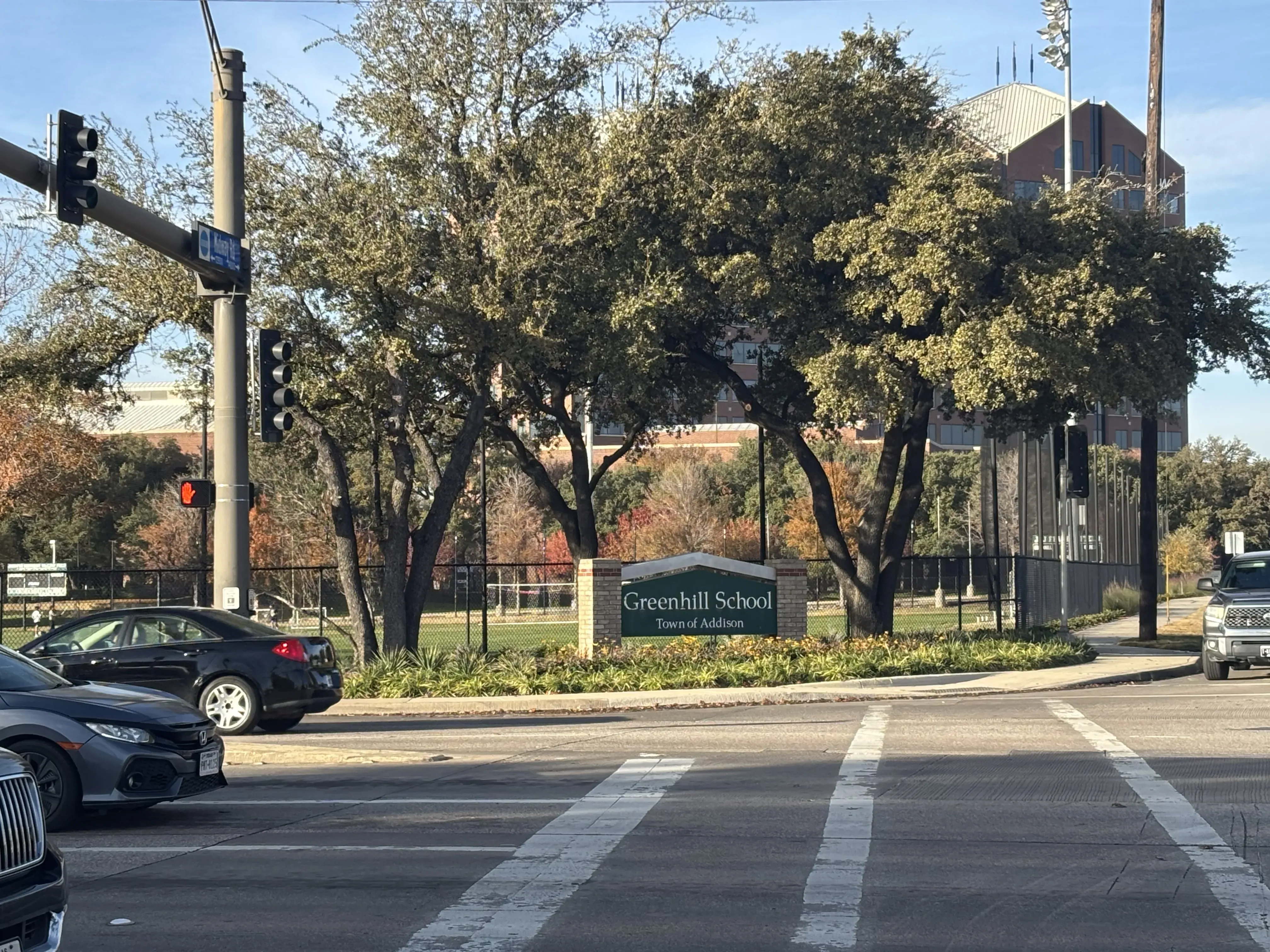
Derek Porter, associate director of equity and inclusion at the Greenhill School, echoed Manna’s sentiment when speaking about his independent school in the Dallas suburb of Addison, Texas.
Porter said he believes that his school will not accept the vouchers because “a lot of independent schools like their intellectual and academic freedom. And they don’t want to have to teach to the [state standardized] test. I’ve never been at an independent school [that] offered standardized tests.”
In addition, Porter’s school already offers financial aid for more than just tuition, providing support for field trips and other expenses that factor into the educational experience. This way, Porter said, the school is able to have a diversity of socioeconomic classes without taking state vouchers. But this may not be the case for every independent school or homeschool co-op.
How do vouchers help or harm religious expression?
The school-choice debate is intimately connected to religion. Some say that making independent schools financially accessible opens up options for religious observance. Others argue that digging deeper reveals that they do not promote religious equality.
Johnson said he does not want his tax money to go to private Catholic schools because he is a Baptist, and praying to Mary is “not a part of my deal.” On the flip side, he argued that Catholics don’t want to fund Baptist schools because they don’t believe in the “priesthood of all believers,” or that people can have direct access to God without going through a religious leader. He asserted that “all religion must be free and voluntary,” and public tax dollars should go to public schools, rather than potentially favoring religion in private school.
Scott, the public policy director of the Texas Home School Coalition, is also a Christian, but she takes a different stance on vouchers. She believes that they promote religious freedom, since the parent is able to curate children's educational experience to their religion.
Scott quoted the King James version of Proverbs 22:6, which says: “Train up a child in the way he should go: and when he is old, he will not depart from it.” She said this morals-guided mindset directs how religiously minded parents raise children. This serves as justification for the decision to send their children to a Christian private school or to homeschool them.
Johnson also used a morals-centered approach, but he argued for public schools: “Every human being is made in the image of God. Every. Single. One.”
Johnson feels that every person deserves the right to an education, no matter their socioeconomic background. As well as being beneficial to the economy, he views public school as a “foundational building block for a diverse democracy” and essential to self-actualization, or “know[ing] her place in the world.”
Do vouchers fix inequalities?
In Texas, schools are funded by property taxes, which many argue are inequitable. Wealthier neighborhoods with higher home values have more money going into their public schools. The opposite is also true.
As the Greenhill School's Porter said, “The quality of the school dictates the real estate values. And the real estate values, that income goes right into the school. And so it’s a real cycle of either perpetual privilege or perpetual disparity.”
The intended goal of the voucher program is to fix this cycle, but people debate its future success.
Johnson remarked that public education “used to be a conservative value, but now it’s become a liberal value.”
Going further, Jim Chadwell, a former Eagle Mountain-Saginaw ISD superintendent and teacher as well as a self-described conservative, views the ESAs as a tuition coupon for the affluent, rather than the accounts increasing access to non-public education.
“They won’t fund early childhood/pre-K [programs] or our health programs for pregnant mothers, but they will fund [voucher] programs as an entitlement for those that can already afford private schools,” he said.
Manna, the government professor, said left-leaning voucher supporters believe that vouchers will fix the inequalities perpetuated in the public school system. He used the example of civil rights organizations that lean left but are upset at the low quality of urban public schools.
Echoing this, Marisol Herrera, Fort Worth Independent School District (FWISD) Parent Teacher Association first vice president, said the FWISD is highly inequitable, which causes those who have been ignored by the system to support vouchers.
“The people in the schools that are struggling the most, that get the least attention, they’re angry,” Herrera said. “They’re very angry because the way they see it, they’ve been ignored for decades by the people in charge in the city.”
Are vouchers here to stay?
The future of the voucher law is uncertain. In order for it to remain on the books, the state needs to test and audit the program, said Scott, of the Texas Home School Coalition. She also said the opposition to the law will either maintain or increase, which could also impact its future.
In a LinkedIn post titled “Education Policy Requires Systems Thinking—not Soundbites,” Greenhill School’s Porter offers two reflections that he said all educators—regardless of their views on school choice or ESAs—should consider.
First, “‘choice’ and ‘access’ are not the same.” Having the option available does not mean that it can actually be pursued. The question remains whether it is possible to have an ESA program that fixes, rather than exacerbates, structural inequities.
Second, he asks: “What do we lose when education is framed primarily as a market transaction?” He doesn’t directly answer it, but Johnson, the executive director of Pastors for Texas Children, shares his thoughts: “It has been said, ‘If you think education is expensive, consider the alternative.’” In other words, society experiences a bigger financial burden when the majority is uneducated.
Porter ends his post with this insight: “This moment asks all of us—educators, policymakers, and families alike—to clarify whether we view education as a public good or a consumer product. The answer will shape not just schools, but the kind of society we’re building together.”