Story
 April 15, 2026
After 3 Years of War, Sudanese Civilians Pay the Price
Country:


The Nuba Mountains became a refuge. That safety is now unravelling.
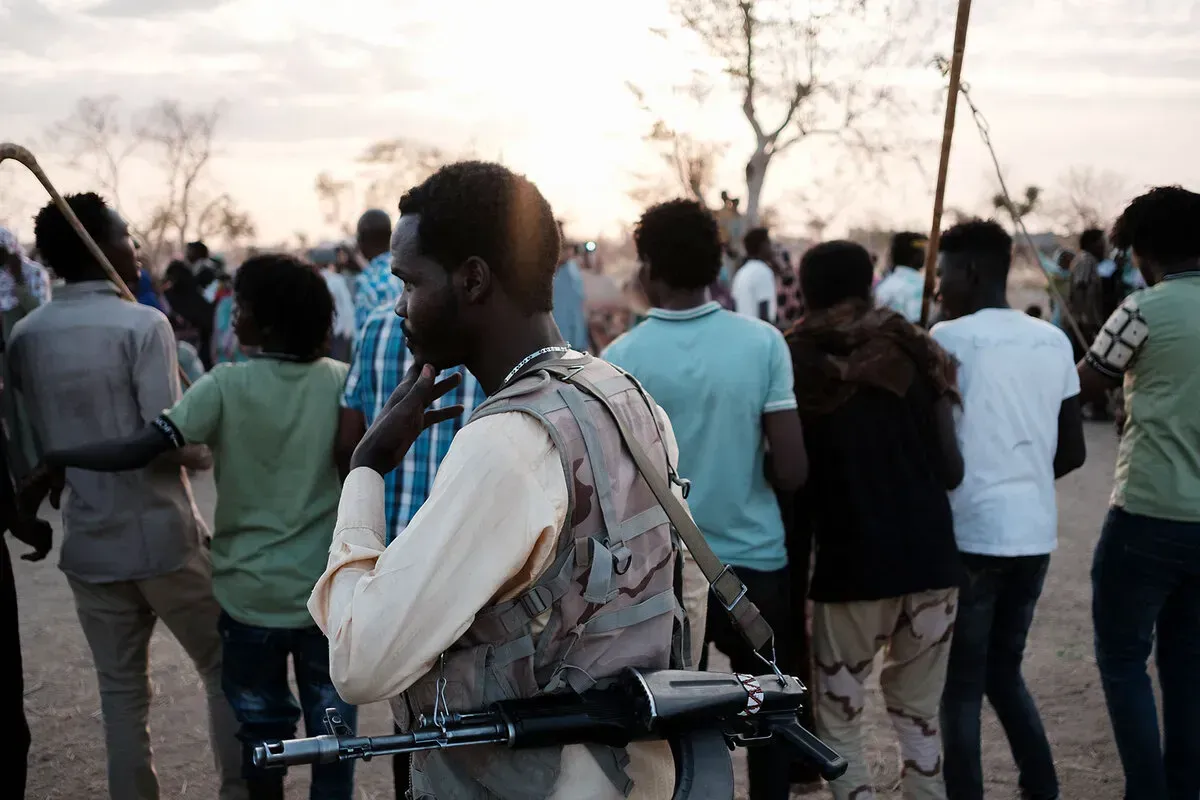
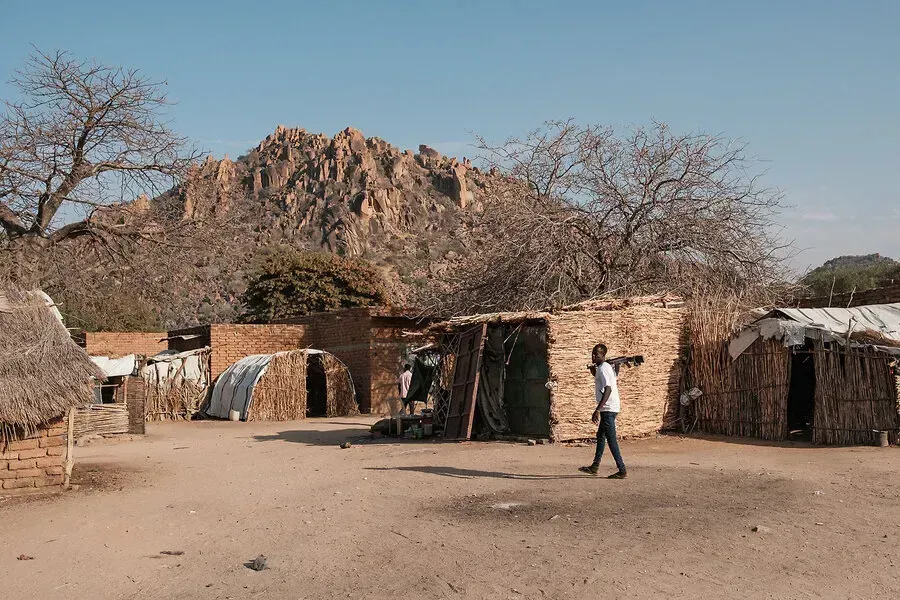
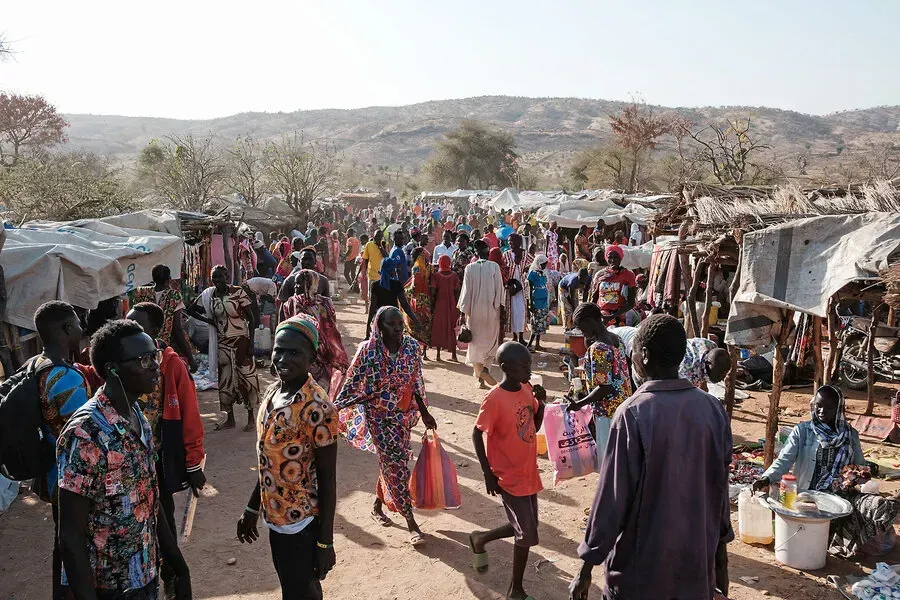
Young soldiers, wearing uniforms the same color as the sandy ground, play card games in a market stall to fill time between firefights. Less than a mile away, in a displacement camp clinging to the edge of town, people build shelters from dried grass to keep the blazing heat at bay. After dark, gunfire echoes off the surrounding hills.
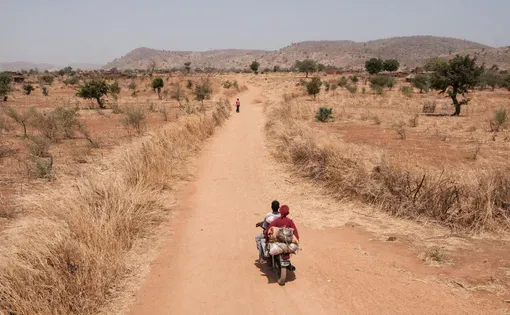
Tongoli is located in the Nuba Mountains of South Kordofan, in central Sudan, which is now the front line of the devastating civil war that began three years ago, April 15, 2023. With Sudan now roughly divided between a paramilitary-controlled west and a government-controlled east, this is “the last remaining contested region,” explains Maram Mahdi, a peace and governance researcher at the Institute for Security Studies, a think tank based in South Africa.

As a nonprofit journalism organization, we depend on your support to fund more than 170 reporting projects every year on critical global and local issues. Donate any amount today to become a Pulitzer Center Champion and receive exclusive benefits!
War without ideology
When Sudan’s civil war began three years ago, the fight was for control of the military. On one side was the Sudanese Armed Forces (SAF) and on the other, the Rapid Support Forces (RSF), a paramilitary militia that the army once deployed to quash uprisings against it.
As the conflict spread, however, the two sides – both repeatedly and credibly accused of war crimes – have reframed themselves as champions of justice. The SAF says it is defending Sudan against a “terrorist” organization whose crimes are “unprecedented in the history of mankind.” Meanwhile, the RSF claims to fight for a democratic Sudan built on the principles of “freedom, justice, and equality.”
Walideen Adow Ahmed, a teenage RSF soldier recovering from an injury at a hospital in the Nuba Mountains, says he joined the fight because he feels “marginalized” by leaders in Khartoum, who he says are getting wealthy while ordinary people lack basic services such as schools and hospitals. (As a condition of entering the Nuba Mountains, the Monitor’s reporter and photographer agreed to be accompanied by a representative of the local government, which is allied with the paramilitary side of the conflict.)
However, at its core, the war “is really about existentialism,” Ms. Mahdi says. The two sides both “know that if they hand over power … they cease to exist.”
The conflict’s lack of a strong ideological bent has created many strange bedfellows. The Nuba Mountains, for instance, have long been ruled semiautonomously by a rebel group called the Sudan People’s Liberation Movement-North. The SPLM-N runs a secular, democratic state-within-a-state in its territory, complete with courts and classrooms.
In the decade before the current war, the Sudanese military repeatedly sent the RSF to violently suppress the SPLM-N’s rebellion. Even after the RSF split from the army in 2023, its fighters continued an ethnically targeted campaign of killing, rape, kidnapping, and looting in the Nuba Mountains.
All this history made it particularly striking when, in February 2025, the SPLM-N announced that it had entered an alliance with the RSF.
For the RSF, the value of the partnership is clear. The militia now has access to the relative safety of the Nuba Mountains’ rugged, rocky terrain, which they are using as a staging ground for attempted advances on the capital, Khartoum.
But taking up arms for its longtime enemy is also strategic for the SPLM-N, explains Alex de Waal, an analyst on Sudan and executive director of the World Peace Foundation at the Fletcher School at Tufts University. The war was quickly advancing into the rebels’ territory, and if they allied with the SAF, which serves as the country’s de facto government, “they would be a very minor player,” he says. “With the RSF, they have a lot more leverage.”
Civilians pay the price
Whatever the ultimate aims of the war’s combatants, however, civilians on all sides are paying a catastrophic price. Two out of five Sudanese – some 21 million people – don’t have enough to eat, and nearly 14 million people have fled their homes. In all, close to 34 million of Sudan’s 52 million are expected to need some form of humanitarian aid this year.
Since the beginning of the year, drone and other airstrikes – carried out by RSF and the SAF alike – have struck homes, hospitals, markets, and aid convoys in the central Sudanese states of North, South, and West Kordofan, killing hundreds of civilians. In the Nuba Mountains, seven people died and dozens were injured in late March when an airstrike hit a funeral gathering.
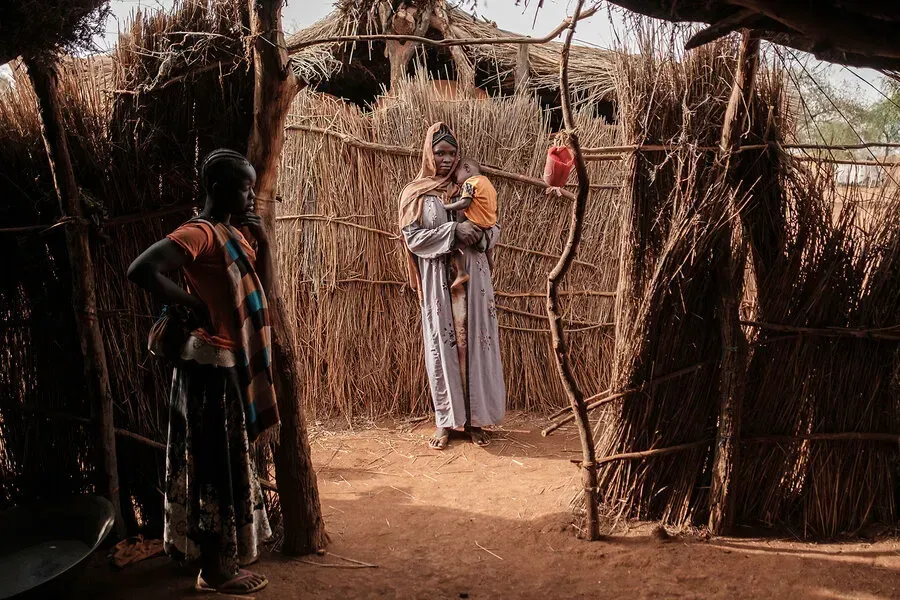
In the displacement camp on the edge of Tongoli, a woman who goes by Oum al Hussein was caring for her baby, Dawa. The child’s pale skin was pulled tight around her eyes, and her ribs protruded from her chest. Mother and daughter arrived here 15 days earlier, the third time they have been forced to relocate since the war began.
Like so many families in Sudan, theirs has known devastating loss as a result of the conflict. In April last year, while the family was living in a town about 70 miles from here, Oum al Hussein’s husband, Jabal al Dar, was killed by a drone attack while driving his tractor.
Oum al Hussein says her husband was a devout Muslim and devoted family man. Without him, she is raising Dawa on her own. “I am worried for my baby. I want her to live and be healthy,” she says. “We are tired of this war.”
In a nearby hospital, Mr. Ahmed, the teenage soldier, lies recovering from a bullet wound he sustained in November. Although he joined the RSF to fight for his freedom, he explains that he no longer thinks he will survive “to see Sudan after this war.” Asked if the fight is worth his life, Mr. Ahmed looks exhausted. He doesn’t want to say.