Pulitzer Center Update July 21, 2026
How Ethiopian Youth Transformed Investigative Journalism Into National Dialogue on Climate, Conflict, and Civilian Protection
Country:

In Ethiopia, the convergence of climate change, food insecurity, and ongoing conflict has created one of the most complex humanitarian crises in the world. Millions have been displaced; hundreds of thousands of civilians have lost their lives; and communities across the country continue to face the daily realities of drought, displacement, and uncertainty. Yet among these challenges, a group of young Ethiopians, journalists, and digital creators came together to explore how investigative journalism can inform, engage, and inspire action in even the most fragile environments.
Supported by the Pulitzer Center, the Amhara Region Media and Art Charitable Association (ARMACA) launched "From Crisis to Accountability: Climate Change, Conflict, and Civilian Protection in Ethiopia," a multi-platform engagement initiative that translated Pulitzer Center-supported investigative reporting into public dialogue, creative expression, and youth-led advocacy. The project combined an in-person workshop, a national digital storytelling contest, and a participatory radio program to ensure that verified journalism reached communities across the country.
Understanding the Stories Behind the Crisis
The project was anchored by two powerful Pulitzer Center-supported investigations that provided the intellectual and ethical foundation for all activities. The first, "Climate Change Is Driving Millions to the Precipice of a Raging Food Catastrophe" from Georgina Gustin and Larry C. Price documented how climate change, food insecurity, displacement, and instability intersect across Africa. It revealed how prolonged drought, global economic shocks, and fragile food systems have pushed millions to the brink of famine. For Ethiopian youth, this story resonated deeply: Their own communities experience recurrent drought, livestock loss, agricultural collapse, and internal displacement.
The second investigation, "Falling Like Leaves: The War in Ethiopia and Its Crimes Against Civilians" by Ann Neumann documented the devastating toll of Ethiopia's conflict: 385,000 to 600,000 civilian deaths, over 5 million displaced people, and systematic violations including sexual violence, humanitarian obstruction, and information blackouts. Rather than treating the story as a historical account, ARMACA positioned it as a living analytical framework to examine current realities. Despite the November 2022 ceasefire, the story identified patterns such as civilian vulnerability, ethnic tensions, and media polarization that continue to manifest across regions including Amhara, Oromia, and Tigray.
These stories were not used as static texts to be summarized. Instead, they became living documents to be interpreted, localized, and translated into action. The project's innovation lay not in repetition but in translation, moving participants from passive reading to active interpretation and storytelling.
From Knowledge to Action: The Hybrid Workshop and Webinar
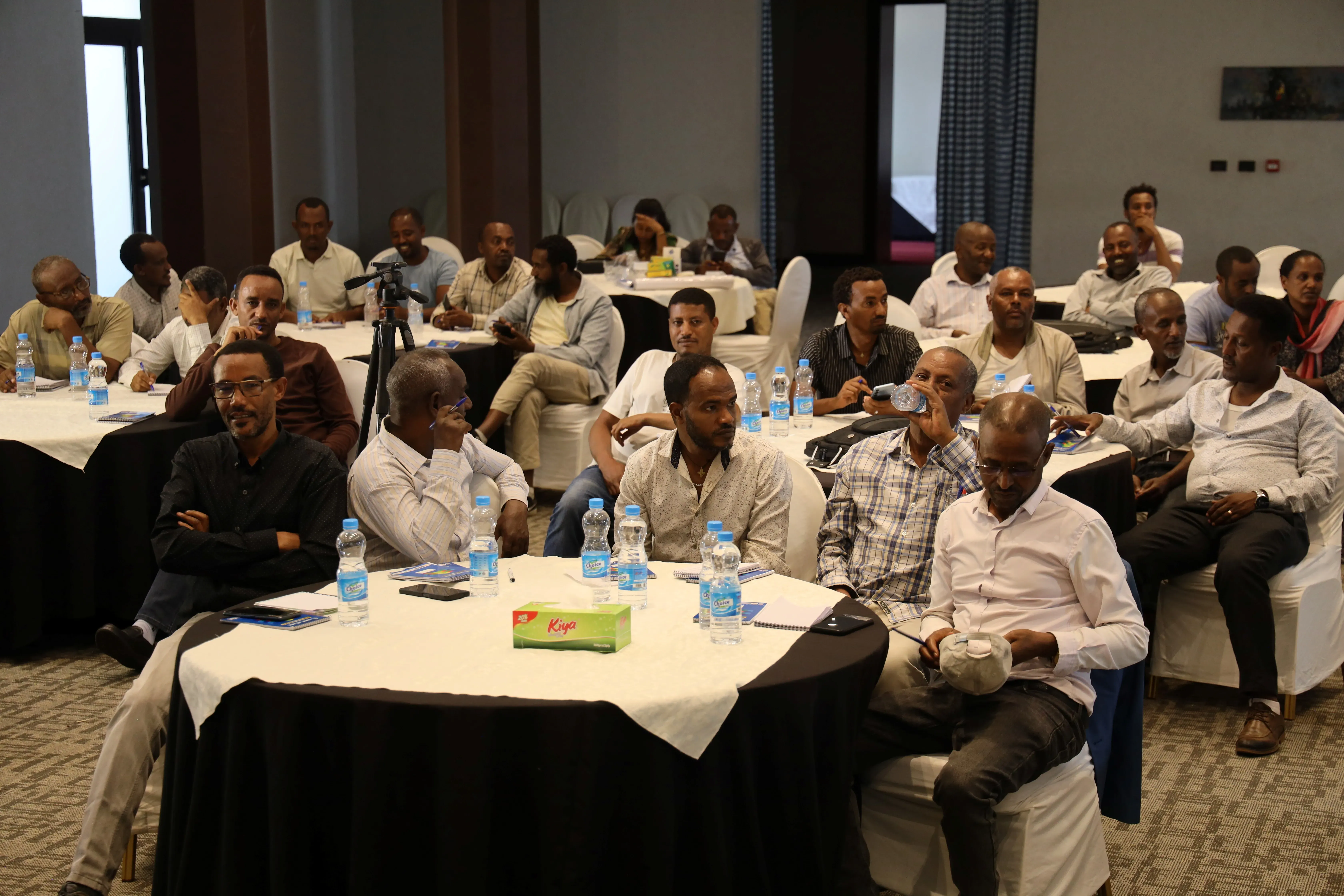
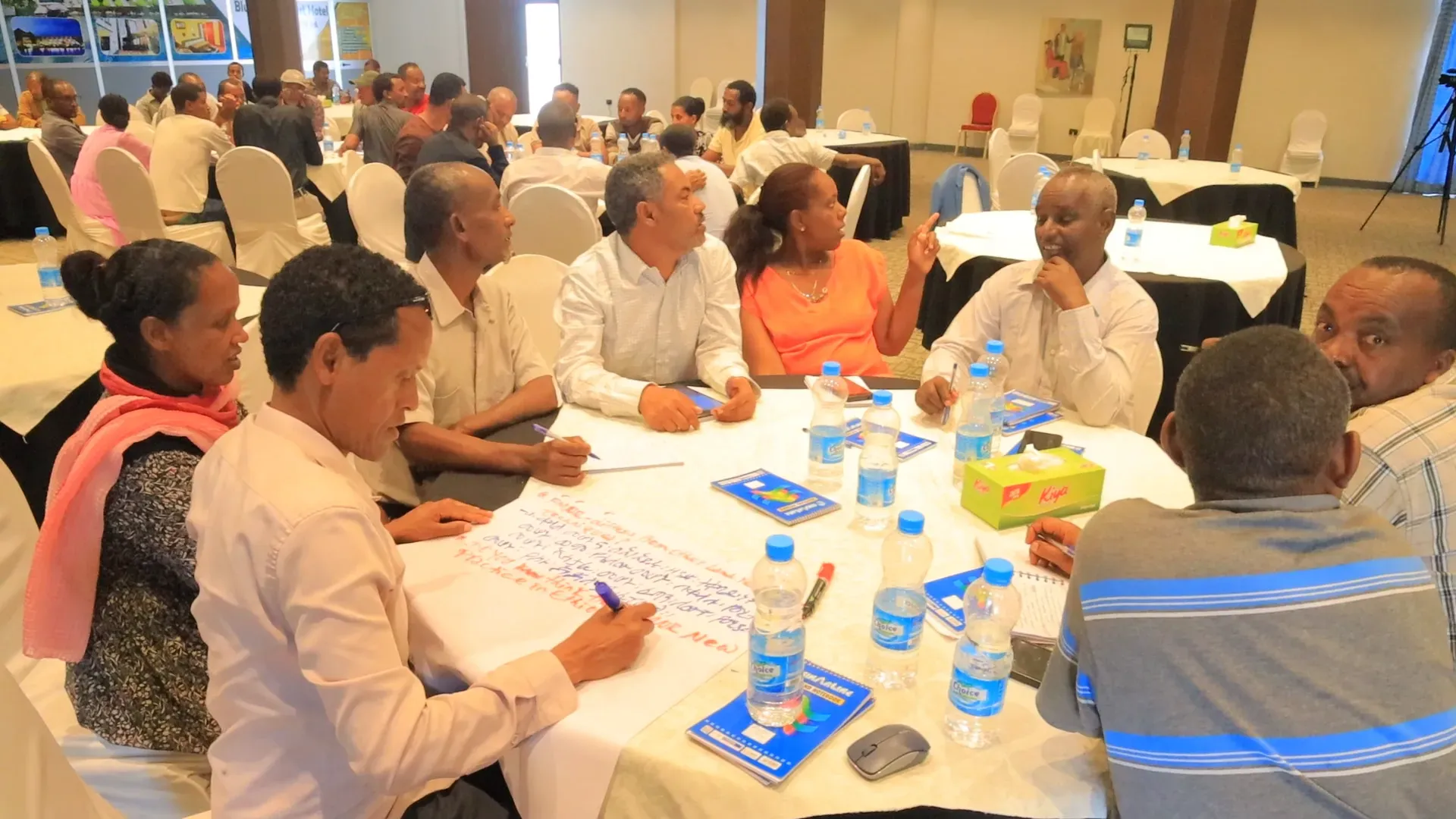
On February 27, 2026, ARMACA implemented a hybrid event combining an in-person workshop in Addis Ababa with a live online webinar. The workshop brought together 60 participants: early-career journalists, digital content creators, and university graduates in communication and social sciences. A balanced gender representation of 35 male and 25 female participants ensured diverse perspectives, reflecting a deliberate inclusion strategy.
The workshop opened with a guided engagement of the Pulitzer Center-supported investigations. Rather than a simple presentation, facilitators curated multimedia excerpts, images, data points, and field reporting, providing contextual explanations that linked global findings to Ethiopian realities. Comparative insights from complementary Pulitzer Center stories on famine in Somalia and child malnutrition in Kenya helped participants understand regional patterns and shared vulnerabilities.
Participants were divided into thematic groups to unpack the investigation across three core dimensions: climate systems failure, food system breakdown, and human consequences. They engaged in critical reading, evidence mapping, and identification of narrative techniques used by journalists. This phase transformed them from passive listeners into analysts of investigative journalism. The webinar, conducted simultaneously, attracted 115 online attendees from across Ethiopia, expanding the reach and impact of the in-person session.
The Digital Contest: Creativity as a Tool for Change
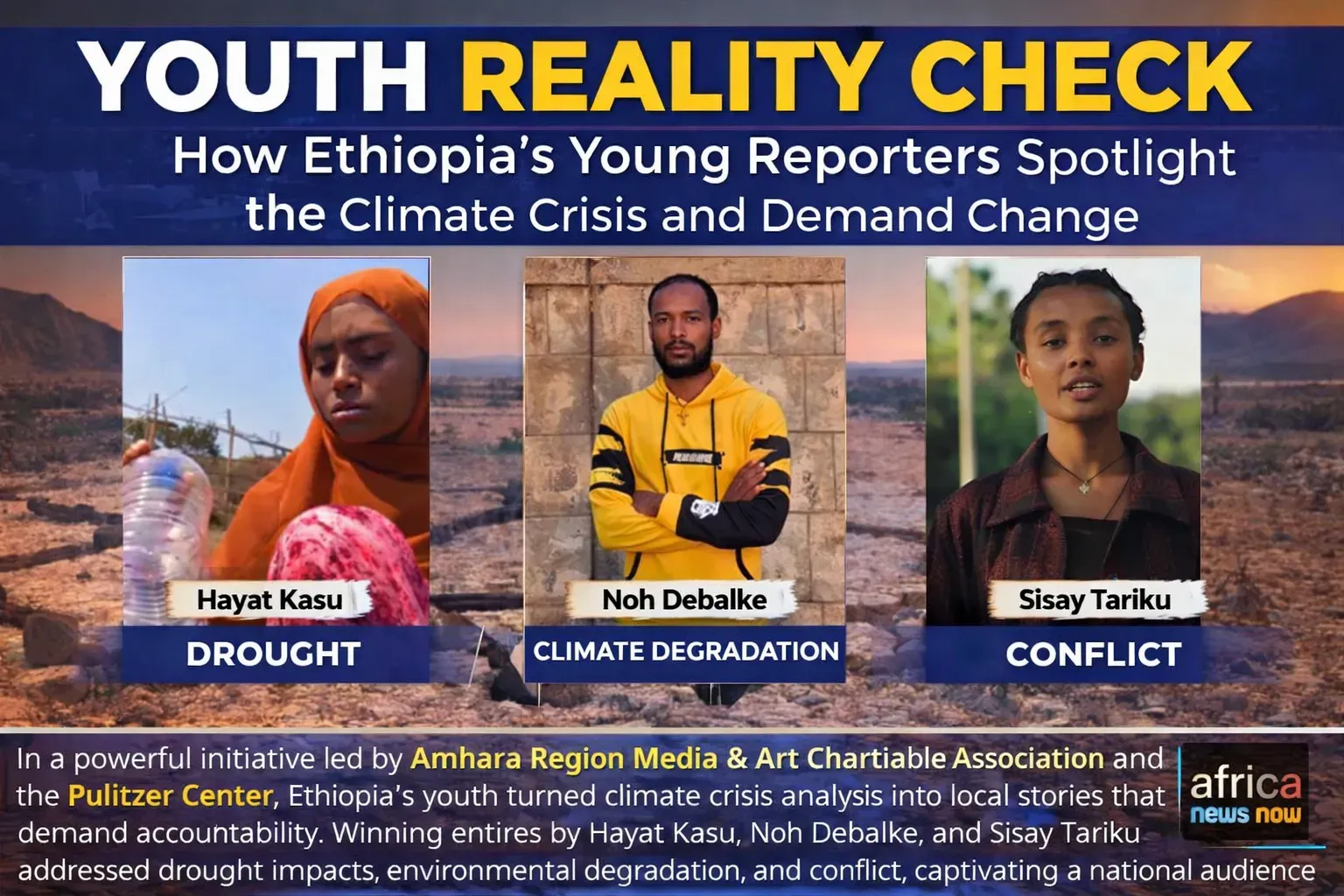
Following the workshop, participants entered a national digital storytelling phase. The contest challenged youth content creators to produce original videos and photo stories inspired by the Pulitzer Center investigation on climate-driven food insecurity. Participants were required to interpret and localize the investigation's core findings, drought as systemic collapse, food insecurity as a human crisis, and displacement as a consequence of climate stress, and transform them into youth-centered digital narratives that connected global journalism to Ethiopian realities.
The contest featured a structured judging process by senior journalists and digital storytelling experts, ensuring both professional rigor and creative appreciation. The winners demonstrated extraordinary creativity. Hayat Kasu, the grand winner, captured drought as a progressive collapse of life systems, land, water, and human survival. Her visual narrative used minimal dialogue but powerful symbolism: dry land, scarcity of water, and human struggle. Her work closely reflected the investigative finding that prolonged drought is a systemic breakdown, not a temporary shock.
Noh Debalke, who placed second, conceptualized climate change as a "wound" inflicted on both land and people. His metaphorical narrative presented environmental damage as something that spreads, deepens, and leaves scars, capturing the cumulative damage of climate change over time.
Sisay Tariku, who placed third, introduced a critical dimension often overlooked: the intersection between climate crisis and conflict. Her video emphasized the fragility of peace, civilian suffering, and social instability, translating investigative journalism into a human-centered narrative of insecurity.
The contest achieved a nationwide public reach of 403,218 people with over 6,147 online interactions—comments, shares, and discussions across TikTok, Facebook, and Telegram.
The Radio Program: A National Conversation
The national participatory radio program, titled "Falling Leaves: Public Dialogue Series," translated investigative journalism into public civic dialogue through four live 120-minute broadcasts. The program featured interactive call-ins, SMS and WhatsApp contributions, social media engagement, expert panel discussions, and nationwide rebroadcast via 31 community and university radio stations. The total estimated broadcast reach was 5.3 million listeners.
Each broadcast followed a dynamic and emotional progression. The opening featured story excerpts describing displacement, famine, and violence. Panel discussions unpacked war narratives, misinformation, and civilian vulnerability. Then the microphone opened to the audience, and the silence broke.
One caller during the radio program shared: "We walked for three days without food. My children survived on leaves. I never told this story before today." The studio fell silent. The tone shifted from discussion to collective reflection. Multiple follow-up testimonies emerged. A listener from Oromia shared: "Before this program, I thought the conflict was far from us. Now I understand how it affects all regions in different ways." Another participant reflected: "What I heard in the story is what we lived. Today I am speaking for the first time."
Strengthening Knowledge and Understanding
The impact of the project extended beyond participation numbers. Surveys conducted with 320 radio listeners revealed that understanding of conflict dynamics increased from 35% to 78%, while trust in journalism increased from 30% to 70%. 82% of surveyed participants reported improved awareness of civilian protection issues, and 76% indicated they could now connect national conflict narratives to their local realities. Participants moved from fragmented, region-specific perceptions to a national, interconnected understanding of conflict and shared suffering.
In the digital contest, post-activity surveys showed that 76% of participants improved their storytelling skills, 80% deepened their understanding of climate change, 82% committed to continued content creation, and 84% believed their content contributed to public awareness. Overall, participants consistently noted that the Pulitzer Center stories helped them connect global journalism with local realities, understand complexity, and develop storytelling confidence, while gender-disaggregated data showed equitable learning outcomes between male and female participants.
One participant reflected: "I now see how global issues connect to our local reality." Another noted: "We need to tell these stories ourselves." A young journalist committed: "As a journalist, I will verify before reporting and avoid content that can escalate tensions."
Challenges and Lessons Learned
The project operated in a highly sensitive and challenging environment. ARMACA's director was summoned twice by police authorities to provide clarification on the program's objectives, editorial framework, and public communication approach. Authorities questioned whether the content could be interpreted as advocacy on behalf of conflict-affected populations. The inquiries highlighted the broader sensitivity surrounding participatory media work in fragile contexts, particularly where audience testimonies and interpretations may be viewed through regulatory and security lenses.
Other challenges included digital access inequality, which affected some participants who had limited internet connectivity, restricting their ability to participate fully in online components. The complexity of investigative content required careful simplification; the Pulitzer Center stories contained dense data and multi-dimensional analysis that some participants initially found difficult to interpret. Content production constraints emerged due to limited technical equipment among some participants, which affected the quality of their contest submissions.
To address these challenges, the project implemented simplified storytelling frameworks, established peer support groups, and offered flexible submission formats that accommodated varying levels of technical capacity. The project also strengthened its internal editorial and moderation systems, including enhanced pre-broadcast review processes, improved guidance for facilitators on conflict-sensitive communication, and reinforced mechanisms to ensure balanced and responsible audience participation.
Despite these challenges, the project generated powerful lessons for future programming. Hybrid models combining in-person workshops with digital contests are the most effective approach, as they maximize both depth of learning and breadth of reach. Youth engagement multiplies reach organically; when young participants create and share their own content, they become amplifiers who extend the project's visibility far beyond direct participants. Storytelling drives understanding more effectively than lectures; narrative-based engagement helped participants internalize complex investigative findings and translate them into emotionally resonant, locally relevant messages.
Continuing the Conversation
The project's impact extended beyond its formal implementation. Multiple radio stations translated content into local languages and rebroadcast independently. Six young journalists initiated a documentary film project inspired by the program. Universities expressed interest in using the program as a teaching resource. Partner stations requested to replicate the format. This demonstrates not just sustainability but scalability and cross-linguistic adaptability.
By grounding discussions in verified, evidence-based reporting, the project achieved what few initiatives have managed: It created a safe, credible space for national dialogue on the most sensitive issues facing Ethiopia. It transformed audiences from passive listeners into active civic participants. It showed that journalism, when localized and humanized, can bridge divides, build trust, and inspire action. It demonstrated that youth, when equipped with the tools of investigative storytelling, become not just consumers of information but producers of change.
The Pulitzer Center-supported stories revealed the crisis. Ethiopian youth reinterpreted it, humanized it, and amplified it. And in doing so, they transformed information into impact, and impact into hope.
RELATED INITIATIVES
Initiative
Africa Outreach Program