Story
 June 22, 2026
Amid Anti-Immigrant Sentiment, South Asian Communities Grapple With a Changing Ireland
Country:

Students report on various issues around the world.

The country long defined by its openness to newcomers has tightened its immigration rules, but immigrant communities find a sense of belonging.
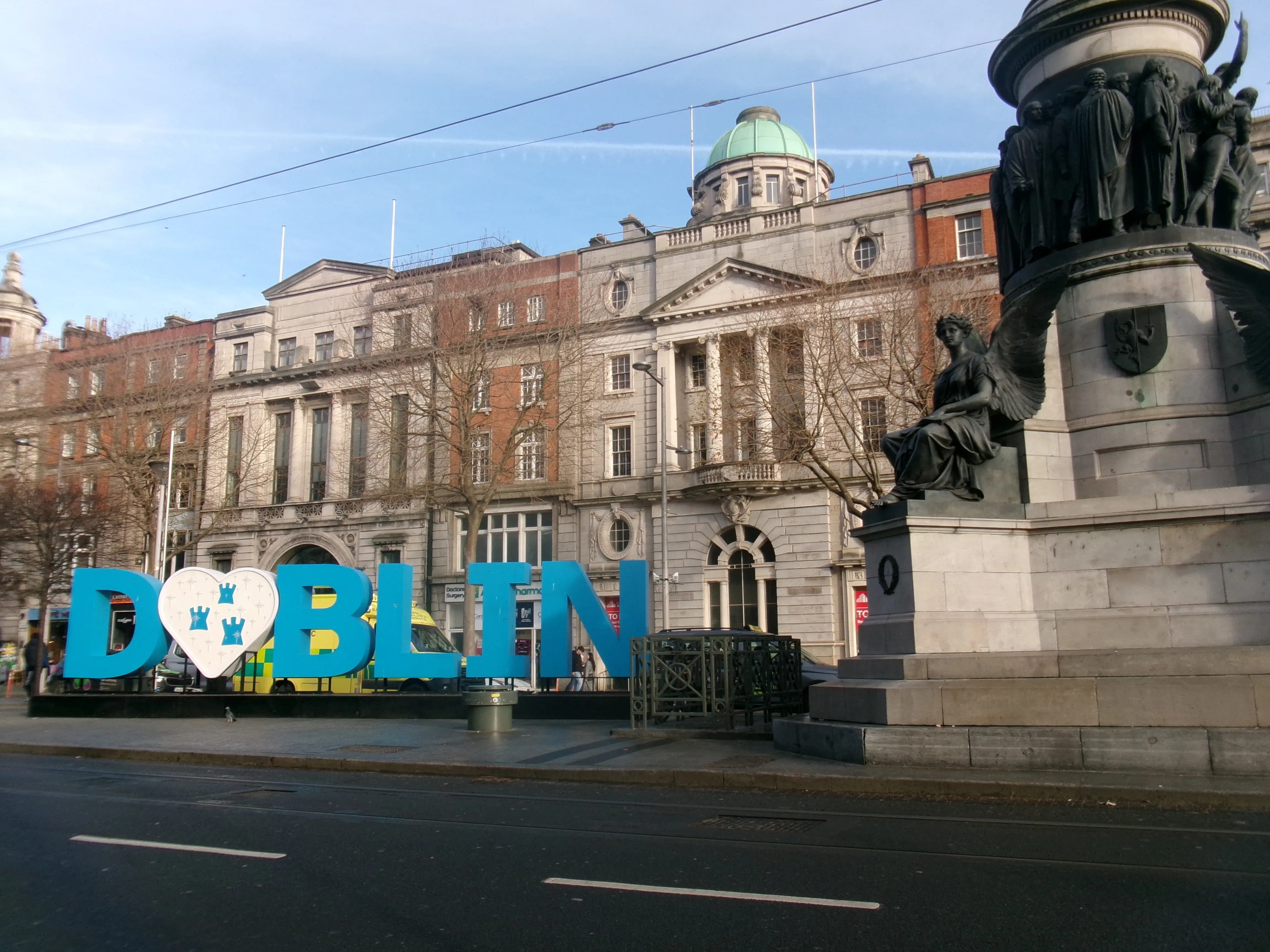
DUBLIN—On a cold January evening near Dublin’s O’Connell Bridge, a Bollywood dance studio—one of the few in Ireland—is filling again. Children and teenagers file in with backpacks, and instructors test the speakers as music begins to echo through the mirrored room.
Just months ago, the scene looked different. Weeknight classes that once ran at full capacity began to thin out. Some students switched to virtual sessions, and others stopped coming altogether, uneasy about traveling into the city center after a wave of anti-immigrant protests and online threats targeting South Asian communities in Dublin. Parents hesitated to send their children out after dark.
Half a year after the August 2025 rise in anti-immigrant rhetoric, particularly targeting South Asian communities, Dublin’s immigrant residents are slowly returning to their routines.

As a nonprofit journalism organization, we depend on your support to fund more than 170 reporting projects every year on critical global and local issues. Donate any amount today to become a Pulitzer Center Champion and receive exclusive benefits!
But many say something has shifted. In a country long defined by emigration and an openness to newcomers, some immigrants now describe a growing sense of unease, being viewed with suspicion rather than curiosity. Across the city, community members say they are adjusting how they move through public spaces even as they continue their lives in Ireland, rebuilding the courage to live as comfortably as they once used to.
The studio had to adapt. Instructors leaned more heavily on Trinity College student association events and family functions to stay afloat. Now, attendance has begun to rebound, even as a sense of caution lingers.
Siddharth, who asked to be identified by a pseudonym for safety reasons, is one of the longest-serving instructors at the school. He moved to Ireland several years ago, drawn by work opportunities and the promise of a country known for its friendliness and openness. Through dance, he teaches not only choreography but also cultural expression, introducing Irish-born students and immigrants alike to Bollywood’s storytelling traditions.
“Dance is how people connect,” Siddharth said. “It’s how we feel at home.”
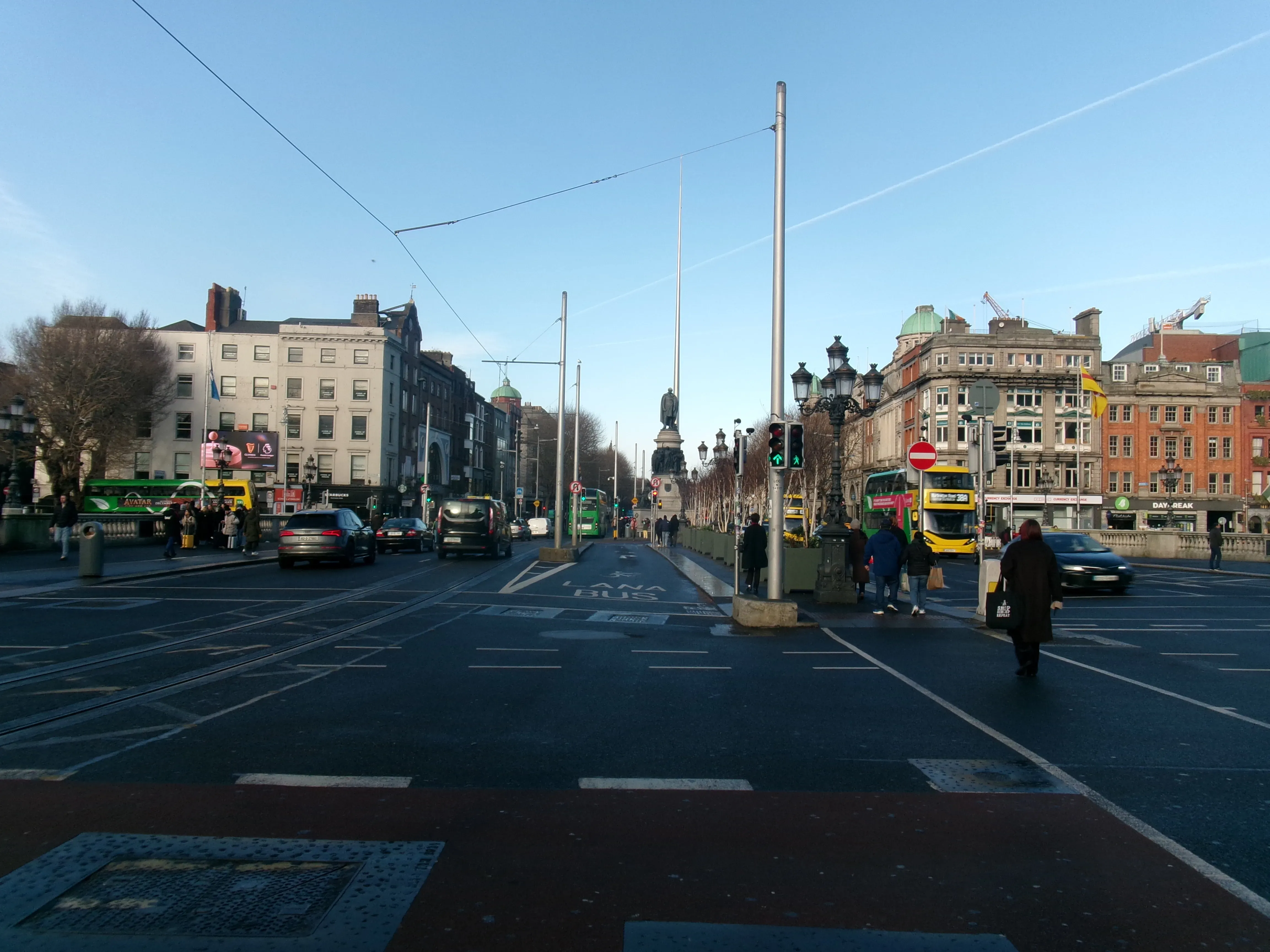
Even as classes fill again, many in Dublin’s South Asian community say that feeling at home has grown more complicated.
While Ireland’s immigrant population has grown steadily over the past decade (driven by labor shortages, tech-sector expansion, and international education), the speed of that change has sparked backlash fueled by misinformation and economic anxiety.
Additionally, many of these anti-immigrant protests have been inspired by groups outside Ireland.
For Indian immigrants, many of whom work in healthcare, technology, hospitality, and small businesses, the shift has been jarring. Siddharth described an atmosphere that feels different from even a year ago.
“Before, people were curious, asking where you’re from, what you do,” he said. “Now, sometimes it feels like people are suspicious first.”
For Prashant Shukla, co-founder of the Ireland India Council, established in 2002, the contradiction is stark. He describes a community that is deeply embedded in Irish society, contributing to major economic sectors, yet increasingly aware of hostility.
“We are not a temporary presence here,” Shukla said. “Indian doctors are staffing hospitals. Indian students are paying tuition and conducting research. Indian entrepreneurs are creating jobs. This is a long-term community.”
Yet, recent months have formed difficult conversations. Indian students have reported harassment on public transportation, and some families have expressed concerns about children being singled out in schoolyards.
“It’s important to say that the majority of Irish people are welcoming,” Shukla said. “But when even a small group becomes louder, it changes how safe people feel.”
Some of that hostility, Shukla said, has extended beyond the streets. During the height of tensions in 2025, the Ireland India Council began receiving threatening calls and messages—many of which appeared to originate from U.S. phone numbers, often in the early-morning hours.
“If I was receiving 10 threatening messages, I was receiving 90 messages of support,” Shukla said. “From Irish society, from organizations, from people in positions of responsibility.”
The Council reported the messages to Ireland’s Department of Justice, which Shukla said responded proactively, working with community leaders to address safety concerns and prevent further escalation. The organization also raised concerns directly with senior government officials, including the prime minister and justice minister.
“We did not put things under the carpet,” he said. “Everything was documented and shared at the highest level.”
Shukla believes some of the protests were amplified by actors outside Ireland, pointing to coordinated messaging and political rhetoric that didn’t reflect the realities of the Indian community, many of whom are employed in high-skilled sectors and are not reliant on state support.
Still, the response within Ireland has been mixed but largely resilient. Community organizations and human rights groups have spoken out, while cultural initiatives have expanded in an effort to counter misinformation and build visibility.
“We cannot respond to exclusion by disappearing,” Shukla said. “We respond by participating. We respond by showing who we are, our culture.”
The Migrant Rights Centre Ireland (MRCI) and other immigrant advocacy groups have seen growing demand for legal support and community counseling. Along with providing support to people who come seeking legal aid, MRCI is dedicated to lobbying for open borders and legislation protecting immigrants.
In November 2025, Ireland tightened immigration rules amid political pressure to align its policies with other European Union states; a country once known for its unique border policies has changed to match its stricter counterparts. For instance, the government instituted stricter eligibility thresholds for family reunification.
In response, MRCI hosted numerous Know Your Rights campaigns and organized protests calling for reforms to the stricter family reunification rules.
Neil Bruton, co-founder of MRCI, expressed disappointment with the changed rules after meeting with the Department of Justice.
“They [DOJ] keep saying they value migration,” Bruton said. “They really have not shown it.”
For migrant workers to bring one child in 2026, one has to be making 50,000 euros and face other restrictive policies.
“We’re absolutely shocked,” Bruton said. “This is a restrictive policy that’s going to deny essential [migrant] workers the right to have their family here with them. And in fact, they’re hardening the rules more. They’re going to bring in a fee for a family reunion, and they’re going to bring in accommodation requirements.”
Ireland’s history makes this moment particularly striking. For generations, the country was defined by emigration, with millions leaving for economic opportunity abroad. Today, it is one of Europe’s fastest-growing immigrant destinations. That is, until the recent tightening of immigration rules amid political pressure.
Anti-immigrant protests, while not representative of the majority, reveal anxieties about housing shortages, public services, and cultural change.
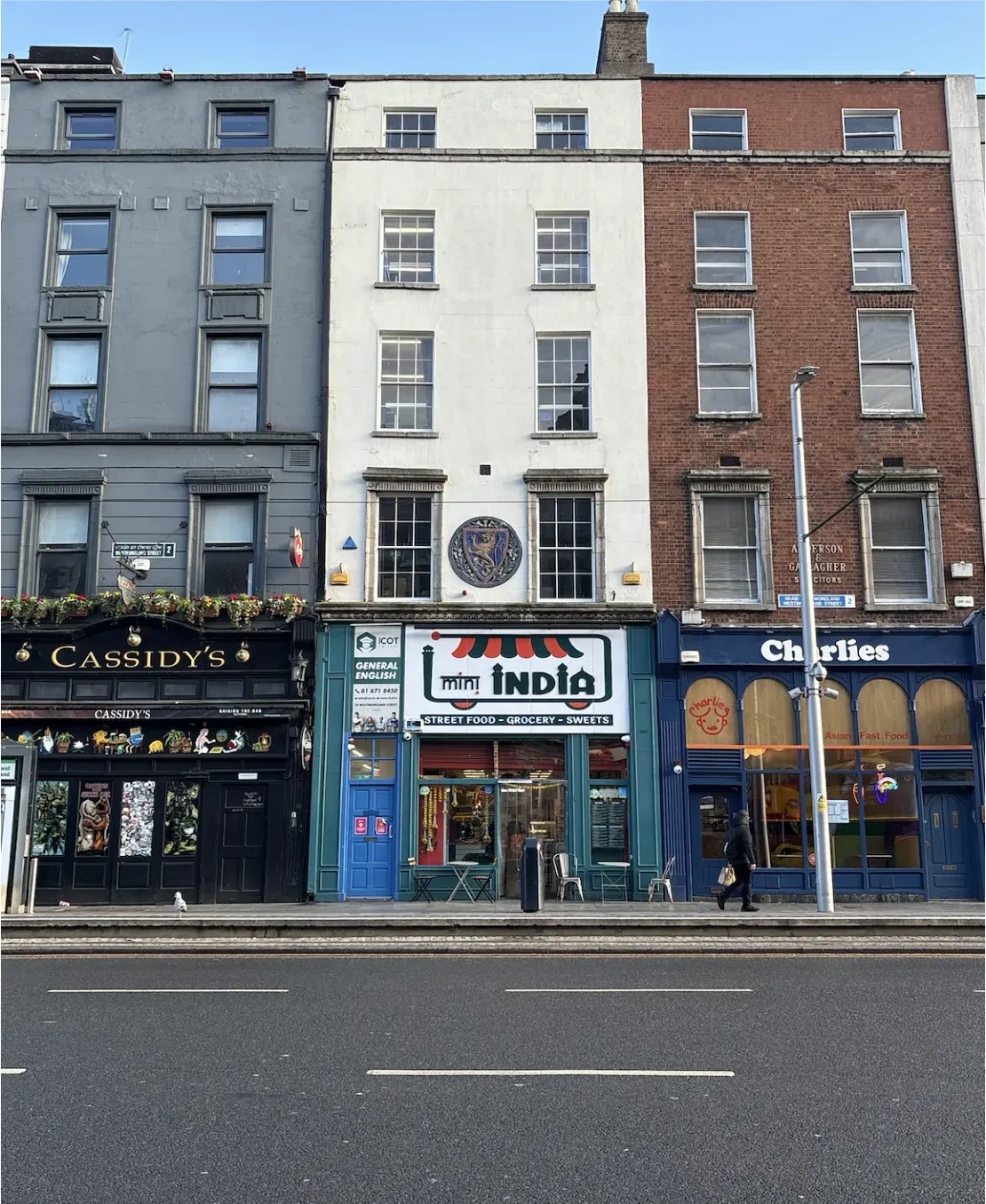
These ramifications are visible in small businesses like Devi’s grocery shop in central Dublin. Shelves are stacked with sacks of basmati rice, jars of mango pickle, and packets of masala that scent the air when opened.
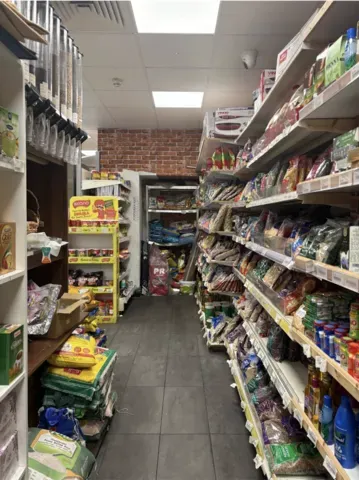
Devi, who asked to be identified by her first name for safety reasons, said her customer base reflects the changing city.
“We have Indian families, of course, but also Irish customers who like to cook something different, students from everywhere,” she said.
Business has grown steadily as Ireland’s South Asian population has expanded. Yet since late summer 2025, Devi said, she has noticed subtle changes.
“Sometimes someone will make a comment,” Devi said. “They’ll say, ‘You’re all coming here and taking over,’ or something like that. It’s small, but it stays with you.”
Devi said she has learned to remain level-headed in these moments.
“You cannot argue with someone who already decided what they believe,” she said. “So you focus on the people who come back every week, who trust you. Most people are kind, but you feel when something has changed.”
She insists on keeping her shop a welcoming space, stocking Irish products alongside Indian staples, chatting with longtime local customers, and sponsoring neighborhood events.
“I live here, and my children go to school here and are even starting to have Irish accents,” Devi said. “This has become home.”
Back at the dance studio, evening approaches and the quiet begins to lift. Children file in with backpacks, and parents remove shoes at the entrance. Siddharth plugs in the speakers, and the first beats of a Bollywood track play.
Attendance dipped briefly at the height of online tensions, he said, but classes today remain full. Instructors choreograph routines for cultural showcases, and families plan for upcoming festivals.
“We talked about stopping for a while,” Siddharth said. “But soon we thought, why should we? We realized that would only hurt us more.”
Even as debates over immigration play out in politics and online, many like Siddharth say the real work of belonging happens in quieter, everyday moments in classrooms, grocery stores, and community spaces across the city.
“I’ve found that belonging isn’t automatic,” Shukla said. “It’s something that can be built.”
For Siddharth, that work begins each evening when the music starts again.
“When the kids dance, you don’t see who is from where,” he said. “I have a job as an instructor, and I just see excitement and fun. Usually, that’s enough.”