Story
 May 14, 2026
How the Kui Refused To Let Borders Erase Who They Are


What the measure could mean for three groups often left out of the national conversation.

For decades, the Kui people of Southeast Asia lost ground quietly: their language retreating from classrooms, their ceremonies fading, their communities on either side of the same border losing touch. Now they are finding each other again.
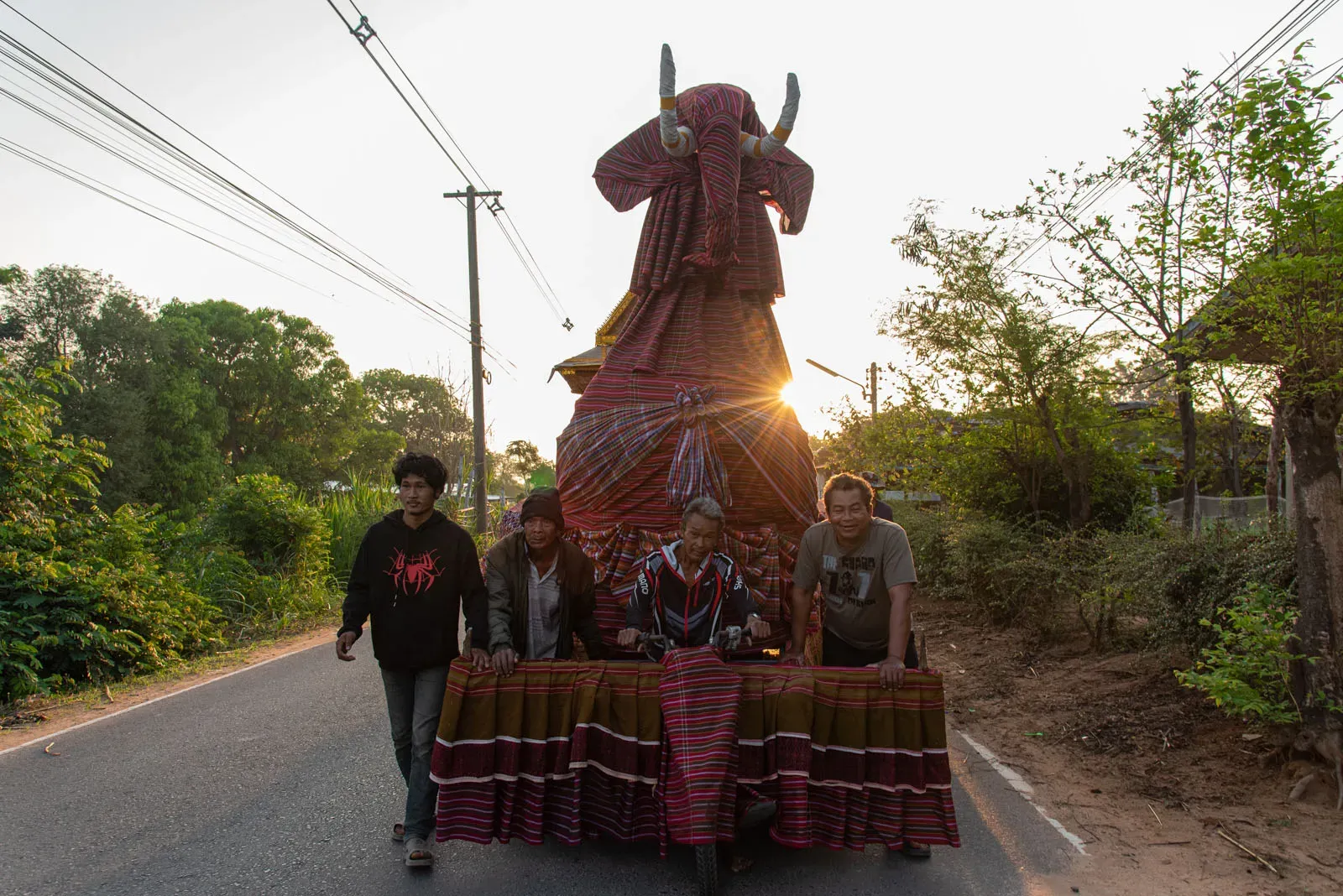
Just after midnight on the third night of the waxing moon in the third lunar month, a man climbed a great torch wrapped in krajang leaves at Wat Ban Phonngam temple in Adsaphon district, Savannakhet province, and set it alight.
Below him, more than a thousand Kui people had gathered. They had come from Thailand, Laos, and Vietnam. Many had not seen one another since the previous year’s gathering. Some had never met at all, yet they greeted each other in the same language.
The ceremony is called Bun Krabong Yai, the Festival of the Great Torch — and for the Bru people of Laos, who are part of the broader Kui ethnic group, it is among the most sacred occasions in their calendar. At the opening ceremony on 20 January, Khammany Inthirath, chairman of the Bru Ethnic Assistance Fund and the most senior Kui politician Laos has produced, addressed the crowd.

As a nonprofit journalism organization, we depend on your support to fund more than 170 reporting projects every year on critical global and local issues. Donate any amount today to become a Pulitzer Center Champion and receive exclusive benefits!
“Before we became subjects of the empire, our people lived together in peace,” he said. “We spoke the same language — one passed down for more than 2,000 years.”
Decades of conflict had erased the festival entirely. It was rebuilt in 2006 from the memories of elders who still carried it within them, and this year the Lao government formally recognised it as national cultural heritage.
Kui people, an ethnic group spread throughout Southeast Asia, have been slowly losing their cultural identity as laws, geography, and modernity have distanced them from one another and created barriers. Their language has been under threat as well as their livelihoods, and traditional festivities. Last year, however, Thailand enacted the Ethnic Protection Act and, along with more research revealing the cross-border nature of the community, it is helping the people reclaim their identity.
The Kui people are predominantly found in the lower northeastern region of Thailand, but other communities can be found in Laos, Cambodia, and Vietnam.
In each of these contexts, over time the Kui culture has been diminished. The Thai Ministry of Education, for example, previously imposed conditions that prevented Indigenous languages from being taught in schools while decades of conflict in Laos put a stop to traditional festivities, and Kui communities in each country lost touch with one another as borders became more formalised.
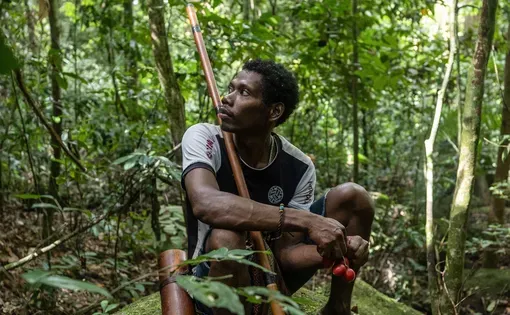
“Today the Kui face real hardship. Our farmland has been seized by private companies. And when we lose our land, children can’t go to school. Surviving as an Indigenous person is not easy,” said Kim Phea, a 24-year-old Kui, speaking by phone from Phnom Penh, Cambodia.
The challenges Kim Phea described are many: land encroachment by corporations, growing dependence on a cash economy after being cut off from the forests they once relied on, and the erosion of the native language. In his home community in Preah Vihear province, he said, younger Kui have largely stopped speaking it.
While Surawit Siriphanitsakun was pursuing his doctoral degree at Rajabhat University Surin in Thailand in 2005, his research on community tourism took him on field visits to communities in Cambodia, Laos, and Vietnam. As a Kui, along the way he was shocked to keep encountering people who spoke the same language as him. He saw firsthand that each Kui community was facing challenges.
“At that time, Kui communities in each country were facing a similar crisis; cultural assimilation by the dominant mainstream culture was causing the Kui language and traditions to disappear,” Surawit said.
Changes in recent years, however, are seeing the Kui people reclaim their identity. Surawit himself began building a network of Kui communities in 2004 across six provinces in Thailand’s lower northeast. This eventually culminated in the formal registration of the Kui Ethnic Association in December 2024. This is supplemented by research conducted in 2005 that discovered that Kui-Bru people in Laos, Thailand, Cambodia, and Vietnam shared the same language, customs, and culture.
Resurgence of festivities
In the decades since, people from the four countries have begun travelling to meet one another, forming transnational relationships that led to the creation of a World Kui Day celebration in 2019 at Wat Pa Achiang in Krapo subdistrict, Tha Tum district, Surin province in Thailand.
Today, World Kui Day is held annually on the third waxing moon of the third month, with the hosting duties rotating to give each Kui community the opportunity to showcase its own traditions. This year, the hosts were the Bru of Laos.
Surawit described the purpose of the annual gathering simply: to give Kui-Bru people from all four countries a space to share their arts and culture, and to advance their collective work of cultural preservation. “It’s about making people understand that the Kui are not alone,” he said. “We have brothers and sisters from the same roots living in many different places and countries.”
Kim Phea has attended World Kui Day gatherings in Thailand, and felt something unexpected when he arrived. “We speak the same language, even if it’s not identical in every way. The way of life of the Kui in both countries is not so different,” he said.
This and other celebrations are one of the ways the Kui are reviving their culture.
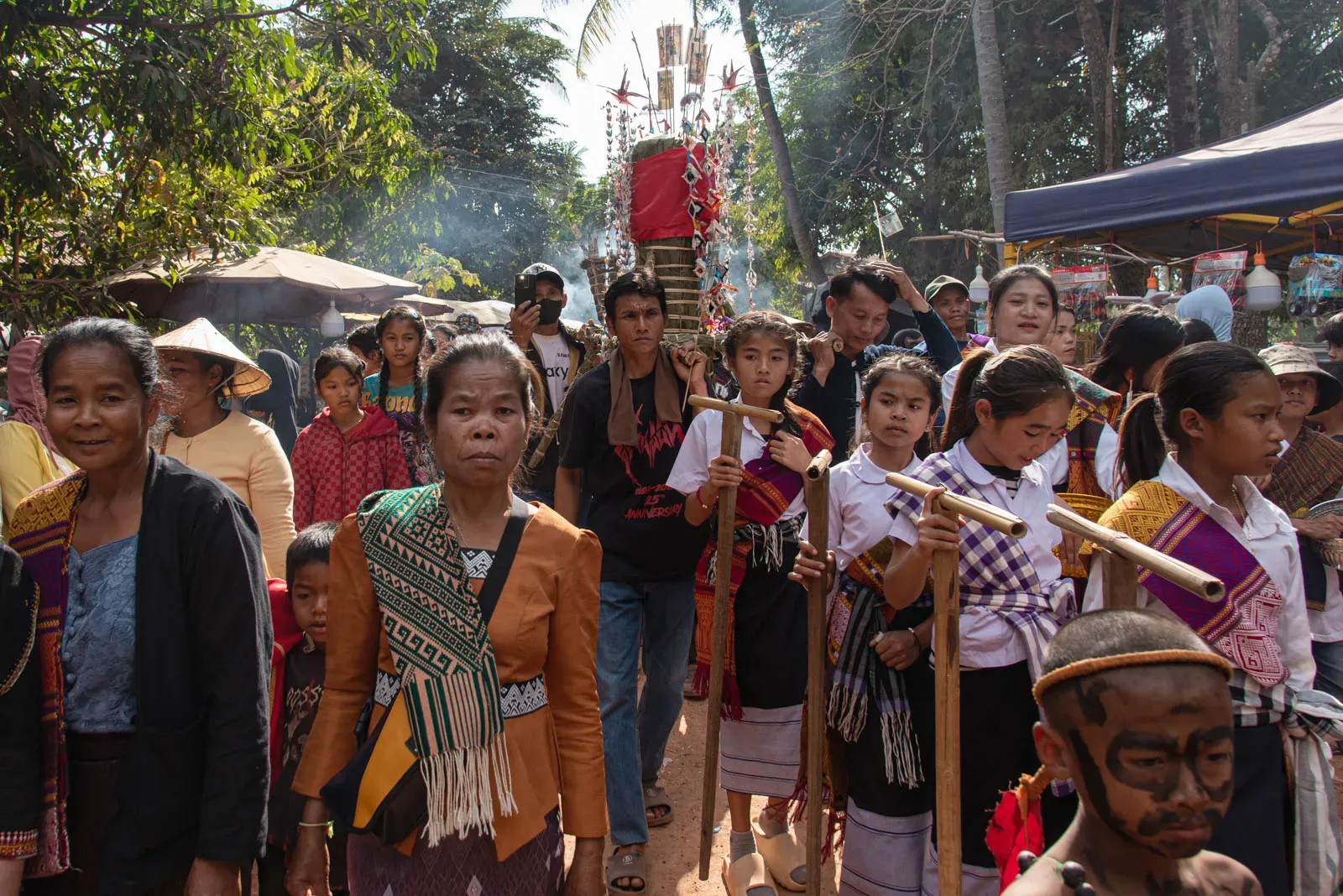
On the morning of the Boun Krabong Yai, the area surrounding Wat Ban Phonngam buzzed with stalls lining both sides of the road. The Bru began arriving from surrounding villages, joined by delegations from the capital of Vientiane, a group of more than 90 Kui from Thailand, and representatives from Vietnam.
The Saen Ya Phi Pu Ta ancestor veneration ceremony began at 2pm with a procession starting at the village entrance. Its purpose is to pay respects to the ancestors prior to the parade. Complete with Bru musicians, Brahmin ritualists, dancers, and more than 1,000 villagers, the masses assembled and wound their way toward the torch-lighting grounds of Wat Ban Phonngam. Here, the centrepiece ritual of climbing the great torch and setting it ablaze takes place just after midnight.
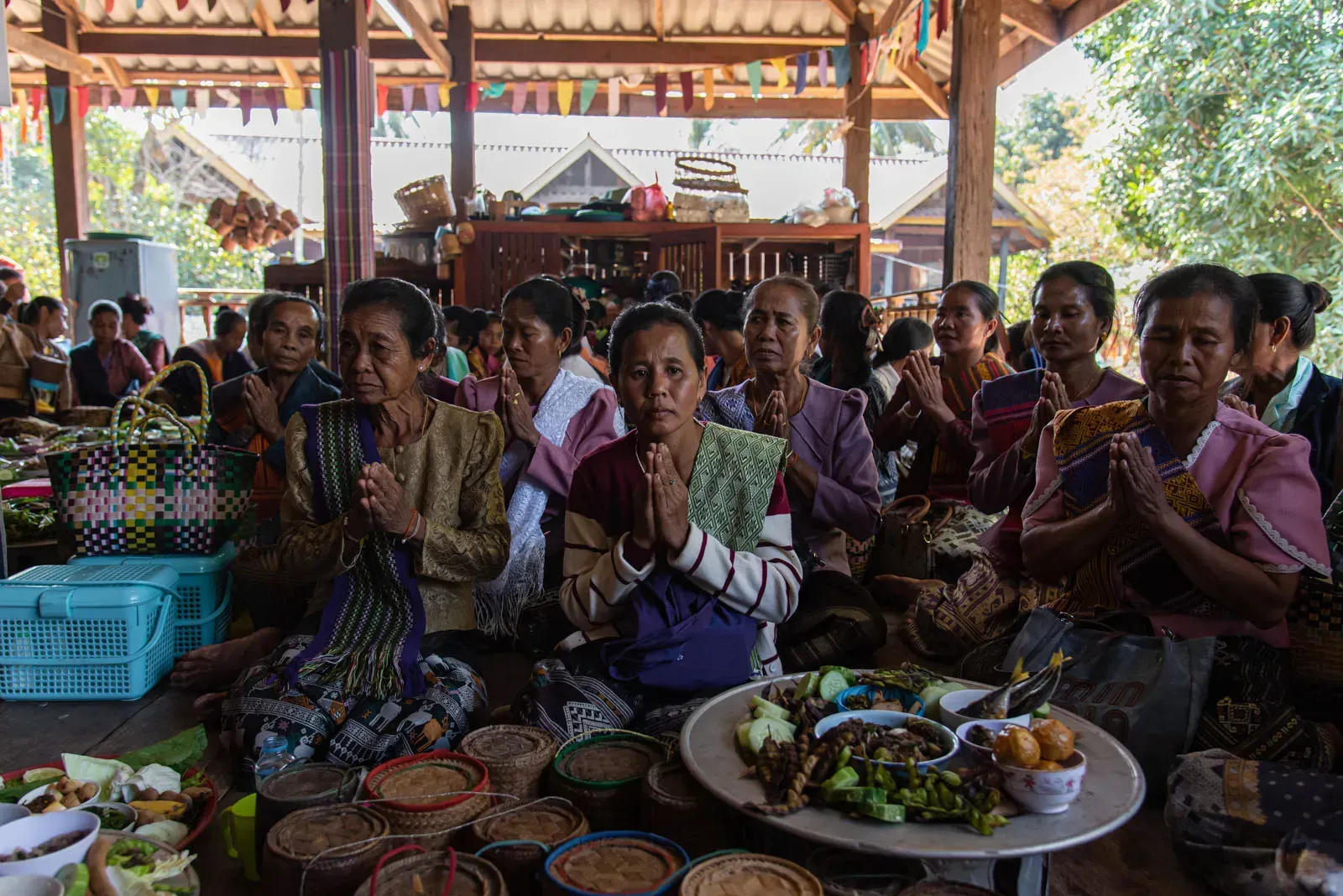
Tiangkham Inthirath, organiser of the Boun Krabong Yai and a Bru village elder and scholar in Laos, recited the words that give the torch its meaning:
“When the torch shines bright on a moonless night, I shall see. Those who are sick, may they find a healer. The torch is education; it is the gift of light. Whoever has not studied carries no knowledge.”
He told HaRDstories that the festival had vanished for decades during the wars that tore through Laos, and was only revived in 2006, painstakingly reconstructed from the memories of elders who still carried it within them.
Then in 2008, the Bru communities across all 13 villages in the Phonngam area reached a collective decision to hold the festival every year, choosing Wat Ban Phonngam as the permanent venue.
Preserving language
Beyond these annual gatherings, Kui communities across the region have come to recognise an urgent shared reality: the use of the Kui language is declining at an alarming rate, and is expected to disappear within two to three generations. The transmission of the language within families has weakened, and with no schools teaching Kui, younger generations are growing up without access to their own cultural heritage.
“The Kui language is a symbol and a culture; the means of communication the Kui people have used since ancient times. We must preserve it for our children,” said Atikarn Saiprae Katapunyo, a Kui monk whose doctoral dissertation became the conceptual blueprint for the Kui language dictionary project. As part of his doctoral degree, he began creating a four-language cultural dictionary containing 4,000 entries in Thai, Khmer, Kui, and Lao. This became the foundation for an international Kui-Bru dictionary that is now being compiled jointly by scholars, elders, and community experts from the four countries. It is expected to be completed in 2027.
“Even if someday no one speaks Kui anymore, at least there will be a database, something that can be used to build curricula for schools,” Atikarn Saiprae said.
In Preah Vihear province, Cambodia, a Kui language classroom has been established that meets every Sunday to teach the next generation.
Surawit, who now serves as president of the Kui Ethnic Association, explained how Thailand’s Ethnic Protection Act bolsters these efforts and is paving the way for a pilot programme like the one at Takheian Kui Wittaya School, bringing Kui language instruction into education.
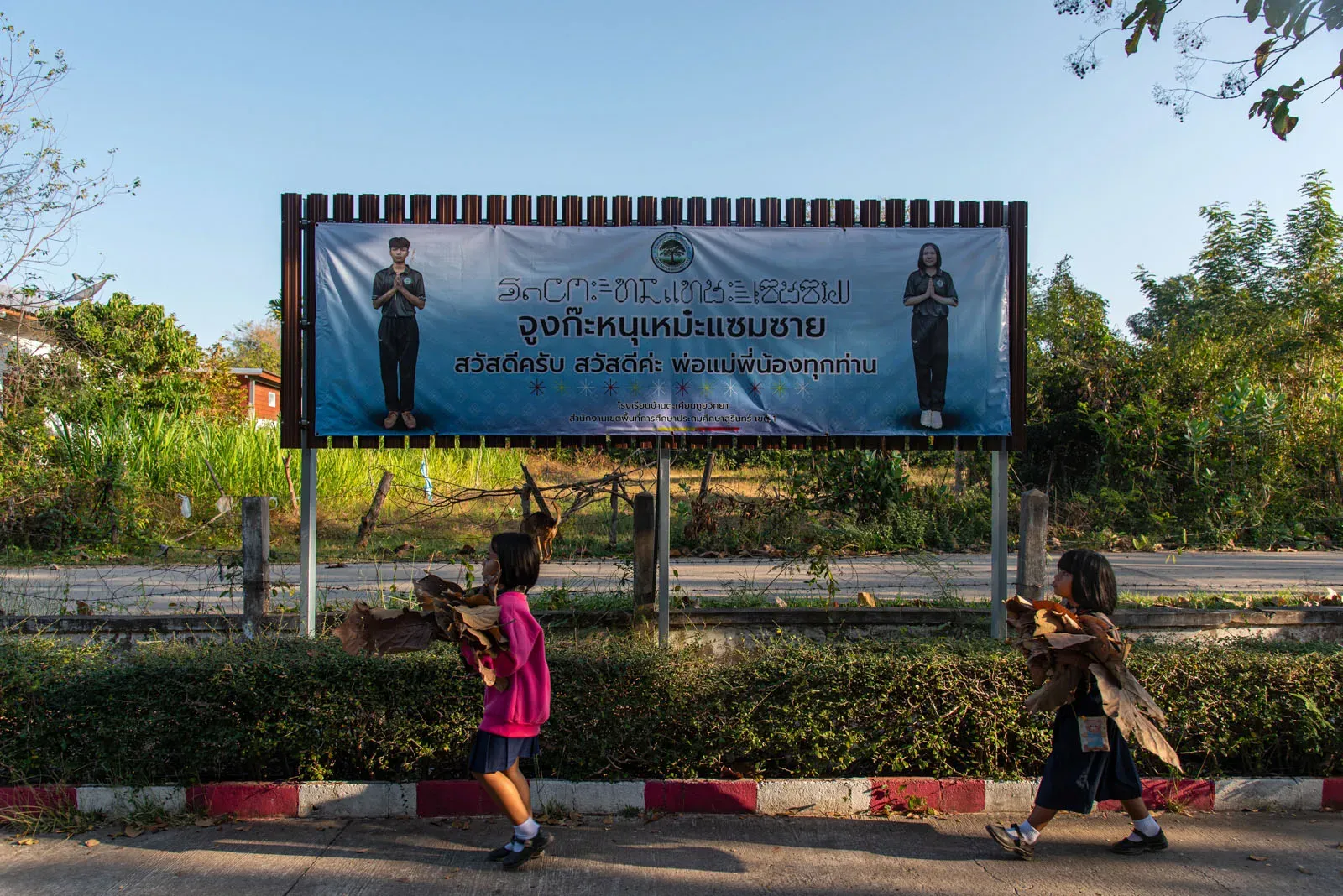
For the association, this opens a door. They now intend to push for Kui language instruction to become part of the formal curriculum at both the basic education and university levels.
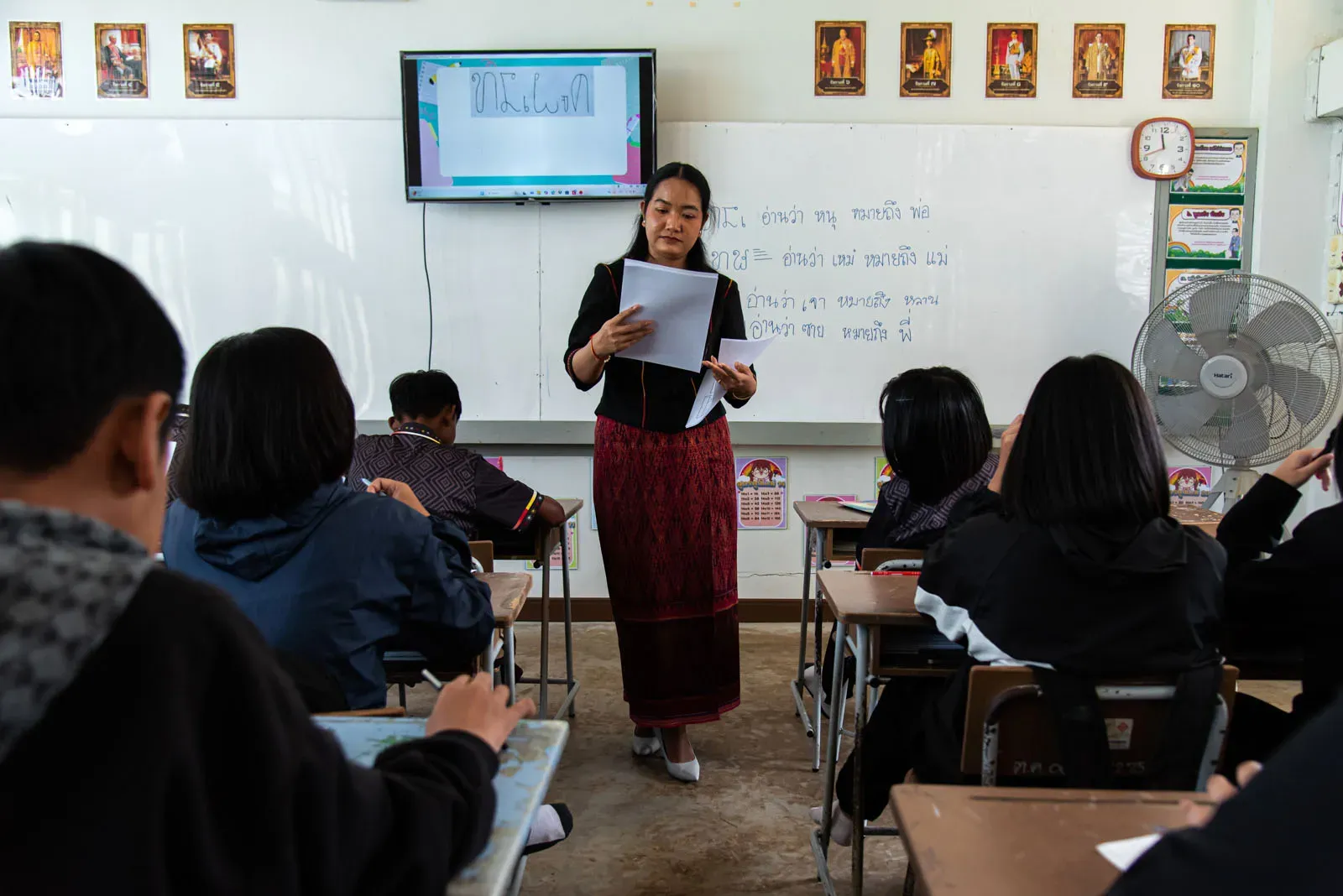
“I’m glad we have the Ethnic Protection Act,” said Sunisa Kaewkham, a Kui language teacher at Takheian Kui Wittayakhom School in Samrong Thab subdistrict, Surin province, speaking to HaRDstories from her classroom. “At least now we can teach it as an elective. But if it can one day become a core subject, other schools that want to offer Kui language can do the same.”
Sunisa currently teaches first-year secondary students with 39 enrolled this academic year. Her method begins with the 40 Kui consonants, eight per lesson, before moving to vowels and then word formation. Even she, who learned Kui as a spoken language, finds the written form a challenge. It was only introduced for teaching purposes in 2018, when Sanong Suksawaeng, a Kui medical doctor, developed a writing system specifically for the language, on the grounds that the Thai alphabet cannot represent all Kui sounds accurately.
“I’m afraid the Kui language will disappear,” Sunisa said. “Young children today don’t communicate in Kui anymore. They mostly use standard Thai.”
Purinat Simram, a first-year secondary student at the school, said that in his daily life he mostly speaks central Thai with some Isan dialect mixed in. Coming to class and discovering that his people’s language had its own written form felt strange and new.
“I’ve heard Kui spoken since I was old enough to remember. It’s the language the older people around my home speak,” he said. Purinat has now completed one semester of Kui language class. “I can read a little, write some sentences. I’m proud to be Kui. I learn about the culture from social media and from listening to the elders at home.”
Depending on elephant tourism
A big part of that culture is working with elephants.
“In the old days, the Kui survived by going into the forest to capture wild elephants, taming them for transport, trading them, and sending them to local lords when there was war,” said Krittaphon Salangam, a former manager of the Elephant Study Centre at the Surin Elephant Village.
He told HaRDstories that the Kui elephant-keeping way of life has also shifted with every era. Capturing wild elephants became impossible after the Wild Animal Reservation and Protection Act was passed in 1960. From there, many Kui turned to rice farming while others took their elephants on the road, wandering to tourist destinations across the country.
“Back then this wasn’t a tourist attraction yet, so elephant keepers and their animals had to drift to places like Pattaya, Chiang Mai, and Phuket,” said Krittaphon, who is part of the Kui community.
Today, Kui community members are adapting their work with elephants to the times.
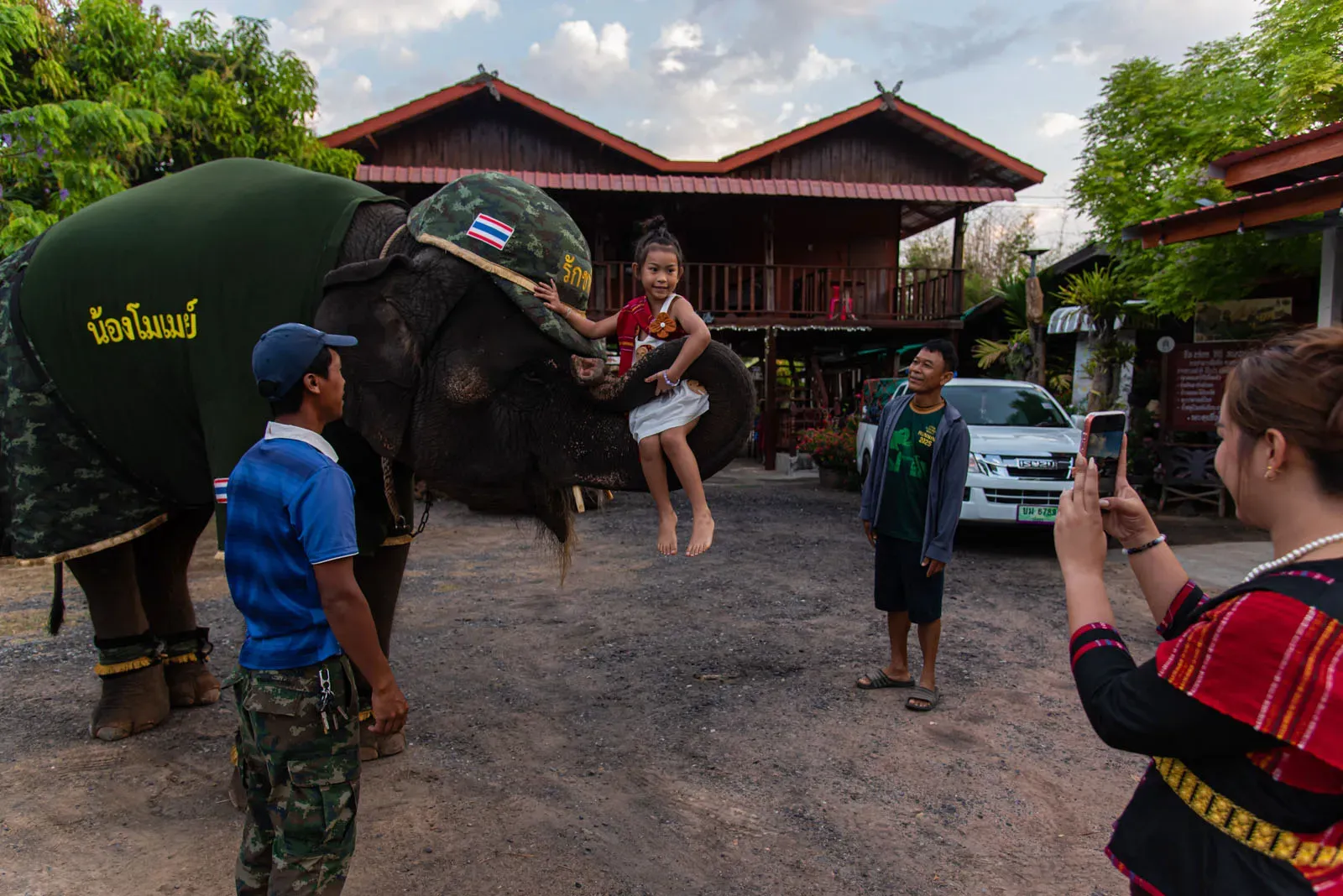
On a Saturday morning at the Elephant Study Centre in Krapo subdistrict, Tha Tum district, Surin, a group of elephants is performing — dancing, playing games — for a crowd of tourists. Their owners move through the audience selling sugarcane. As the show goes on, each elephant owner simultaneously livestreams to their own social media following, drawing donations for the animals’ feed. It is survival, adapted for the present moment.
“The elephant is the Kui way of life. We cannot abandon them. The elephant is a member of our family,” said Ananya Homhuan, a Kui woman who owns two elephants, 18-year-old Plai Raymond and 40-year-old Plai Buathong.
Ananya explained that each elephant aged two years and older receives a monthly subsidy of 12,000 baht (316 USD) from the Provincial Administrative Organisation. But an elephant needs to eat roughly ten percent of its body weight every day, putting daily feed costs at between 300 and 400 baht per animal.
Owners must find ways to supplement that income, be it through performances, elephant taxi rides through nature trails, appearances at ceremonies and merit-making events, and, increasingly since the COVID-19 pandemic, social media. The sight of mahouts with cameras rolling constantly, documenting their elephants’ daily lives for followers, has become entirely ordinary in this village.
But economic survival is only part of the concern. Krittaphon and the elder Kui mahouts — the mo chang, master elephant specialists — also hope that the Pachi ceremony, an ordination for elephant handlers, will continue to be passed on as a crucial part of Kui culture.
The Pachi is the ritual through which an elephant keeper rises to become a full mo chang. In the past, Krittaphon explained, achieving that status required a man to go into the forest and capture wild elephants, with the number caught determining his rank. Capturing one to five elephants qualified a man to become mo sadiang; six or more elevated him to mo sadam; from there, the highest achieved the title of Khruba Lek and ultimately Khruba Yai, depending on their mastery of the hunt.
“We worry that the Pachi will disappear in the future, just as we worry that the Kui language will disappear along with it,” Krittaphon said, as he prepared for the annual Boun Yai Wai Khru Pu Pakam Chang ceremony at Wat Pa Achiang, adjacent to the Ban Nong Bua elephant village — a gathering that includes a demonstration of the Pachi initiation. This year, three new mahouts are being ordained. More than ten mo chang, most of them elderly men, have assembled near the elephant graveyard behind the temple.
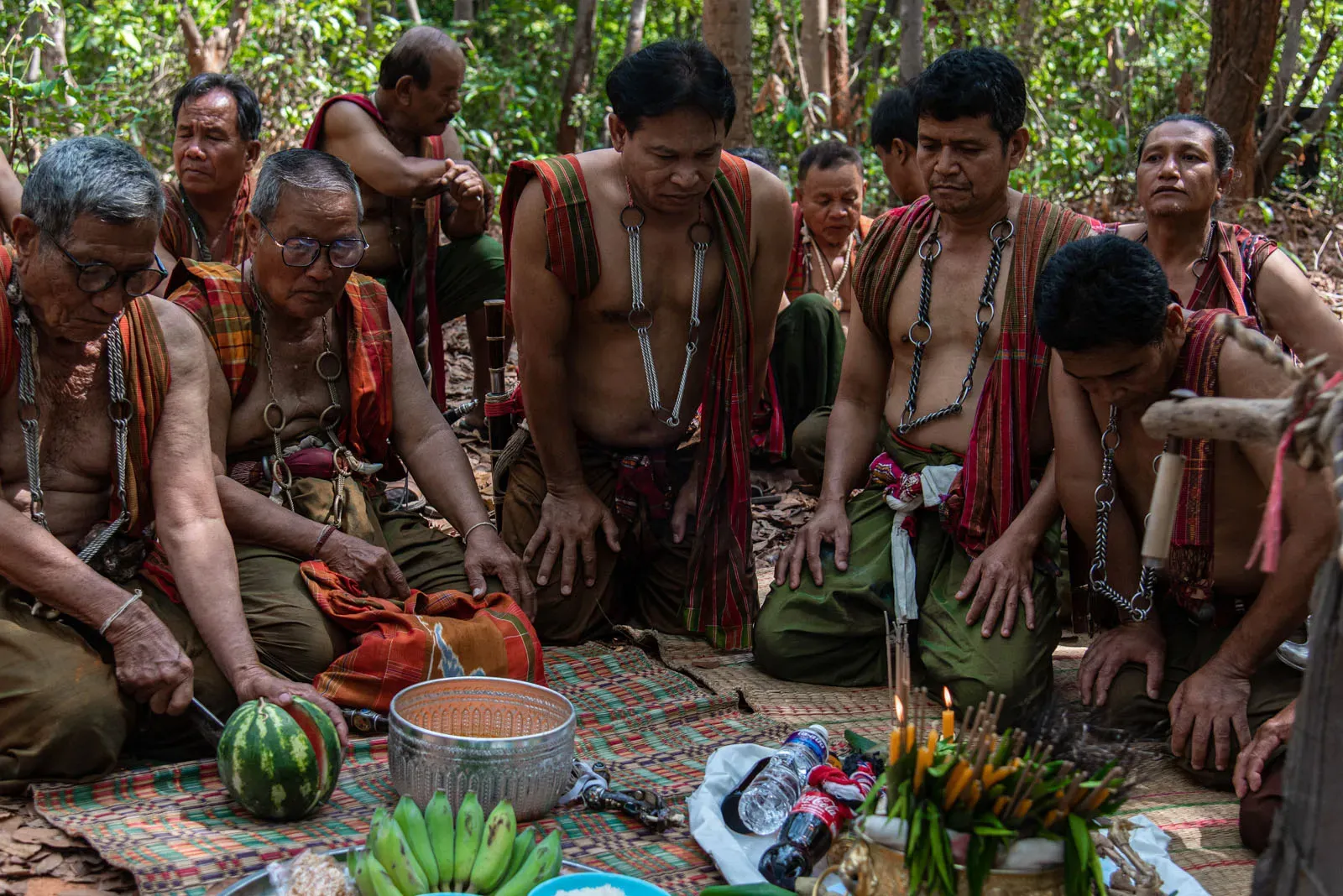
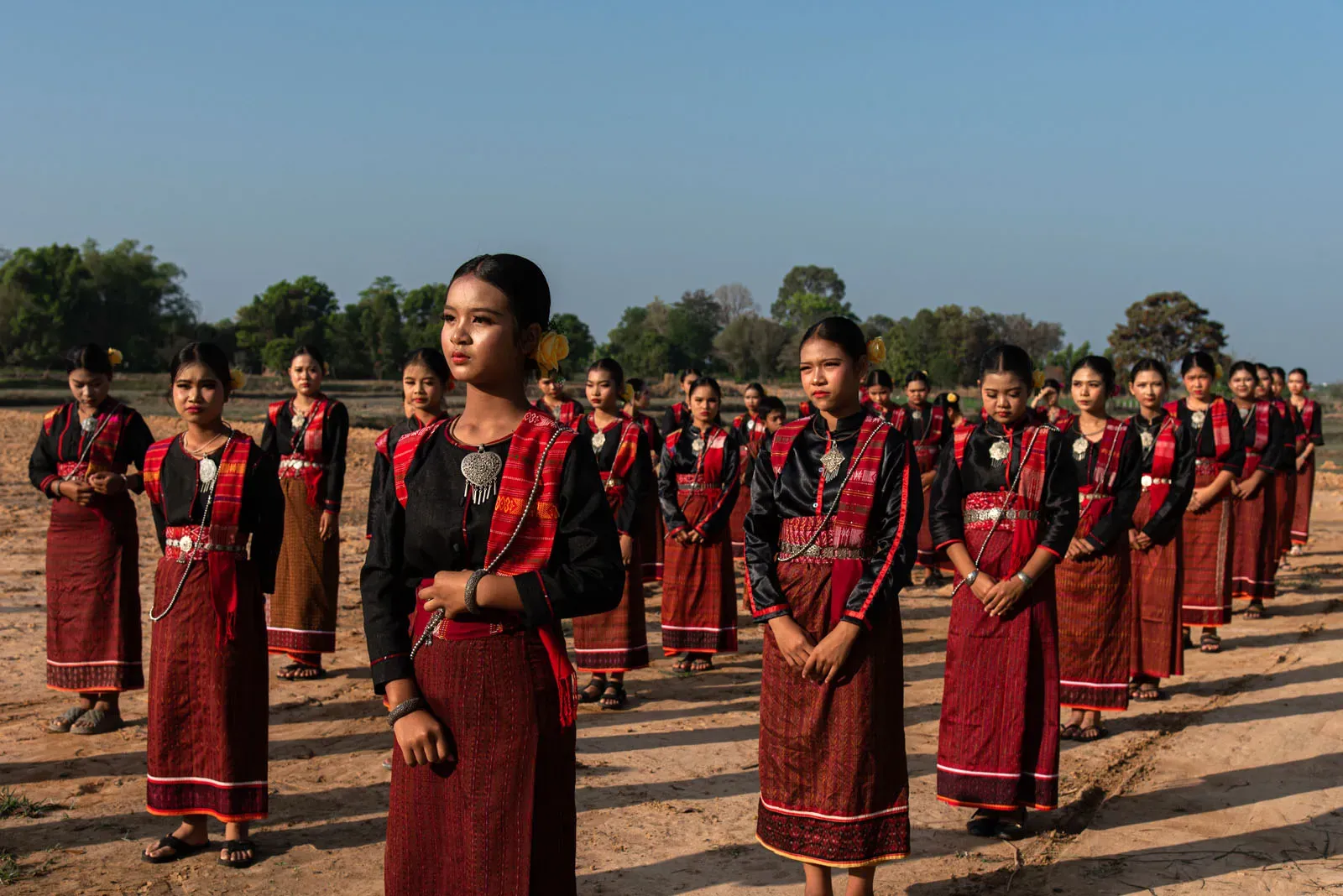
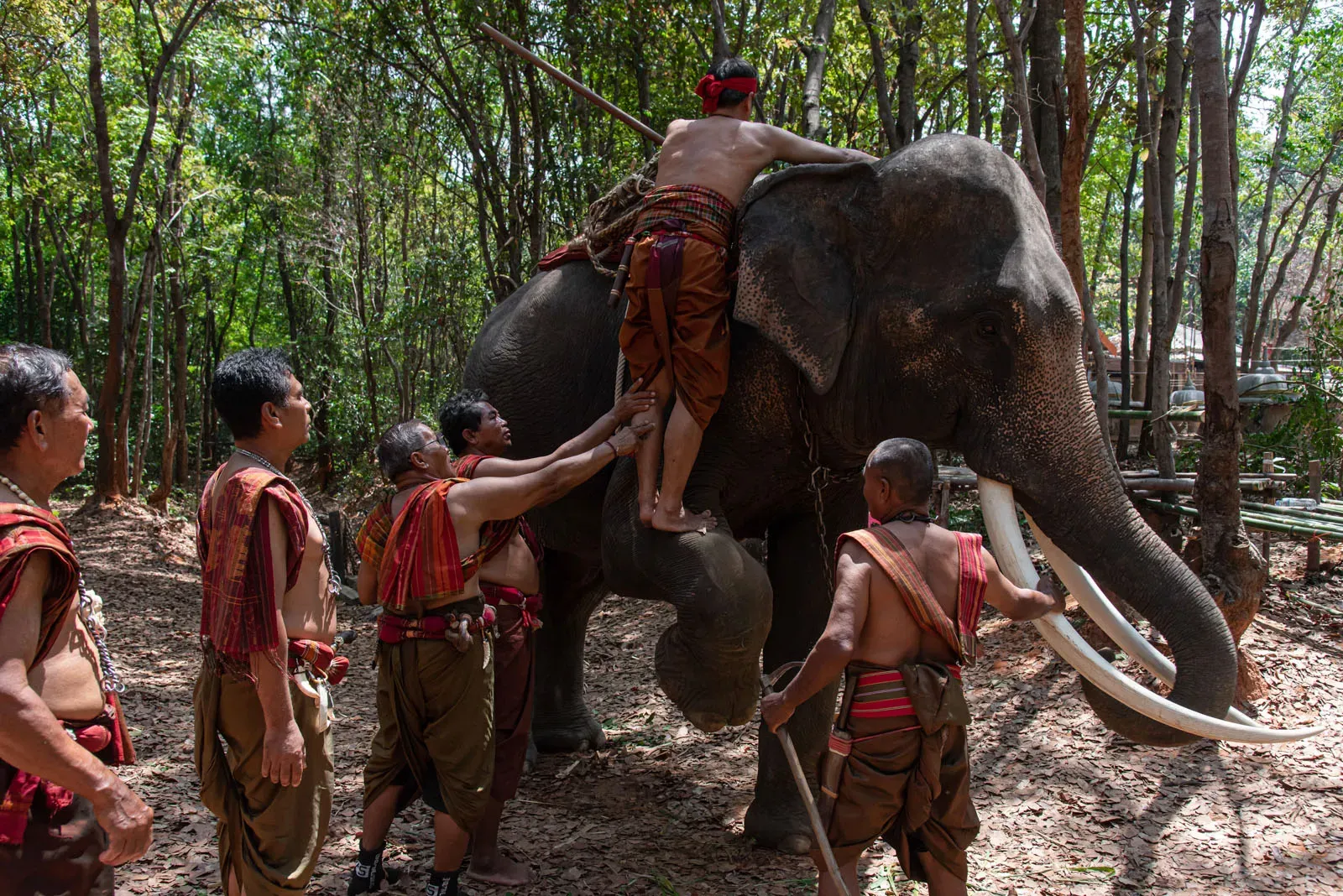
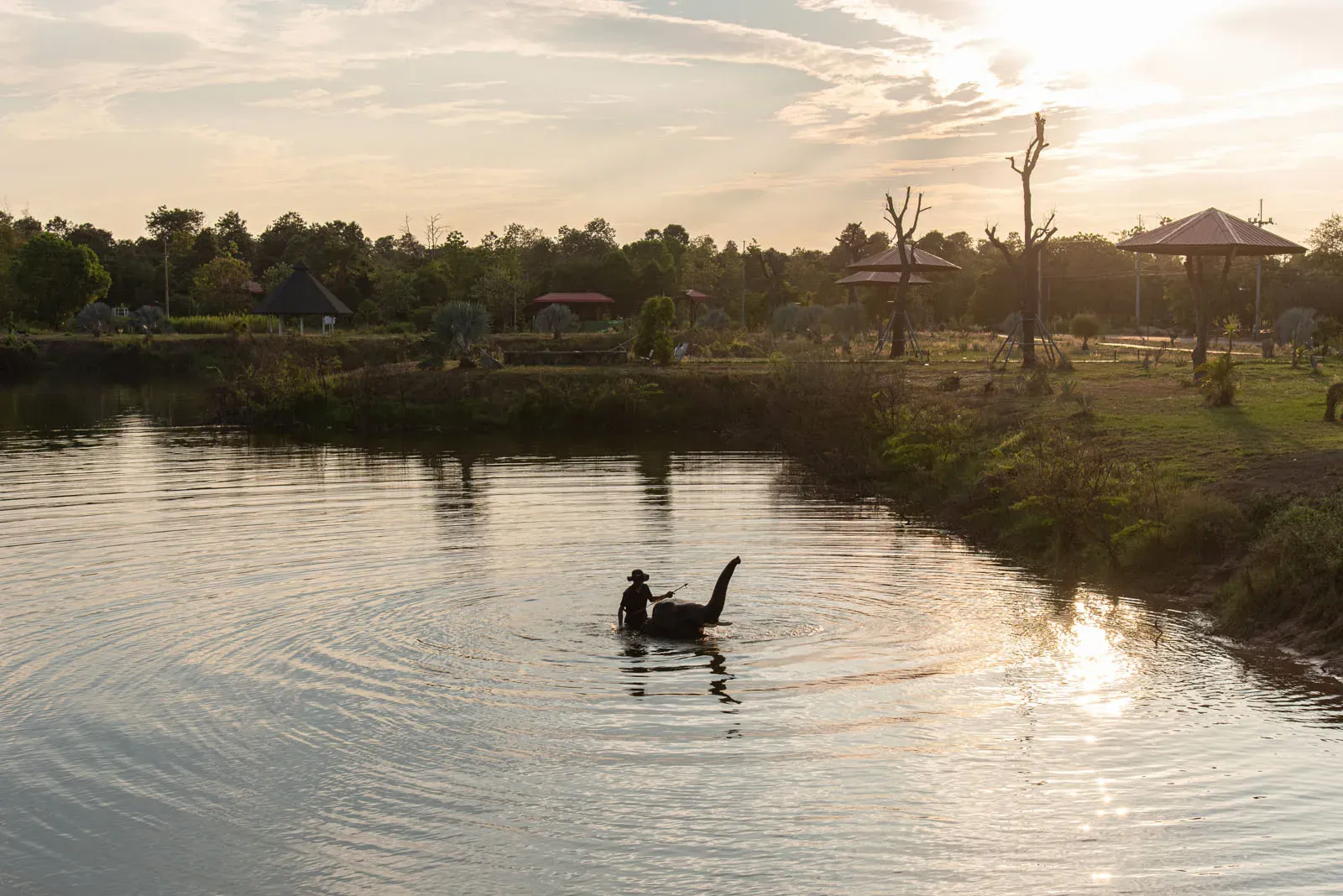
Those undergoing the ceremony must first make a pacha — a solemn vow to conduct themselves with virtue and integrity — before Po Bunma, aged 104, the last surviving Khruba Yai, or “great master,” the highest rank a mo chang can attain. What follows is a re-enactment of the preparation for entering the forest to capture elephants. Where once a participant had to lasso a wild elephant to be recognised as a true mo chang, today a young, untrained elephant is used in its place. It is an adaptation the Kui have made deliberately, to keep the tradition alive rather than let it disappear.
“We hope that the Ethnic Protection Act will help safeguard the Pachi ceremony from disappearing,” Krittaphon said.
Holding on
In Savannakhet, long after midnight, the great torch was still burning. Around it, people who had travelled from four countries stood together in the dark, speaking to one another in a language their governments had not always made room for, that their children were only beginning to learn to write.
“I am overjoyed that we have been able to preserve the Boun Krabong Yai,” organiser Tiangkham said. “To all the children and grandchildren who come after us, do not be a people who forget where they came from. Rich or poor, we are proud to be Bru. We must hold onto who we are.”
The flame would burn until dawn. There was time.
Edited by Rebecca L. Root