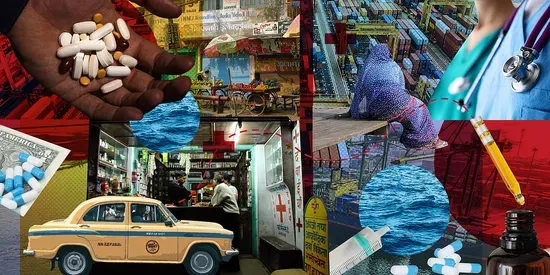
This letter features reporting from India’s Crisis of Substandard Drugs, at Home and Abroad by Vidya Krishnan and Arshu John
Respected Minister,
Last month, a neighbor in my apartment complex lost her six-year-old daughter to what should have been a simple fever. She had followed every instruction: the dosage, the diet, the doctor’s words. Yet the antibiotics failed. Later, the doctor whispered that the batch might have been substandard. I still remember the mother clutching the empty medicine bottle, her voice cracking, "I did everything right. Why did my medicine fail me?” That moment was not just her heartbreak; it was a question that should haunt us all.
When I read the Pulitzer Center-supported project India’s Crisis of Substandard Drugs, at Home and Abroad, I realized her story was not an anomaly but a symptom of a deeper national wound.
One article exposed how exported Indian-made medicines, including contaminated cough syrups, claimed over 70 children’s lives in the Gambia over the course of four months in 2022. India, the “pharmacy of the world,” supplies 20% of global generic medicines, yet one World Health Organization study estimated that one in ten medical products in low- and middle-income countries are substandard or falsified, leading to more than 250,000 preventable deaths annually. When quality control fails here, it’s not just Indian families who grieve, it’s the world that loses faith in our promise to heal.
Here in Karnataka, where thousands depend on free or subsidized government medicines, the cost of a faulty drug is devastating. For the poorest families, an ineffective antibiotic isn’t just a medical failure. It’s the loss of a day’s wages, a child’s chance to recover, or, sometimes, a life. I’ve seen neighbors skip meals to afford new prescriptions after the first ones didn’t work. This is not just a healthcare issue; it is a moral one. If we cannot guarantee the safety of a pill handed to a patient, how can we claim progress?
Minister, you have both the power and duty to change this. I urge you to establish a State Medicine Quality and Safety Task Force, empowered to conduct random third-party audits across all public hospitals and pharmacies, with results made transparent to the public. Pair this with QR-code verification on every medicine strip, allowing citizens to instantly confirm authenticity using their phones: an already proven success in Tamil Nadu.
Further, a citizen-reporting helpline and mobile app should enable doctors, pharmacists, and patients to flag suspicious or ineffective drugs in real time. Lastly, Karnataka must procure only from WHO-GMP-certified suppliers, ensuring our state sets the benchmark for ethical manufacturing and global compliance.
These reforms are not theoretical. They are actionable, evidence-backed measures endorsed by the WHO and already showing results elsewhere.
Minister, global health does not begin in grand policies: it begins in the quiet trust with which a mother gives her child a spoonful of medicine. That trust is sacred.
I write to you as a young citizen, asking you to protect that faith, so that no parent in Karnataka, or anywhere, must again wonder if their medicine might harm instead of heal.
With respect and hope,
Tisha Sehrawat
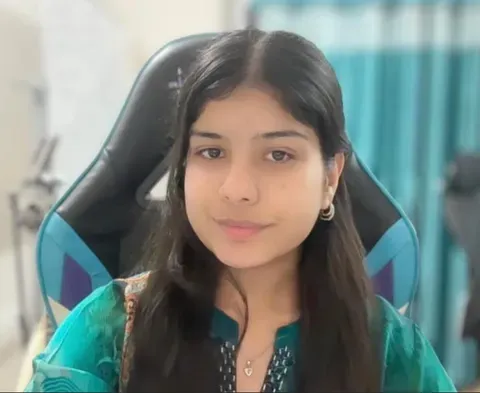
Tisha Sehrawat is a high school student from Bengaluru, India, and an IB Diploma Programme candidate with a strong interest in medicine and global health. Her work includes research and science writing on patient safety, pharmaceutical quality, and health equity, as well as co-founding Shiksham, a youth-led initiative that supports education and well-being for underserved girls. She also writes on science and culture, enjoys public speaking and music, and believes storytelling is essential to building trust and accountability in healthcare systems.
Read more winning entries from the 2025 Local Letters for Global Change contest!
Student letters reflect the authors’ views. Students choose their own topics and act independently if they decide to share their letters outside the classroom. The Pulitzer Center is a nonpartisan 501(c)(3) organization that does not endorse candidates, parties, or specific legislation. Our publication of student work is for educational purposes.