Journalist Resource January 2, 2026
Following Systems, Not Statements: How We Investigated Automated Border Surveillance in Europe
Country:



The money trails of companies, agencies, and state actors cashing in on the EU’s AI tech push to...
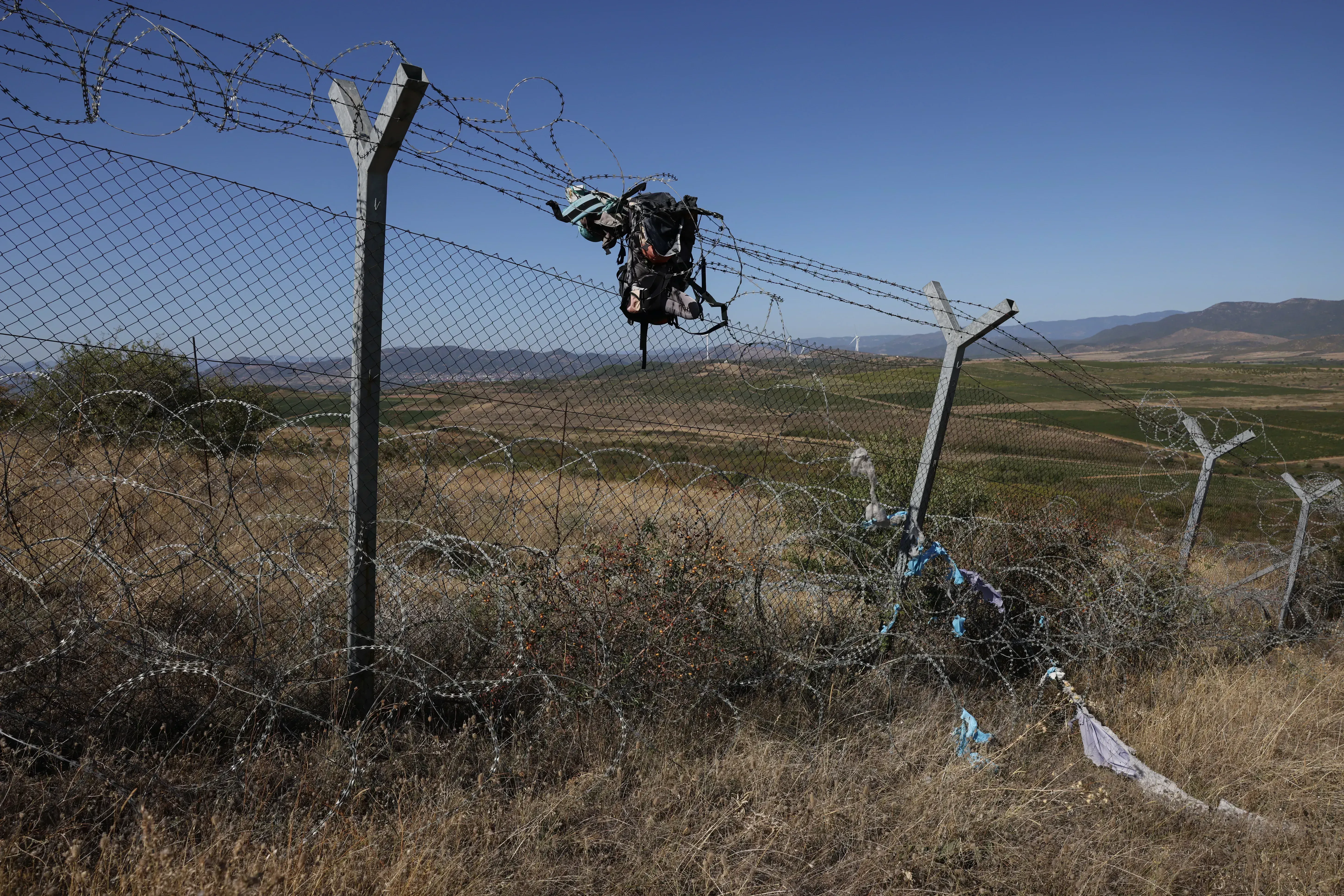
Adopting the approach of "following the money," we traced the path of EU funding, evaluated tender documents, and consulted industry experts.
This investigation began with a shared intuition: that the most consequential decisions shaping Europe’s borders were not being made where surveillance technologies were deployed, but elsewhere—across policy rooms, research programs, and funding mechanisms that remain largely out of public view. From the outset, we chose to follow systems rather than statements. Instead of relying on press releases or official narratives, we focused on tracing flows of money, data, and accountability across borders and institutions.
Our reporting combined on-the-ground investigation in Greece with policy research in Brussels and institutional analysis in Switzerland and the U.K. While each part of the investigation was conducted separately and grounded in its own national and legal context, together they revealed how border surveillance technologies emerge from a transnational ecosystem that blends security, defense, research, and private industry.
Our hypotheses
- Is Greece being used to test and extend an AI-ready “smart border” architecture from Evros to its internal EU borders?
- Are EU Home Affairs funds disproportionately financing surveillance infrastructure, benefiting defense, and security firms at the expense of other priorities like integration?
- Are pilots and deployments blurring the lines between research and operations, creating legal and accountability gaps for those affected?
Building a Systemic Methodology
Methodologically, we blended document analysis with field reporting to understand how automation is increasingly replacing traditional forms of human observation at Europe’s borders.
- We analyzed EU and national funding data, tracking major allocations and specific items related to border management and surveillance.
- We identified and analyzed OSINT data regarding policymaking, public announcements, and connections between politics and the private sector.
- We reviewed procurement documents and tenders, including confidential technical annexes and secrecy provisions in security contracts.
- We filed numerous freedom of information requests to EU agencies and national ministries for contracts, minutes, pilots, and evaluation documents.
- We conducted interviews with EU and national officials, border and police officers, company representatives, researchers, NGOs, and affected people along the routes.
- We visited and reported from key frontier areas.
- We consulted with experts on technical and legal parameters, including the EU AI Act’s migration/border provisions and agency statements about high-risk AI systems.
- We maintained detailed project coordination records, including meeting notes, assigned roles, and aligned publication and fact-checking processes.
- We visited lobby events in Brussels and Athens.
Throughout the investigation, we rigorously tested our assumptions. Rather than treating early findings as conclusions, we approached them as hypotheses that needed to withstand scrutiny. We actively searched for facts that could disprove our interpretations, revisited documents when new information emerged, and cross-checked claims with multiple independent sources. This process was slow and often frustrating, but it was essential to avoid overstating patterns in complex bureaucratic and technological systems.
Treating 'Pilots' as Operations
A recurring theme across our reporting was the widespread use of the term “pilot” to describe surveillance initiatives that, in practice, already functioned as operational systems. We made a deliberate choice to question this language. Instead of accepting the experimental framing, we examined how these pilots were used, what decisions they informed, and what safeguards were applied.
This distinction mattered because pilots are often subject to weaker oversight and limited public scrutiny. By treating them as operations when they functioned as such, we were able to ask more precise questions about authorization, legal frameworks, and accountability. A Frontex drone surveillance pilot became a central case study in this regard, illustrating how the pilot label can obscure the fact that a technology is already shaping operational outcomes.
Mapping Funding and Corporate Beneficiaries
A central pillar of our methodology was exhaustive funding analysis. We mapped financial flows across institutions and countries, extracting data from EU funding portals, national procurement platforms, tender documents, and public disclosures. Following the money allowed us to identify not only who paid for specific technologies, but also who benefited from their development and deployment.
This approach revealed recurring corporate actors involved across multiple projects and regions, as well as the growing role of private companies in shaping security and border policies. It also helped us situate individual deployments within a broader economic ecosystem rather than treating them as isolated cases.
Tracing the 'Evros Model'
One strand of the investigation focused on what we came to describe as the “Evros model”: a set of surveillance practices and infrastructures initially developed in the Evros region in Greece and later referenced in other contexts. Our work here was grounded in a careful review of meeting minutes, tenders, and technical documents, paired with verification through knowledgeable sources.
We were careful to distinguish between proposed capabilities, funded projects, and implemented systems. This distinction was crucial in avoiding speculation and in preventing the conflation of national contexts. While we traced how ideas and models moved, we treated each country’s legal framework and operational environment separately.
Investigating Policymaking in Brussels
While on-the-ground reporting in Greece revealed how surveillance technologies are deployed, another part of the investigation focused on Brussels: the policymaking environment where many of these technologies are enabled, funded, and politically legitimized. The guiding question was how findings from border regions fit into the broader institutional dynamics at the EU level.

One of the central findings was that the European Commission is currently pursuing a course of general deregulation, including in areas that directly affect data protection and liability. This trend is visible in the development of the AI Act and in decisions that weaken consumer and citizen protections. A critical moment was the removal of the liability directive from the AI Act, which significantly reduced legal risks for private companies developing AI-based products.
This shift benefits the private sector while placing consumers and affected individuals at a disadvantage. In the context of border technologies, it helps explain how high-risk systems can be deployed with limited accountability.
Lobbying and the Convergence of Tech and Defense
This deregulatory trajectory cannot be understood without examining lobbying dynamics in Brussels. Our research showed the growing influence of large U.S.-based technology companies, which leverage the EU’s dependence on American defense capabilities to exert political pressure. Arguments around competitiveness and innovation repeatedly surfaced in policy debates, often aligning closely with corporate interests.
At the same time, we observed a growing convergence between the tech lobby and the defense lobby. Companies frequently belong to lobbying organizations on both sides, issue joint statements, and participate in shared events. This convergence blurs the line between defense and security—a distinction that, at the EU’s borders, has already largely collapsed.
Cyber defense companies play a key role in this process, acting as a bridge between military, security, and civilian surveillance domains. As a result, the private sector increasingly dictates military and security demand within EU member states, rather than responding to clearly defined public needs.
Opaqueness and Research Exemptions
A major obstacle in Brussels was the extreme level of opaqueness surrounding AI-powered technologies in the defense and security sector. Our research suggests that this lack of transparency is not incidental. The European Commission frequently invokes research exemptions to keep information out of public reach.
This pattern is particularly visible in Horizon 2020 and Horizon Europe programs. While these initiatives fund technologies used at the borders, ethical concerns and societal implications are largely left to the self-assessment of participating consortia. Independent oversight mechanisms are weak, and meaningful public accountability is rare.
Non-EU research
The Swiss part of the investigation focused on Switzerland’s indirect but structurally important role within the European migration framework. Although not an EU member, Switzerland is part of Schengen, contributes financially to Frontex, and participates in EU research programs. This made it a revealing case for understanding how non-EU countries are integrated into European border technologies.
Our research traced how Swiss research institutions benefit from EU-funded science linked to migration management. A key example was the private research institute Idiap, designated by the Swiss government as a “research institute of national importance.” Within Idiap, we identified a research group that received both Horizon funding and a direct Frontex grant for basic research on biometrics, including facial recognition and gait analysis.

Switzerland does not participate in the EU’s AI Act and has not yet adopted its own dedicated AI regulation. While future regulation is expected to follow the EU’s lead, a regulatory gap currently exists. This allows AI research related to migration management to proceed without the safeguards debated at the EU level, effectively positioning Switzerland as a permissive research environment within the European migration complex.
Connecting the Dots
Taken together, our reporting showed that border surveillance in Europe cannot be understood through isolated national case studies alone. Technologies deployed in Greece are shaped by policy decisions in Brussels and research conducted in countries such as Switzerland. Accountability gaps observed on the ground are often produced much earlier—through deregulation, lobbying, funding decisions, and institutional opacity.
Our methodology was designed to surface these connections. By combining field reporting, document analysis, funding mapping, and policy research, we aimed to make visible a system that is often deliberately fragmented. We hope this approach can be useful to other journalists, researchers, and investigators seeking to understand how automated systems of control are built—and how responsibility for them is diffused across borders.
Limitations of the Methodology, Lessons learned, Challenges
Many challenges emerged throughout the investigation, most of them stemming from the opaque nature of contracts, procurement processes, and institutional practices. One of the main lessons we learned was the importance of persistence. Freedom of information requests were often rejected or returned only partially completed. Success sometimes came after repeated appeals, and it was crucial not to be disheartened by setbacks. By continuing to follow up and refine our requests, we were able to access valuable material that would have been otherwise unavailable.
Secrecy and redactions limited the details we could obtain, but we adapted by designing hypotheses that could be tested using capability-level evidence rather than relying on full operational documents. This approach allowed us to verify assumptions based on observable effects and technical specifications, rather than incomplete narratives.
Field access presented another challenge. Many border zones are sensitive and restricted, making on-the-ground reporting difficult. We overcame this by leveraging trusted sources and cultivating local contacts who could provide insights without compromising safety or legality.
A recurring methodological hurdle was the careful handling of terminology. Authorities often avoided using the term “AI,” even when they were effectively deploying such systems. To navigate this, we focused on the functions and capabilities of technologies rather than the labels used, which allowed us to understand operational realities more accurately.
Editorial coordination across borders also required careful planning. With multiple team members operating in different countries, synchronization was essential to ensure consistent fact-checking and avoid compromising sensitive information. Staggered deadlines, rolling publication planning, and buffer time proved critical in maintaining quality and rigor.
Finally, we learned that structured persistence, adaptability, and cross-disciplinary collaboration are central to tackling investigations of complex, opaque systems. Challenges are inevitable, but designing methods that can accommodate partial information, unclear terminology, and institutional secrecy allows meaningful, verifiable reporting to emerge even under difficult conditions.
Replicating the Methodology: Tips for Other Investigations
For journalists planning similar investigations, we found several aspects of our methodology to be highly transferable:
- First, start with a systems map. Understanding the flow of policies, funding, and implementers provides a framework to identify leverage points, accountability gaps, and the relationships between actors. Classifying spending by function is particularly useful to highlight public-interest trade-offs and to follow money where it matters most.
- When analyzing experimental initiatives, such as so-called “pilots,” treat them as evidence in their own right. Even when labeled as experiments, pilots often function operationally, and analyzing them as such reveals real-world impacts and oversight gaps.
- Pairing documents with physical evidence is equally essential. Photographs, geolocation, and timestamps help corroborate documentary findings and provide tangible verification for claims that might otherwise rely solely on paper trails.
- Building an interview matrix is critical. Tailor questions to different stakeholders—policymakers, researchers, corporate actors, and on-the-ground implementers—to ensure you collect complementary perspectives. Anticipate the “language games” institutions may play by focusing on functions and impacts rather than official labels, which can obscure operational realities.
- Document the editorial process. Synchronizing reporting across borders, managing legal reviews, and tracking changes in real time requires careful workflow planning. This ensures that collaboration does not compromise fact-checking or source protection. We relied on several practical tools to manage and analyze our data. Spreadsheets were used to clean and classify funding lines and procurement items, while document databases helped index tenders, meeting minutes, FOI returns, and correspondence with consistent tagging to surface patterns. Mapping and imagery were essential to validate sites and visualize coverage. Finally, secure communications and version control were vital for coordinating cross-border teamwork, tracking roles, and safeguarding sensitive information.