Story
 December 2, 2025
Wisconsin Teacher Scandal Spurs Legislation, New Policy — and a Lawsuit
Country:


Hundreds of teachers have been accused of sexual misconduct. Officials have kept the public in the...

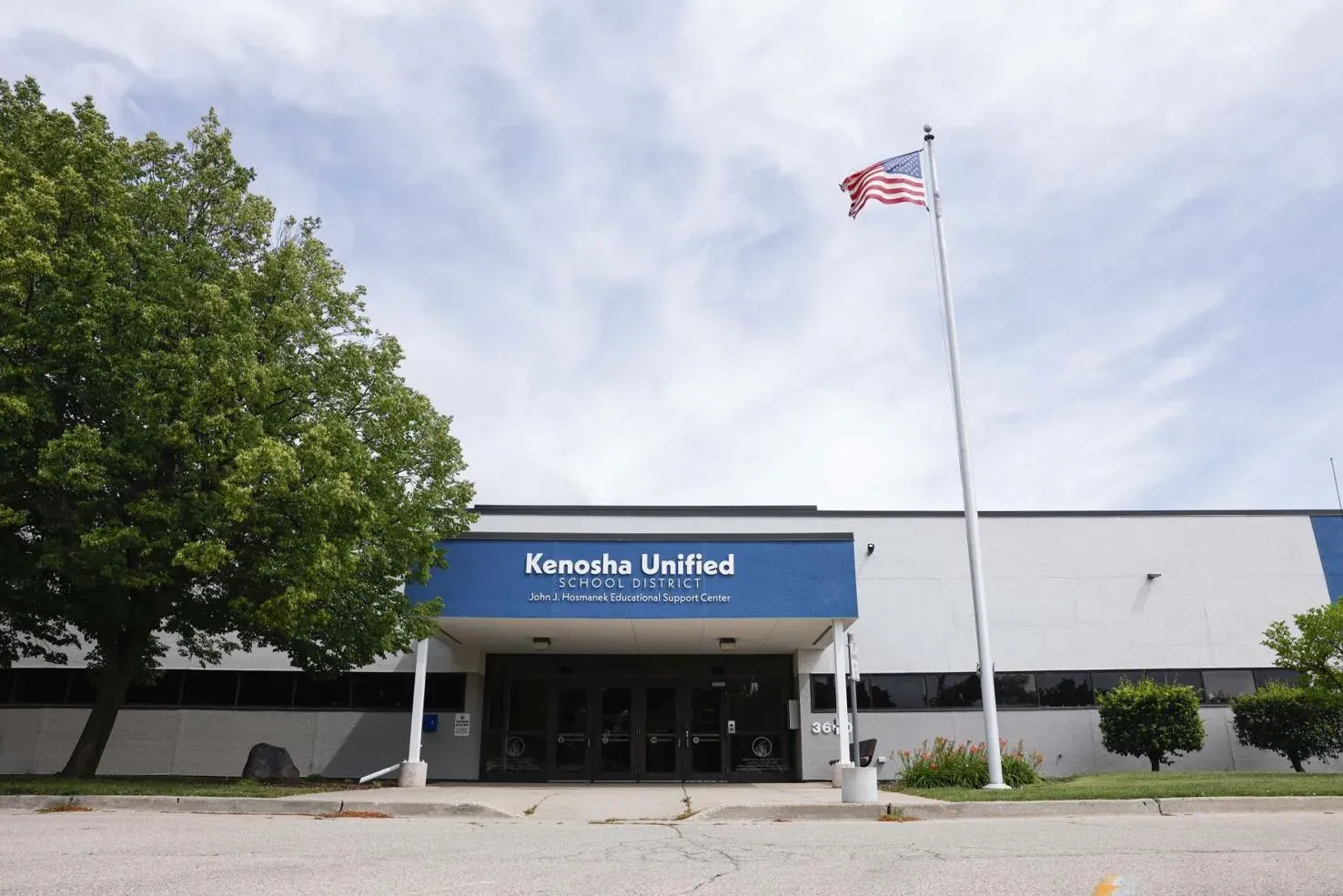
In a recent high-profile case of educator sexual misconduct, the parents of a Kenosha, Wisconsin, student are suing their school district and their daughter’s former teacher after administrators concluded the teacher groomed the girl when she was 14.
Christian Enwright, 31, pleaded guilty to 15 counts of disorderly conduct in April. Prosecutors accused him of a “sexually charged” social media relationship with the student, according to the criminal complaint.
The plea and the family’s lawsuit have gained widespread attention, including from legislators at the state Capitol. This fall, lawmakers cited the Enwright case while proposing to criminalize grooming a minor for sexual activity.

As a nonprofit journalism organization, we depend on your support to fund more than 170 reporting projects every year on critical global and local issues. Donate any amount today to become a Pulitzer Center Champion and receive exclusive benefits!
Educator sexual misconduct and grooming often only become publicly known when an educator is arrested and charged with a crime.
A Cap Times investigation found that more than 200 educators were investigated by the state Department of Public Instruction from 2018 through 2023 following allegations of sexual misconduct or grooming, a likely undercount of the true prevalence of these behaviors. In November, the Legislature ordered an audit of the department’s handling of misconduct investigations in response to the Cap Times reporting.
The Enwright case is a rare instance in Wisconsin, where educator misconduct resulted in new legislation and changed school policies. It’s also unusual that Enwright’s conduct resulted in criminal charges, despite no criminal penalty for grooming in state law.
The Kenosha family’s lawsuit argues the Kenosha Unified School District failed to prevent Enwright from grooming their daughter and didn’t investigate previous complaints that alleged the teacher behaved inappropriately with other students.
“Grooming” is a series of boundary crossings to develop trust with a child for the purpose of sexual exploitation, according to the Rape, Abuse & Incest National Network.
The Cap Times is not naming the Kenosha student or her parents. The family requested anonymity because the girl is a minor and still attends school in the district.
In an interview, the parents said they decided to sue the school district to instigate change with how complaints are investigated and policies are implemented.
“They have to take accountability for what happened,” the girl’s father said. “There has to be a change. If nobody steps up, then they're just gonna keep doing the same thing.”
District administrators in Kenosha have modified policies on grooming and appropriate staff-student relations following the Enwright case, such as prohibiting staff from singling out a student for inappropriate special attention.
But it’s unclear from district policies what training is provided to staff, students or parents on the policy and how to report violations — a key component of preventing abuse, researchers say.
Charol Shakeshaft, an educator sexual misconduct prevention researcher, said reporting boundary-crossing behaviors doesn’t come automatically to people, which is why training is important.
“Mostly we ignore red flags because we don't realize they’re red flags,” said Shakeshaft, a distinguished professor emeritus at Virginia Commonwealth University. “And so once we start to realize that this could be a red flag of a problem, then we're much more willing to report it.”
Through a spokesperson, Kenosha Unified School District Superintendent Jeffrey Weiss declined to be interviewed or respond to written questions for this story, citing the ongoing litigation.
“Kenosha Unified takes all personnel concerns, especially allegations of inappropriate behavior or misconduct, very seriously,” district spokesperson Tanya Ruder wrote in a statement. “The district follows all policies, laws and statutes to ensure that concerns are investigated throughout and handled appropriately in the best interest of students and staff.”
Enwright’s attorney did not respond to a request for comment or written questions.
‘Classic grooming behavior’
During Enwright’s time at the formerly named KTEC West, administrators had received complaints about his conduct with female students, according to school district documents obtained by the Cap Times under open records laws. District records do not make clear how administrators responded to all of the complaints.
He let eighth grade girls hang out in his classroom while they skipped their own courses, one teacher reported to the principal in January 2024. Fellow educators knew Enwright met with students alone behind closed doors, gave female students “long hugs” and that he encouraged students to email him while he was out on paternity leave, a district investigator wrote in a report months later.
For one 14-year-old girl, Enwright provided what he described to the district investigator as mentorship. The investigator wrote Enwright “engaged in classic grooming behavior, preying on the vulnerability of at least one female student, under the guise of being a mentor, to foster and further a predatory relationship with her.”
Enwright started messaging the girl on Snapchat starting in June 2023. Contrary to school guidelines, Enwright and other educators had exchanged social media contact information with students, including the girl, following a school walking club outing over the summer.
The full content of Enwright’s communications with the girl are unknown because Snapchat messages automatically disappear unless saved by a user. But a Kenosha Police Department report found that during a one-week period, Enwright exchanged over 600 messages with the girl, with some messages sent after midnight.
Photos recovered by police from the girl’s phone depict Enwright making sexualized comments about her physical appearance, calling her “cute” and sending emojis with heart eyes and blowing kisses. Many of the photos show Enwright in his bed without a shirt.
At school, Enwright had a photo of the girl and him pinned on his classroom bulletin board that didn’t feature individual photos of other students. He wrote her personalized cards signing them “Love, Mr. Enwright.”
The district’s human resources office received an anonymous tip about Enwright in February 2024, prompting an investigation into his behavior and a report to child protective services.
The girl’s parents said they first learned about Enwright’s interactions with their daughter after the school district interviewed the child without inviting or notifying them beforehand. The parents received updates on the district’s investigation like any other member of the school via district emails, they said.
The investigation included interviewing two school staff members, who expressed concerns over Enwright’s conduct with female students.
The girl’s parents told the Cap Times the school district failed to do enough to protect their daughter from being groomed, especially given the previous complaints.
“They should have disciplined him far before (our daughter) was involved,” the girl’s father said.
The parents said their daughter is funny, strong-willed and confident. But following Enwright’s behavior, her demeanor changed and she started questioning herself, they said. Her mother described their daughter now having more trouble with relationships — not wanting to get close to anyone.
Ruder, the school district spokesperson, declined to answer questions about the previous complaints against Enwright, how the district responded in those cases, and the district’s policies and training on staff-student behaviors.
School Board approves policy updates
A month after the district terminated Enwright’s employment last year, the Kenosha Board of Education passed a new policy on staff-student relationships and grooming.
The policy says district employees are expected to avoid engaging in physical contact with students that is suggestive of romantic or sexual interest, or that is inappropriately familiar or intimate. It also defines and prohibits grooming behaviors, such as singling out a student for special attention through gifts, or making sexually suggestive or inappropriate comments about the student’s appearance.
While the policy must be included in the district’s staff handbook and posted on its website, it contains no listed requirement for staff, students or parents to receive training on the policy and how to report violations.
Schools cannot leave educator sexual misconduct prevention to chance or assume staff members know appropriate boundaries, said Charles Hobson, a professor at Indiana University Northwest and a board member of the National Center to Stop Educator Sexual Abuse, Misconduct & Exploitation.
“You have to spell it out, and you have to let people know, ‘If you violate these (policies), you'll be disciplined,’” Hobson said.
Educating staff and students about boundary crossings and encouraging bystanders to report violations can help stop abuse, Shakeshaft added.
Where prevention tends to break down is a lack of reporting and investigating concerning behaviors, Shakeshaft said. Worrying that a staff member is blowing a colleague’s actions “out of proportion” is a common reason coworkers hesitate to report boundary crossings, she said.
“If they're not doing anything wrong, that's the end of it. It's over,” Shakeshaft said. “If they're crossing boundaries, but haven't done anything yet, they're being warned.”
The Kenosha student’s father said his daughter didn’t receive training on how to report complaints against educators or how to contact the school district’s sexual harassment policy liaison, called a Title IX coordinator.
“You should feel like your child is their priority to protect,” he said. “I mean, every parent sends their kids to school thinking everything is OK, and there's people there watching out for them, and now we just don’t feel like that.”
No trial date has been scheduled in the family’s lawsuit against the district and Enwright. Both the Senate and Assembly versions of the bill to criminalize grooming were referred to legislative committees in November.