Story
 November 26, 2025
Grads Want Wisconsin School District To Do More To Stop Teacher Sex Abuse
Country:


Hundreds of teachers have been accused of sexual misconduct. Officials have kept the public in the...

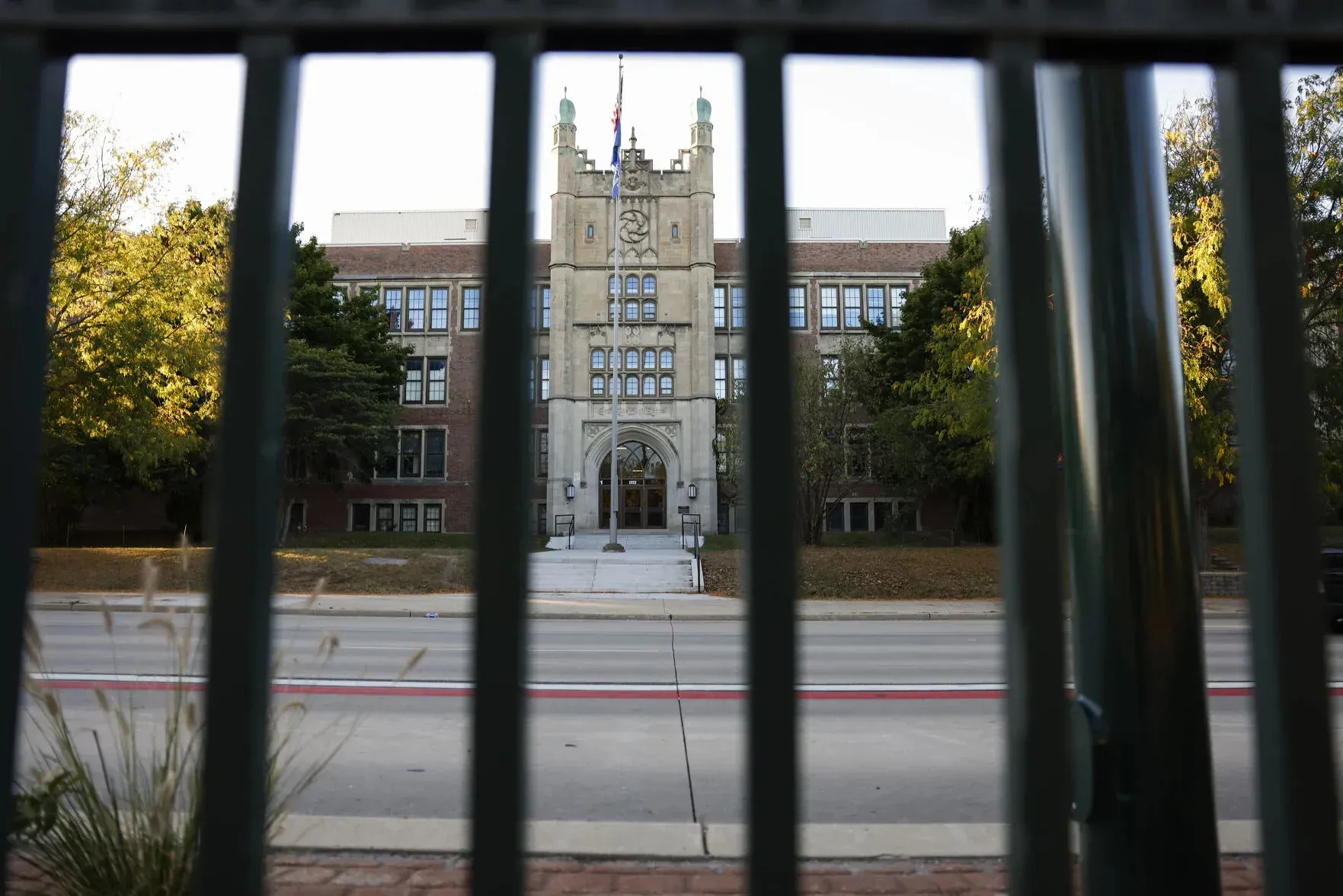
David Kruchten was an involved teacher at Madison’s East High School. He coached tennis and ran multiple extra-curriculars like student government, the school store and a business club called DECA.
Former students described Kruchten as a friend or the “cool teacher” — the person they trusted most at school.
Then in January 2020, Kruchten was arrested after a school field trip to Minnesota where students discovered hidden cameras in their hotel rooms.
Kruchten pleaded guilty a year later to federal charges including attempting to produce child sexual abuse material and was sentenced to 12 years in prison. The charges stemmed from two previous incidents in Wisconsin.

As a nonprofit journalism organization, we depend on your support to fund more than 170 reporting projects every year on critical global and local issues. Donate any amount today to become a Pulitzer Center Champion and receive exclusive benefits!
The federal judge at Kruchten’s sentencing revealed 137 victims were involved in the case across numerous field trips, court records show.
Ten of the students later sued Kruchten and the Madison Metropolitan School District, arguing the district had given Kruchten broad authority and discretion, which allowed him to secretly film students and violate their constitutional rights.
Kruchten admitted in a lawsuit deposition that he filmed students in their hotel rooms dating back to 2016, according to the deposition transcript.
But while the lawsuit ultimately led to a settlement with Kruchten last year, the school district was dismissed from the case. Three students involved in the lawsuit told the Cap Times they hoped the legal pressure would spur the district to overhaul its policies and training practices to prevent educator sexual misconduct from happening again.
“If there were consequences for all of the little things that he did and there were eyes on him and checks and balances, this all could have stopped a lot earlier,” said Sydney Marz, who as a student went on multiple field trips with Kruchten as part of DECA.
More than five years after his arrest, though, the school district’s policies continue to fall short of recommendations by researchers who study best practices in preventing educator sexual misconduct.
District administrators and the Madison School Board updated field trip procedures after Kruchten’s sentencing to include recommendations from an external policy review.
But district policies do not contain specific rules the researchers recommend, such as monitoring locked classrooms, limiting electronic communications, and requiring administrators to disclose discipline for sexual misconduct in letters of reference.
The district also lacks policies on staff giving gifts to students or hiring students to babysit. Researchers say these types of policies help prevent grooming behavior that can lead to abuse.
Wisconsin’s second largest school district also doesn’t provide all students with annual training on appropriate staff-student boundaries, on the district’s policies and on how to report violations. Through a spokesperson, Superintendent Joe Gothard declined an interview request on how the district's policies have changed since Kruchten’s case. In a statement, spokesperson Edell Fiedler said the Madison Metropolitan School District takes allegations of sexual harassment or misconduct seriously and student safety is a top priority.
“MMSD’s policies and procedures aim to ensure the safety of students and staff,” Fiedler wrote. “When a thorough investigation reveals policy, procedure or legal violations, there are consequences.”
No member of the district’s elected School Board responded to requests for comment. Attorneys who represented Kruchten in his criminal and civil cases also declined to comment or answer written questions from the Cap Times.
Charol Shakeshaft, who researches educator sexual misconduct and grooming, said establishing specific policies on how to maintain appropriate boundaries with students is important for setting behavior expectations.
“But more importantly for me, is it gives people permission to intervene,” said Shakeshaft, a distinguished professor emeritus at Virginia Commonwealth University. She also served as an expert witness in the students’ lawsuit.

‘He was a friend’
Three students who were a part of the lawsuit said district administrators didn’t do enough to protect them from being groomed by Kruchten. The students are now in their 20s.
Marz, Lauren Engle and Kylie Kavanaugh each said they had close relationships with Kruchten that he developed across their classes and activities. They went on overnight field trips with Kruchten as part of DECA where he often hung out with them in their hotel rooms, they said.
“The DECA people were like his favorites,” Marz said. “He would get really casual. It kind of felt like he was a friend.”
Engle and Marz said Kruchten often discussed other students with them, had their cellphone numbers, and hired students — including Engle — to babysit for him.
As part of the business club, students could attend regional DECA business and marketing competitions across Wisconsin and the national competition typically held out of state. Engle, Marz and Kavanaugh said they started going on overnight field trips with Kruchten during their freshman years at East High in the 2016-17 school year.
They described that when Kruchten would come to their hotel rooms, he’d spend time talking or playing games. One of the games they played with him was Cards Against Humanity, which includes sexual descriptions and jokes.
“I feel like the amount of time he spent in our hotel rooms was pretty out of the ordinary,” Kavanaugh said. “Looking back on it now, if I was a parent that was on that trip chaperoning — which we didn't really have — I feel like I would have been a little concerned about why a grown adult male teacher was spending so much time in a room with four freshmen-in-high-school-aged girls.”
Even when other chaperones were on the school trips, the three former students described how Kruchten was their main point of contact and who they spent the most time with.
Neither Engle, Marz nor Kavanaugh was on the Minnesota trip that triggered Kruchten’s arrest. However, each described seeing in their hotel rooms on previous trips the same types of objects that prosecutors say Kruchten used as secret cameras. The devices, placed in the bathrooms and sleeping areas, included air fresheners and thermostats.
Each woman gave a victim impact statement at Kruchten’s sentencing in 2021.
“Kruchten has tainted every single one of his victims' high school experience, and we will continue to feel these repercussions for years to come,” Engle said at the sentencing.
In a letter to the presiding judge prior to the sentencing, Kruchten said he got “too comfortable with looking at students and former students as peers.”
“And once I started blurring the lines, looking at them as friends, I lost sight of my sacred duties and responsibilities as a teacher,” he wrote.
Engle said Kruchten’s letter highlights how his boundary crossings influenced his decision to start filming students.
“That’s what led him to start recording us, and if that was caught earlier, he might not even have had that thought,” Engle said.
Fiedler said the district cannot discuss personnel matters, but maintaining student safety and wellbeing is the district’s highest priority.
MMSD updates some policies
Engle, Marz and Kavanaugh — along with six other students — filed their lawsuit against the Madison school district and Kruchten a week after his sentencing. A 10th student later joined the lawsuit.
“It was abundantly clear in this lawsuit that MMSD had no desire to protect us,” Engle said. “And the district did not want to protect us, and they did not do things that could have protected us and other students.”
In court filings, the school district’s attorneys denied the students had been injured by the district’s actions and that the students were entitled to any legal redress. The district had instituted effective policies and procedures designed to safeguard students, they argued.
James Peterson, the federal judge presiding over the lawsuit, later dismissed the school district from the case. Peterson ruled the students had failed to show a direct causal relationship between the district’s actions and Kruchten’s conduct.
The district ordered an external review of how staff and administrators responded to the discovery of the cameras on the 2019 Minnesota field trip in the wake of Kruchten’s arrest. The review, conducted by an attorney hired by the district, also examined the district’s field trip policies.
The scope of the review excluded examining Kruchten’s behavior in the years before his arrest. Outside of field trip policies, the review didn’t address training or the efficacy of district policies on appropriate staff-student boundaries.
Due to staff changes, Fiedler was unable to confirm if any other internal review was conducted.
In June, under state open records laws, the Cap Times requested the school district release files related to investigations of Kruchten and other educators accused of misconduct.
The school district has yet to provide any of those records — unlike a dozen other Wisconsin school districts that received similar requests for records from the Cap Times as part of a year-long investigation.
After the outside attorney’s policy review, Madison school district leaders updated the field trip policies and procedures to include several recommendations. One update included having a chaperone or student oversee hotel room key distribution to students, rather than having a school staff member do it alone.
The district also created an updated sexual harassment policy to align with federal regulation changes, including definitions for grooming and sexual misconduct, district records show.
Since 2015, the district’s employee handbook has prohibited staff from having inappropriate social or romantic relationships with students, regardless of whether the student is 18.
However, the district’s posted policies and staff code of conduct lack specificity on other behavior that would qualify as boundary crossing or grooming behaviors that should be reported by staff and students.

Researchers recommend additional steps
Having detailed and enforced policies on boundaries with students can help identify and address problematic behaviors before they escalate, said Charles Hobson, a professor at Indiana University Northwest and a board member of the National Center to Stop Educator Sexual Abuse, Misconduct & Exploitation.
“There are things, from my perspective, that can be done in the employee selection process, the training process, the performance assessment, the disciplinary process to make it real clear that we take the safety of children seriously,” Hobson said.
Hobson recommends Madison and other school districts adopt policies setting clear limits on when staff may be alone with students or touch students, as well as provide students and parents with training on sexual harassment policies.
He also recommends schools keep records of all complaints and their outcomes in a central location, and publicly disclose annual statistics on sexual harassment and abuse.
Fiedler, the Madison school district spokesperson, said the district doesn’t produce annual statistics on misconduct, but does keep investigation records in a central location.
Shakeshaft authored the 2024 book “Organizational Betrayal” about educator sexual misconduct which outlines dozens of policy recommendations for school districts to prevent boundary violations escalating to abuse.
Some of her recommendations include creating enforceable policies to:
- Avoid staff giving personalized gifts to select students.
- Create procedures for students to babysit or do other household work for staff.
- Require administrators to disclose sexual misconduct in references for former employees.
- Require staff-student communications take place on district accounts and devices.
“I think we should leave no decision to chance, meaning no decision to individual interpretation,” Shakeshaft said. “Help people understand how (policies) should be interpreted. Because if someone wants to do something, they can phrase it as, ‘I'm helping the kid.’”

Shakeshaft acknowledges that schools cannot have a specific policy for every possible staff interaction with a student. However, schools need to be specific enough to explain what appropriate adult-to-student behaviors mean, she said.
While the Madison school district’s policies aren’t as specific as Shakeshaft’s recommendations, Fiedler said the policies broadly cover any situation.
In some cases, the district’s policies provide staff with guidelines rather than clear limits. For example, its social media policies for educators recommend not following or messaging students on their personal social media, but these aren’t requirements, Fiedler said.
Madison staff members are trained annually on the district’s policies to comply with Title IX, the federal law prohibiting sexual harassment in federally funded schools. This training includes defining appropriate and inappropriate staff-student interactions and how to report violations internally, Fiedler said.
The district’s curriculum also teaches students in grades kindergarten through fifth on appropriate and inappropriate touch, and how to report unsafe physical contact, she said. For older grade levels, the district’s human growth and development lessons cover topics like dating and sexual violence.
But the district lacks instruction to students or training for parents on appropriate staff-student interactions, or the district’s policies in those areas, as recommended by Hobson and Shakeshaft. Engle, Marz and Kavanaugh each said they were never provided this type of training while they were in school.
All three women were high school seniors when Kruchten was arrested in 2020 and had graduated college by the conclusion of the lawsuit.
Kavanaugh said she wants the district to adopt more policy changes to ensure what she experienced never happens to another student.
“My entire life will never be the same because of this,” she said.