Pulitzer Center Update August 29, 2025
Exploring Local Barriers to Health Care Access in the Classroom
Country:

Lesson Plans
The Complexities of Global Health Care Access
Students explore examples of limited healthcare access in rural America and Nigeria and then consider how a lack of access impacts individuals, families, communities, and countries.
Tell us about you, your students, and your community.
I teach in rural northern Minnesota in a predominantly white, Christian community with various socio-economic levels. As a social studies educator, I designed this lesson for an 11/12 International Baccalaureate World Geography class.
Tell us about your lesson.
As part of our Food and Health unit in World Geography, my students spend a substantial amount of time learning about disparities in food and health systems globally as well as the role of international organizations, governments, and communities in managing and addressing complications within these systems. We live in a rural community where, although a local hub of health care exists, many people struggle to access specialized medical care and have to travel long distances to receive services. This challenge is a tremendous barrier, especially for people who lack economic resources and/or reliable transportation. Additionally, our community struggles to attract young medical providers to the area. We also simply do not have enough doctors available for our local population, including OB-GYNs.
I wanted to incorporate this local issue, which is very relevant to my students, into the Pulitzer Center reporting on rural health care access for women and families in Nigeria. Being able to capture and understand the struggles here in rural America, juxtaposed with those in Nigeria, is an opportunity for students to become aware of how significant accessible health care is for all people. Furthermore, I am hopeful that engaging with these two pieces of journalism can motivate students not only to identify the barriers to health care in rural spaces but also to seek solutions to these issues.
Tell us about what your students learned while engaging with the lesson.
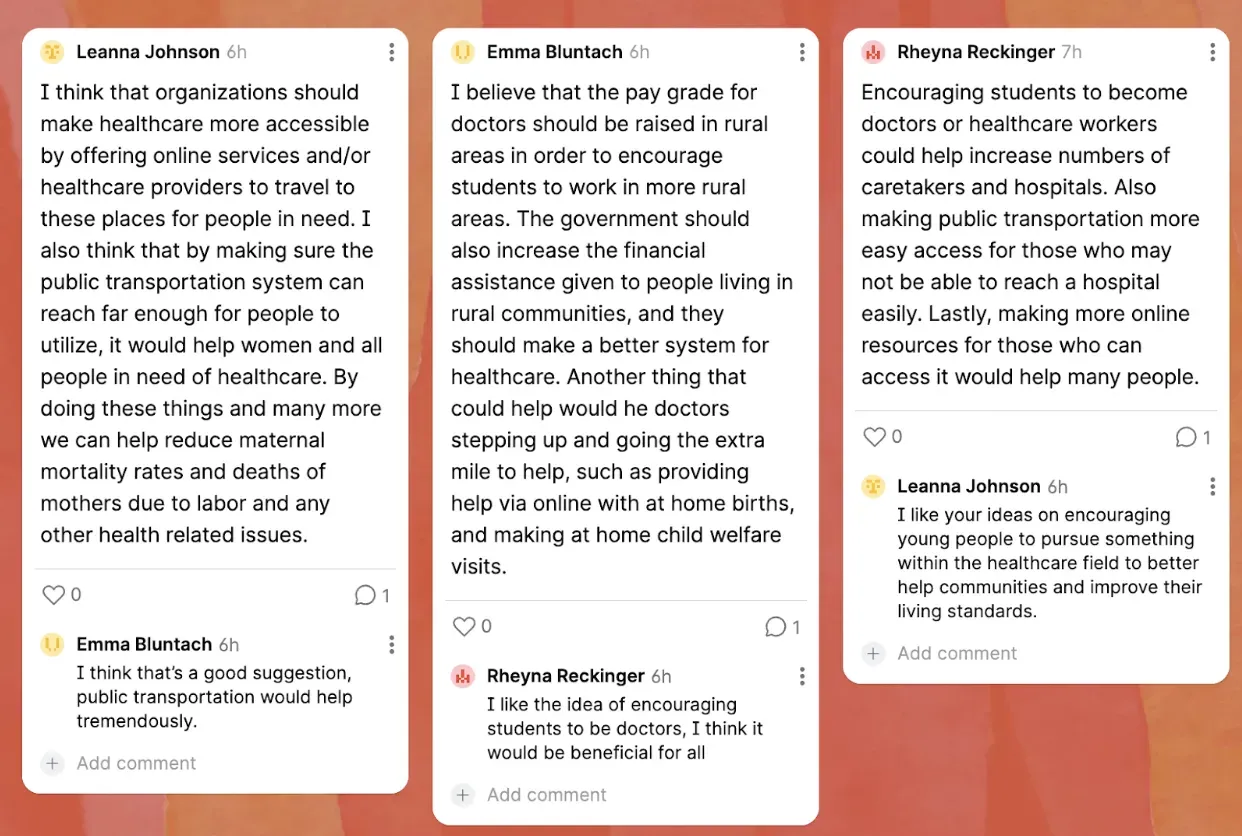
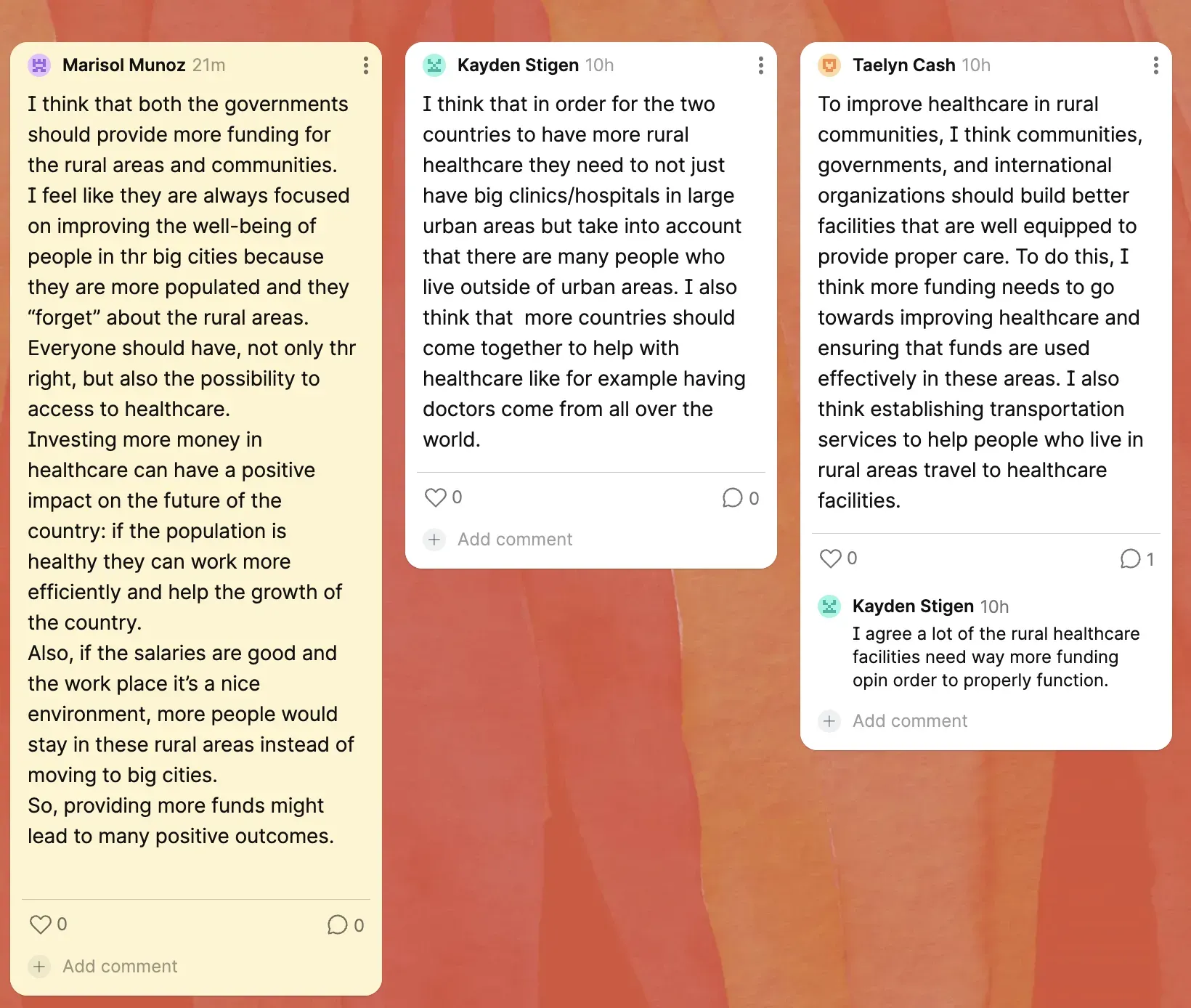
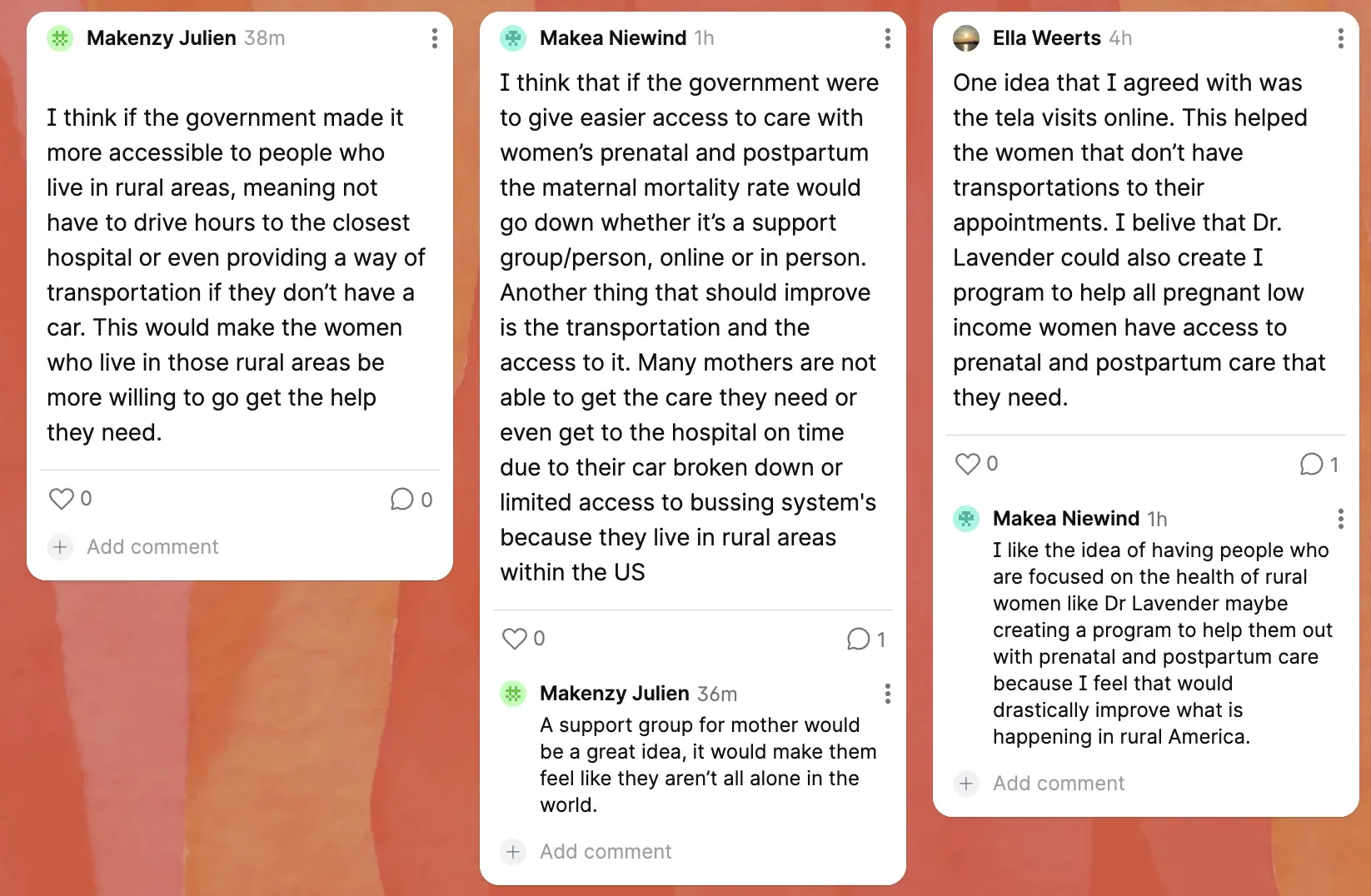
For our cumulative task, students responded to the question, “In what ways should communities, governments, and international organizations take action to prioritize health care access in rural areas?” The following responses demonstrate the impact the lesson had on their understanding of health care access.
“I think that if the government were to give easier access to care with women’s prenatal and postpartum, the maternal mortality rate would go down whether it’s a support group/person, online or in-person. Another thing that should improve is the transportation and the access to it. Many mothers are not able to get the care they need or even get to the hospital on time due to their car broken down or limited access to bussing systems because they live in rural areas within the U.S.”
“One idea that I agreed with was the [telehealth] visits online. This helped the women that don’t have transportation [to get to] their appointments. I believe that Dr. Lavender could also create a program to help all pregnant low-income women have access to prenatal and postpartum care that they need.”
“In rural areas, I believe that hospitals and/or governments should create a hospital bus service. This bus service will work with and communicate with patients on giving rides to the hospital during need and routine checkups”.
“They should take action by actually helping women no matter the color of their skin. The government should make sure every county has a doctor for these pregnant women.”
“Encouraging students to become doctors or health care workers could help increase numbers of caretakers and hospitals. Also making public transportation more easy access for those who may not be able to reach a hospital easily. Lastly, making more online resources for those who can access it would help many people.”
By engaging in the video and article from the Pulitzer Center, I became more aware of health barriers for people in rural America, even though I thought I knew what many of them were.
-Brielle Carlson, 2024 Teacher Fellow
“I think that governments, especially in countries with large rural populations, should make a point to make health care accessible in rural locations. It’s difficult to find funding for these services, but I’m sure there are tons of people that would be willing to start a nonprofit to help. More hospitals could also implement things like the online prenatal checkups.”
“I think that organizations should make health care more accessible by offering online services and/or health care providers to travel to these places for people in need. I also think that by making sure the public transportation system can reach far enough for people to utilize, it would help women and all people in need of health care. By doing these things and many more we can help reduce maternal mortality rates and deaths of mothers due to labor and any other health-related issues.”
Tell us about what you learned by creating and teaching this lesson.
Through teaching this lesson, I have come to understand how undervalued access to excellent health care is. By engaging in the video and article from the Pulitzer Center, I became more aware of health barriers for people in rural America, even though I thought I knew what many of them were. Teaching this lesson challenged my perceptions of the American health care system and made me think deeply about how health equity for anyone in the world has enormous impacts far beyond a person’s physical health. I’m hopeful that my students were able to at least start to comprehend the barriers to health care in the world and want to be part of the solution to work towards improving global health equity.
I learned that I needed far more time than I originally planned for my lesson (three days). We could have spent at least five 50-minute class periods exploring this issue within our Geography course. For teachers who intend to teach this lesson, allow yourself more time than you think to answer student questions and to more deeply discuss things like unconscious bias in health care and the role of government in providing basic health necessities like electricity and medicines.
As part of the fall 2024 Teacher Fellowship, “Making Local Connections to Global Health Stories,” 14 educators from nine states created and taught lessons to engage their over 1,500 students in making local connections to global health news stories. Click here to learn more about the Fellows and their collective impact.