Story
 March 6, 2025
State AG Paxton Asks Supreme Court To Halt Nuclear Storage Facility in West Texas
Country:

Project
Texas Energy Crossroads
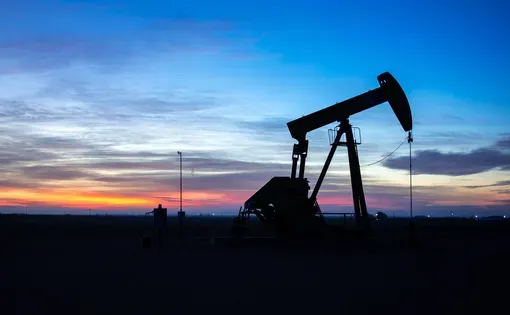
President Trump is throwing his weight behind an expanded campaign of oil and gas drilling.


AUSTIN (KMID/KPEJ) — On Wednesday, the Supreme Court wrestled with whether to move forward with plans to temporarily store nuclear waste at a site in Andrews, Texas, and parts of rural New Mexico even as some justices worried about safety and lack of progress toward a more permanent solution.
It’s an issue that has been on the minds of people across the Permian Basin for years — simply put, they don’t want a nuclear waste in their backyards. Originally planned for a site in Andrews, Texas, the Florida-owned company that would build and maintain the site began looking at another site in Carlsbad, New Mexico, last year after locals pushed back on the idea, which was eventually blocked by the Fifth Circuit Court of Appeals.
The waste would travel through Texas' Midland-Odessa by train … something not too many people are happy about.

As a nonprofit journalism organization, we depend on your support to fund critical stories in local U.S. newsrooms. Donate any amount today to become a Pulitzer Center Champion and receive exclusive benefits!
“We have told the NRC (Nuclear Regulatory Commission) that it’s unfair to impose this burden upon these small jurisdictions. A volunteer group of firefighters showing up to respond to a derailment of spent nuclear fuel, how fair is that, so they’re taking advantage of these small communities, and they’re aware, and that’s part of what we’re doing, we’re raising awareness,” said Monica Perales, Attorney for the PB Coalition of Land and Royalty Owners and Operators.
“The people of Texas have made it clear they don’t want this high-level radioactive waste in their communities. This issue is about state sovereignty and respecting the consent of the governed. I’m confident the Supreme Court will recognize Texans’ rights and uphold the law we passed to protect our state from spent nuclear fuel rods and other forms of high-level radioactive waste,” Representative Brooks Landgraf said last year as the Biden Administration sought to overturn the ban and once again allow radioactive waste to be stored in the Permian.
Now, Attorney General Ken Paxton has taken up the fight to stop the facility from rising in the world’s most productive oil field. Texas Solicitor General Aaron Nielson presented the case on behalf of Texas.
Background
In 1987, Congress determined that the nation’s spent nuclear fuel should be securely deposited deep underground in a permanent facility in Yucca Mountain, Nevada. But the site has yet to be established amid pushback from the state, and funding from Congress, which dried up years ago; the project was halted during the Obama administration.
Roughly 100,000 tons (90,000 metric tons) of spent fuel, some of it dating from the 1980s, is piling up at current and former nuclear plant sites nationwide and growing by more than 2,000 tons (1,800 metric tons) a year. The waste was meant to be kept there temporarily before being deposited deep underground. And now, the site is running out of room.
Paxton argued that the federal government has failed to follow the law for decades and has now attempted to authorize private “interim storage projects,” approving a facility that would store thousands of metric tons of spent nuclear fuel in an above-ground facility in the Permian Basin.
Congress, however, never authorized such a scheme.
In 2016, Interim Storage Partners’ (ISP’s) predecessor applied for a license to operate a “consolidated interim storage facility” where it could house thousands of metric tons of spent nuclear fuel in dry-cask, above-ground storage in Andrews County, less than a mile from the Texas–New Mexico border. The license would be valid for forty years, but ISP may seek to renew it for an additional twenty.
Texas strenuously objected.
On Texas’s behalf, Governor Greg Abbott submitted comments explaining why spent fuel is too “dangerous” to be placed anywhere other than in “a deep geologic repository” and definitely should not be stored on “a concrete pad” atop an oil field where 250,000 active oil and gas wells capture 40% of America’s oil reserves. If something were to happen—be it terrorism or an accident—the result would devastate the world’s largest producing oil field and would significantly harm “the entire country.”
The Texas Commission on Environmental Quality (TCEQ) warned that because the Commission has disregarded Yucca Mountain, ISP’s facility could “become the permanent solution” for the nation’s nuclear waste. Although the Commission says that it “expects” that the waste will eventually be “shipped to a permanent geologic repository,” the Commission never addressed what would happen if—as has been the case for decades—no permanent facility is ever built. New Mexico’s Governor raised similar concerns, warning of “significant risk” that the nation’s spent nuclear fuel will stay in Texas forever.
Nevertheless, the Commission licensed ISP’s proposed facility in 2021.
But here’s the rub, the Permian Basin facility could cause shipments of dangerous materials to be moved through major population centers and transportation hubs, such as Fort Worth, exposing Texas’s infrastructure to potential accidents or terrorist attacks.
“My office argued before the Supreme Court to protect Texas from an illegal plan to send dangerous radioactive materials to the beating heart of America’s energy industry. The Nuclear Regulatory Commission has no lawful authority to irresponsibly dump thousands of metric tons of radioactive nuclear waste on top of the vital oil fields in Texas,” said Attorney General Paxton. “The Commission should follow the law instead of jeopardizing national security, threatening environmental catastrophe, and inviting untold disaster.”
Now, the justices will have to hear arguments from all sides, and consider whether, as the NRC and Interim Storage Partners argues, the states and a private energy company forfeited their right to object to the licensing decisions because they declined to join in the Commission’s proceedings.
A decision is expected by late June.
You can read Paxton’s full brief here.
 View this story on KXAN