By Jorden Andre
12th grade | South Lake High School | Groveland, Florida
Second-place young adult contest winner, Global Health category
With lines from "The Truth Behind 7 Common Lung Cancer Myths" by Caleb Hellerman, a Pulitzer Center-supported story
They called it a smoker’s disease
like ash was the only language lungs could speak.
Like cancer only bloomed in the mouths of cigarettes,
not in the quiet bodies of mothers, daughters, dancers,
women who drank green tea and hiked mountains
and never once lit a match.
Juliet DuBois said,
“If I hadn’t gotten a hip replacement …
I would never have known about it.”
A one-centimeter secret glowing ghost-white
inside a scan meant for something else.
Luck arrives strangely sometimes,
wearing hospital socks,
holding a clipboard,
asking you to breathe in.
Meanwhile the world walks past
pink ribbons tied to grocery carts,
football jerseys, yogurt lids,
while lungs stay hidden beneath ribs and blame.
“Bertie” Gethers smoked
“a few cigarettes a day,”
never enough to count inside the arithmetic of insurance.
Not enough for Medicare to believe her life was expensive
enough to protect.
The doctors measured danger in pack-years
instead of years lived.
And somewhere in Massachusetts,
a machine hummed softly while three lesions appeared
like dark stars inside her chest.
“We thought it was cute,”
she said of Virginia Slims,
twelve years old,
a child holding smoke like a toy.
How many girls were taught to inhale adulthood
before they learned what dying sounded like?
Loryn Fadus was told exhaustion was motherhood.
Of course you’re tired.
Of course your bones ache.
Of course your body feels like collapsing.
Women are taught to carry suffering quietly,
to apologize for symptoms,
to mistake warning signs for weakness.
Until the cough broke a rib.
Until the scan lit up lungs, spine, liver,
a constellation of late discovery.
“I was shocked,” she said.
“Lung cancer was absolutely the last thing
I ever would have suspected.”
The last thing.
As if cancer always announces itself politely,
with a cough,
with age,
with the smell of smoke still clinging to fingertips.
But Kelley Jones noticed it in her fingernails first.
Small moons bending downward like wilted petals.
The body whispers before its scream.
And somewhere,
Dr. Yang remembers his grandfather,
remembers chemo rooms and freshman-year grief,
remembers becoming a doctor
because love sometimes survives as purpose.
“I’m convinced that if we’d found it early …”
That sentence sits heavy in every hospital hallway.
If we’d found it early.
If guidelines had changed.
If women were believed.
If risk meant more than smoking.
If survival wasn’t left to accidents.
Now an AI named Sybil searches scans for futures,
trying to predict catastrophe before it flowers.
Trying to teach medicine that lungs belong to everyone.
Maybe one day screening won’t feel like luck.
Maybe one day women won’t need broken ribs,
hip surgeries, or chance encounters with research studies
to discover they are dying.
Maybe one day the first symptom will not be disbelief.
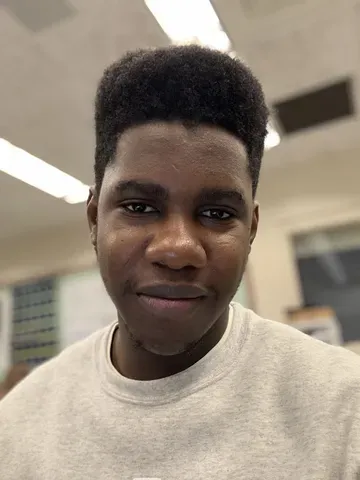
Jorden Andre is a graduated senior from South Lake High School in Groveland, Florida. As a hobby he enjoys exploring all forms of creative media such as reading novels, drawing in different artforms, and writing his own short stories and poems. He wishes to become a doctor to help those in need and finds joy in doing volunteer work in hospitals as he continues on his medical journey. He also hopes to write a book in the future and works on the setting in his spare time whenever he gets a chance.
Read more winning entries from the 2026 Fighting Words Poetry Contest