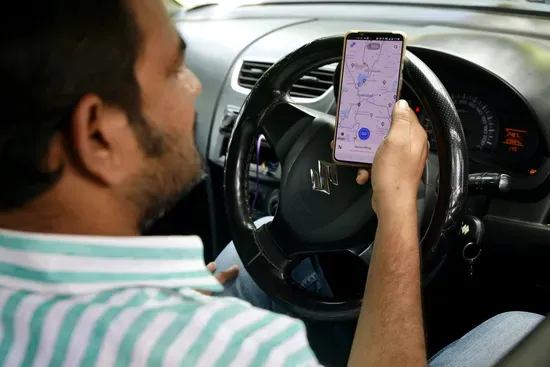
This letter features reporting from "Meet the Most Powerful Uber Driver in India" by Varsha Bansal
Dear Senator Kaine,
I am writing to urge you to support stronger federal protections for workers in the gig economy, particularly clearer labor standards and baseline benefits for app-based drivers and delivery workers. I ask that you advocate for federal legislation that protects gig workers from exploitation from these massive app companies while also allowing them to maintain the flexible nature of their work, as there are currently no comprehensive bills in Congress that address the status of gig workers or guarantee them basic workplace protections.
In the Pulitzer Center-supported article "Meet the Most Powerful Uber Driver in India," Uber driver Shaik Salauddin describes how drivers lack basic protections and face sudden pay changes, and are completely unaware of how the apps that determine their wages work. Drivers in India had to protest to receive even the most basic information, like a passenger’s drop-off location. Their struggle highlights how technology platforms have such a large impact on labor conditions, yet the United States has not updated its laws to protect those working inside these systems.
In our state of Virginia, specifically the greater Northern Virginia region, thousands of residents work for companies like Uber, Lyft, DoorDash, and Instacart. Many do this because the nature of their work provides much-needed flexibility, even though they face drawbacks like unpredictable pay and a lack of benefits. This number may continue to rise, as recent reductions in federal and contractor positions since January 20th could have pushed displaced government employees to seek app-based work as a provisionary source of income. As one of the largest conduits for global internet traffic, Loudoun County is directly tied to the future of app-based work, and I believe our community must model fair labor practices.
I urge you to support a “third category” of worker, an approach backed by researchers at the Fairwork Project, which would allow gig workers to standardize aspects of their work like minimum wage, benefits, transparency in app decision-making, and the right to unionize, while also maintaining the flexibility that comes with app-based labor. I believe this balanced approach would improve worker livelihood without eliminating the benefits that come from being a gig worker.
Senator Kaine, I implore you to champion federal legislation that brings fairness, standardization, and transparency to gig workers and the gig economy. By advocating for gig workers, you ensure that gig workers in Virginia and around the world are treated with dignity and respect in a modern, tech-driven labor system.
Thank you for your consideration,
Eraj Wali

Eraj Wali is a high school senior who is passionate about computer science and electrical engineering. Growing up in and around technology hubs in the Virginia and Washington, D.C. area shaped his interest in how technology affects people, leading him to research the app-based and gig work economy. Eraj hopes to continue exploring how technology can be designed more ethically and responsibly through his own independent research and projects.
Read more winning entries from the 2025 Local Letters for Global Change contest!
Student letters reflect the authors’ views. Students choose their own topics and act independently if they decide to share their letters outside the classroom. The Pulitzer Center is a nonpartisan 501(c)(3) organization that does not endorse candidates, parties, or specific legislation. Our publication of student work is for educational purposes.