Pulitzer Center Update September 21, 2026
Young Burkinabè Voices for Food Resilience
Country:

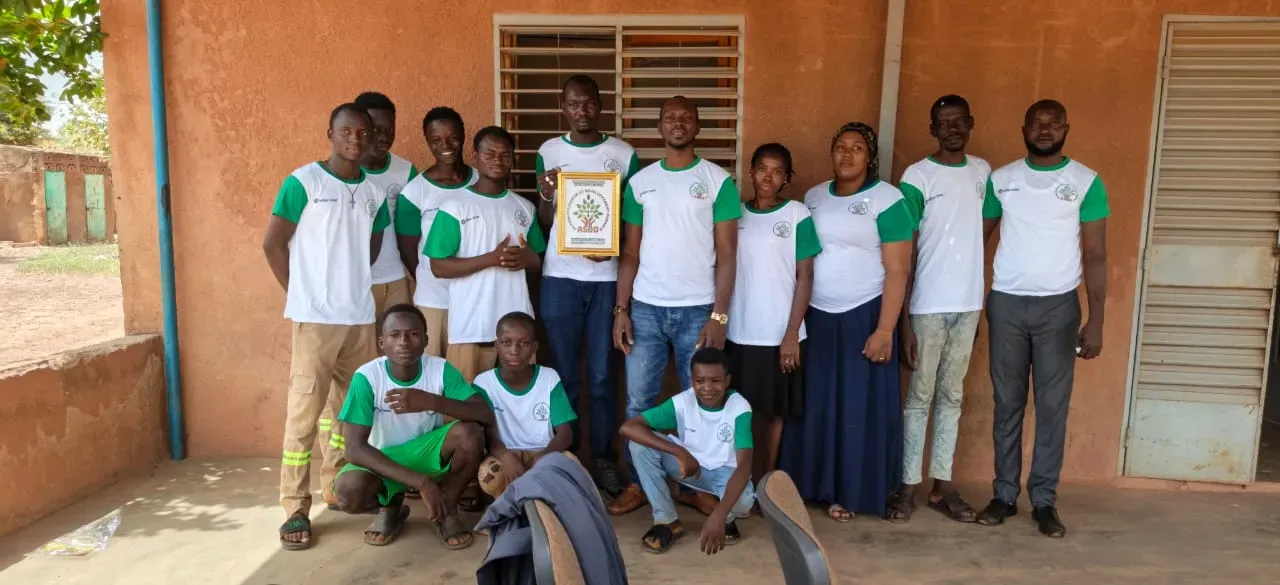
In Burkina Faso, climate change is no longer a distant environmental concern. Unpredictable rainfall, land degradation, and pressure on water resources are increasingly affecting agricultural production and food security, particularly for communities already facing insecurity and displacement.
Against this backdrop, the Association Action Solidarité et Développement Durable (ASDD) launched the “Community Voices and Food Resilience in the Face of Climate Change in Burkina Faso” project, bringing together young people, women, community actors, and students to explore how communities can respond to the interconnected challenges of climate change and food insecurity.
At the heart of the initiative was a Pulitzer Center-supported investigation, "Climate Change Is Driving Millions to the Precipice of a ‘Raging Food Catastrophe.’" Rather than treating the report as simply an international case study, ASDD used the story as a starting point for conversations about the realities facing communities across Burkina Faso.
From global reporting to local realities
During an interactive national webinar held on June 13, 2026, participants explored the connections between climate shocks, land degradation, agricultural productivity, and food insecurity. The Pulitzer Center-supported report provided evidence and narratives that helped frame the discussion, while local participants brought their own experiences into the conversation.
Farmers and community members described increasingly unpredictable rainy seasons and prolonged dry periods affecting staple crops such as maize, sorghum, and millet. Participants also discussed the expansion of land degradation and desertification and the resulting decline in soil fertility. For communities affected by insecurity, these pressures are compounded by displacement. Internally displaced households may lose access to farmland, increasing their dependence on humanitarian assistance while simultaneously reducing local food production.
Water scarcity emerged as another critical concern, particularly for women farmers whose vegetable production and household nutrition depend heavily on access to water during the dry season. These discussions helped participants see food insecurity not only as a local agricultural challenge, but as part of a broader climate and food-system crisis.
Creating space for young voices
The webinar brought together 150 direct participants, including 81 men and 69 women, with youth leaders, students, civil society actors, and members of rural associations among the main participants. The conversation was deliberately designed to move beyond awareness.
Participants asked practical questions about how digital technologies could help farmers anticipate climate shocks, how women’s cooperatives might access financing for solar-powered irrigation systems, and what young people could do immediately to help restore degraded land. The questions reflected a broader ambition of the project: to position young people not simply as audiences receiving information about the climate crisis, but as participants capable of communicating solutions and mobilizing their communities.
This approach continued through a digital creation competition, launched alongside the webinar. Young professionals were invited to produce one- to three-minute videos addressing climate resilience or food security in Burkina Faso.
A total of 25 video projects were submitted. An independent jury assessed the entries based on creativity, relevance, accuracy, and potential impact. The three selected winners focused on solar-powered irrigation, soil restoration, and crop preservation techniques.
Making climate storytelling local and multilingual
Several participating teams chose to produce their investigative videos entirely in Mooré and Dioula, two languages widely spoken in Burkina Faso. ASDD had not initially planned for this, but the decision strengthened the connection between the digital content and the communities it was intended to reach. For ASDD, the experience reinforced the importance of communicating complex climate information in ways that are accessible to communities beyond urban and digitally connected audiences.
The organization encountered this challenge directly during the webinar. Internet connectivity problems in rural areas, particularly around Toussiana and Koupéla, initially made it difficult for some participants to join the live session. In response, ASDD created a live audio relay through community WhatsApp groups and later shared simplified summaries in Mooré and Dioula through its Radio-Climat network.
The experience demonstrated that digital engagement does not necessarily have to mean relying exclusively on high-bandwidth platforms. Combining online tools with radio, WhatsApp, and local-language communication allowed the project to extend its reach to communities that might otherwise have been excluded.
Journalism as a catalyst for action
Throughout the project, the Pulitzer Center-supported investigation served as more than background reading. Its findings became a factual foundation for discussion and a reference point for the young creators participating in the competition.
Participants examined how the climate-related challenges described in the investigation could be understood through the Burkinabè context. Discussions explored approaches including agroecological farming, soil restoration, composting, biochar, natural biopesticides, water conservation, and the diversification of climate-resilient crops.
The report also helped introduce a fact-checking dimension to the competition. By asking young creators to ground their videos in documented evidence, ASDD encouraged participants to move away from general climate messaging and toward storytelling rooted in verified information.
This connection between journalism and civic engagement was reflected in participant feedback. In ASDD’s post-event survey, 92% of respondents reported being satisfied or very satisfied with the webinar, while 88% said the Pulitzer Center-supported report significantly changed their perception of the climate emergency. Meanwhile, 95% reported feeling better equipped to take action in support of food resilience in their communities.
Amplifying community voices
By bringing together international investigative journalism, local knowledge, and youth-led digital storytelling, ASDD’s project created a space for communities in Burkina Faso to connect global climate trends with the realities they experience on the ground.
The initiative demonstrated how a journalistic investigation can travel beyond its original publication and become a tool for dialogue, learning, and community engagement. For the young participants, the project was an opportunity not only to learn about climate-related food insecurity, but also to tell their own stories, investigate local challenges, and highlight possible solutions.
In a context where climate shocks and food insecurity increasingly intersect with other vulnerabilities, amplifying these community voices is an important part of building conversations around resilience.