Pulitzer Center Update November 19, 2026
Telling Trans Stories with Empathy

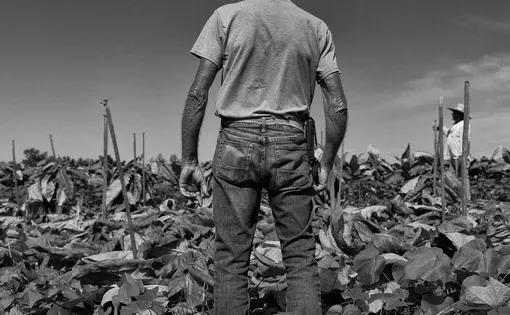
How national policy decisions are reshaping everyday life


“Today, let us give in. Let us wear each other’s clothes
and take a train to a place
where no one knows the names
we were born with.”
This is the opening line in “A New Condition” by Jacob Jing, a finalist in the Pulitzer Center's 2024 Fighting Words Poetry Contest. Jing’s poem was inspired by “Anti-Trans Myths,” a 2023 essay by Simón(e) D. Sun and Florence Ashley. The Pulitzer Center-supported piece explores how political movements have used misinformation to harm and scapegoat transgender people.
This is one of several trans-centered stories and projects that the Pulitzer Center has supported as part of the organization’s human rights focus area.
November 13-19 marked Transgender Awareness Week, which led up to Transgender Day of Remembrance on November 20. The latter honors those who lost their lives because of transphobic violence and discrimination. Reports show that over 273 trans people were murdered worldwide in the past year, averaging one murder every 32 hours.
Globally, trans people face high rates of violence, employment discrimination, and difficulties with healthcare access.
In the United States, trans people have been at the center of political discourse. Campaign advertisements in the recent midterm elections were rife with anti-trans rhetoric, and anti-trans ballot measures passed in Washington state, Colorado, Arizona, and Nebraska, restricting trans students’ participation in youth sports and banning gender-affirming care.
At the same time, trans people broke records in the midterms, with six of 11 trans candidates elected in states and positions that no other trans people had served in. Alabama and Georgia elected their first trans lawmakers: Democratic state Reps. Allison Montgomery and Bentley Hudgins. U.S. Rep. Sarah McBride also made history as the first trans member of congressional leadership when she was elected as co-chair of the Democratic Policy and Communications Committee on November 19.
The way trans stories are told matters. Misinformation about trans people has perpetuated transphobic stigmas around the world. Throughout its 20 years of supporting underreported journalism, the Pulitzer Center has prioritized journalists who treat their subjects with accuracy and empathy.
Center-supported stories about transgender experiences include:
- As part of the Virginia Center for Investigative Journalism at WHRO’s Fractured State project, which documents the effects of Trump administration policies on rural Virginians, photojournalist Landon Shackelford spent time with a trans firearm training group. In “The Untold Gay Gun Story,” Shackelford interviewed Clara Elliott, a firearms instructor who wanted to create a safe space for trans people to defend themselves amid anti-trans legislation and violence.
- Journalist Anuj Behal’s story “For India’s Hijra Women, Rising Heat Comes With Dangerous Trade-Offs” focuses on trans women in New Delhi who depend on panhandling and sex work to survive. On top of the typical dangers of street work, the deadly heat in India creates serious health concerns for those who are exposed to it for several hours daily.
- In Nepal, several trans women found employment as aid workers in HIV clinics. However, after the Trump administration cut funding for USAID in 2025, these workers lost their jobs. With few other options, many turned to sex work, putting their lives and safety at risk. Associated Press reporter Kristen Gelineau and photographer Bram Janssen put a spotlight on these women in “Sex Work or Starve: Aid Workers in Nepal Left Jobless by USAID Cuts Turn to Sex Work To Survive.”
- USAID cuts impacted trans people in Uganda as well, as shown in the essay “Cutting Too Deep—Trump’s Foreign Aid Cuts Fuel HIV Spread in Uganda” by Steven Thrasher and Afeef Nessouli for The Intercept. Thrasher and Nessouli met with a trans support group in Kampala, where trans people discussed their fears of facing violence, getting arrested, or contracting HIV.

Leo Diven Legay
Publishing Assistant
A New Condition
By Jacob Jing
11th grade | Texas Academy of Mathematics and Science | Texas
Finalist, Human Rights category
With lines from “Essay: Anti-Trans Myths” by Simón(e) D. Sun and Florence Ashley, a Pulitzer Center reporting project
Today, let us give in. Let us wear each other’s clothes
and take a train to a place
where no one knows the names
we were born with. On the way, we
christen each other anew, teach each other
how to stop belonging to the things
we hate about ourselves. There is joy
in every piece of birthright abandoned, every patch of skin
reclaimed between gentle fingers. We hold each other
with closed eyes and opened hands, affirm the hurt
so it can heal. I have never known
anything more real than this
open wound, this death sentence
in the form of a body. I still spend my days
staring out the fogged window, yearning to soar
into the scenery streaking by. No bones
governing flight. No flesh governing
life. Only the pure light
of our souls, guiding our way.
Know that this ache
is too intimate to misunderstand. Know
that we are still here anyways, translating longing
into hope, violating your falsified science
just by persisting. Know that we are heading towards
something sweeter, something
kinder. All of us embracing
this social contagion of love.
This message appeared in the November 27, 2026, edition of the Pulitzer Center's weekly newsletter.