Pulitzer Center Update December 19, 2025
Inspired by the Pulitzer Center, Exhibit in Indonesia Explores Community-Led Innovation To Fight Climate Change
Country:


Project
Chocolates Melting Away
Climate change is an increasing threat to the crop and livelihoods in the Philippines.

The exhibition Siasat Teknologi: Stories of Innovation from Various Corners highlights narratives of local innovation by Southeast Asian communities in responding to the challenges of climate change and ecological degradation, particularly in remote and marginalized regions.
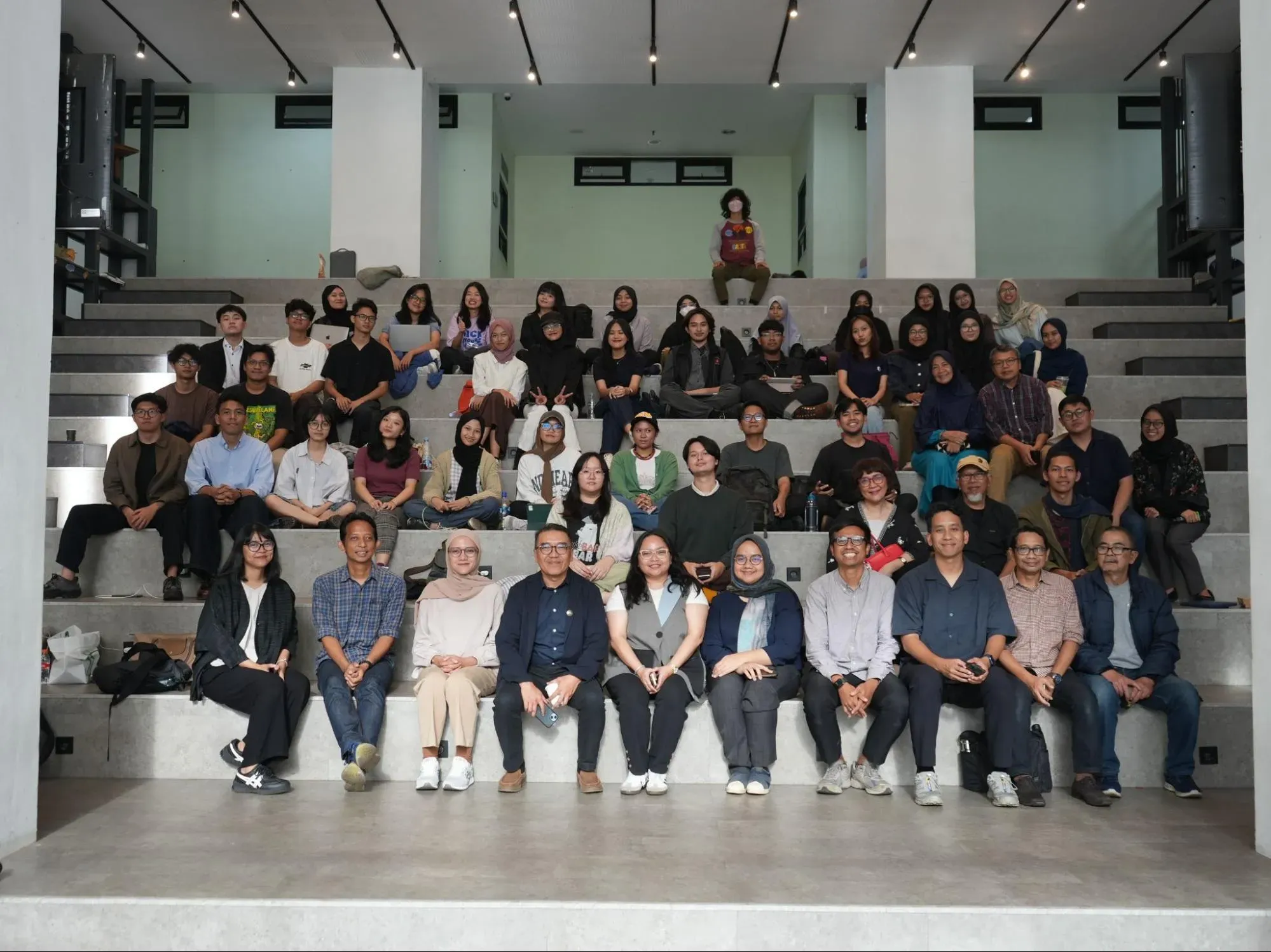
It was held October 6-14, 2025, in the Design Center at the Faculty of Art and Design at Institut Teknologi Bandung (ITB) in Bandung, Indonesia.
Community-based innovations documented by Pulitzer Center grantees—including The Fight to Save Filipino Chocolate by Breech Asher Harani and "Sasi, Ecotourism, and Promising Blue Carbon in Wondama Bay" by Alberth Yomo and Engelberth Wally— inspired the series of exhibitions and courses. Reporting illustrates how innovation often emerges from adaptation to climate change and environmental degradation.
The weeklong exhibition drew 500 visitors, most of them academics and university students. It was held in an industrial-themed open space at ITB, a university top life science program.
Through the works of Pulitzer Center grantees, researchers in social innovation, spatial sociology, and sustainable supply chains were eager to observe life sciences and engineering from a social perspective.
The event built a bridge between life science academics and the grounded knowledge brought by journalists.
Journalists Visit Classes
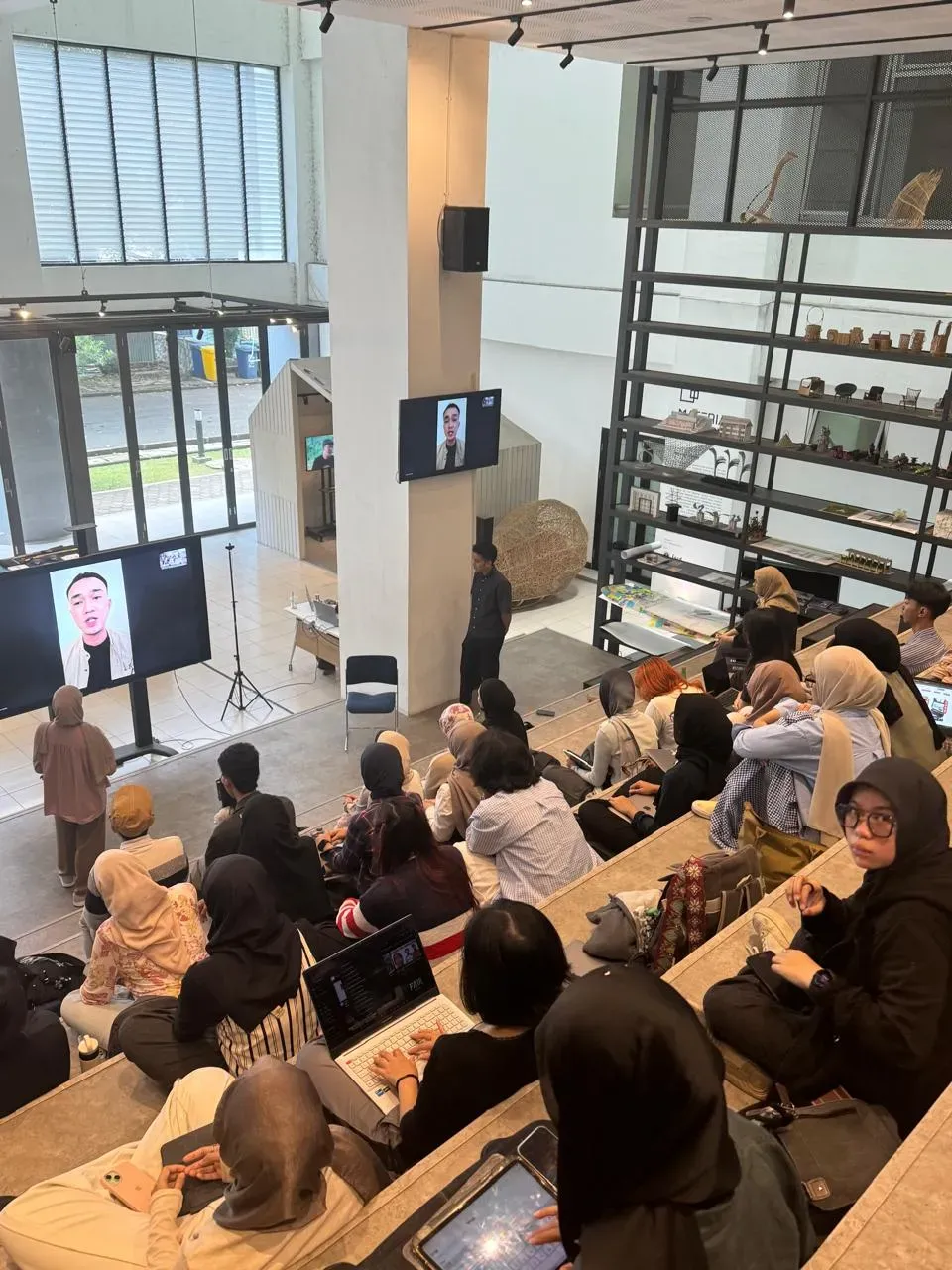
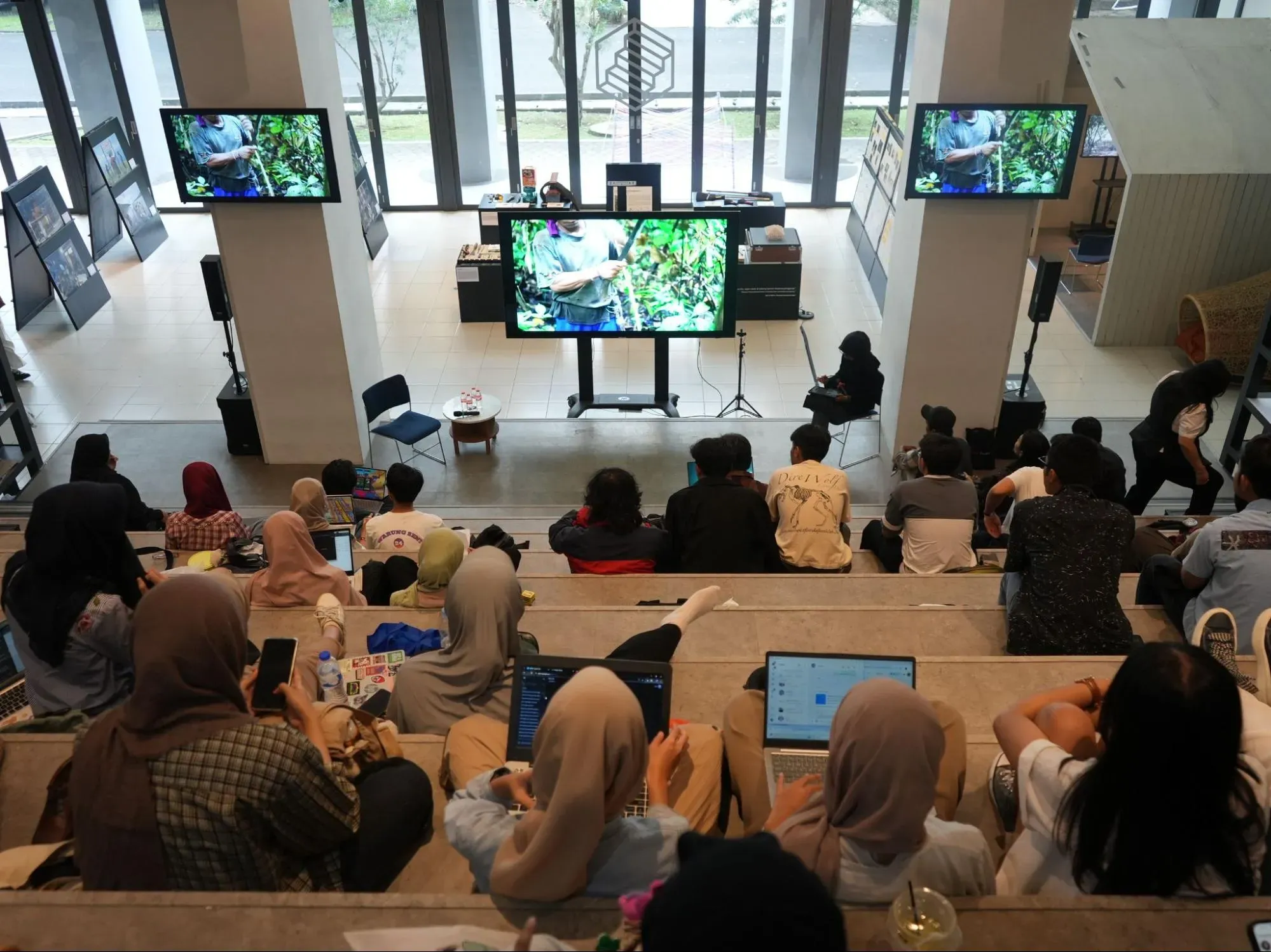
During the first documentary screening, The Fight To Save Filipino Chocolate, Pulitzer Center grantee Breech Asher Harani was the guest speaker in the Social Innovation class. This course explores how to create sustainable solutions to social and environmental problems.
The documentary taught students how an idea developed by a local researcher in the Philippines evolved into a successful polyculture farming method to combat pests and diseases in cacao. It also examines cacao-related issues and climate change through a systems thinking framework, recognizing interconnectedness and viewing environmental problems holistically.
The film presents a real-world case from the Philippines, enabling students to learn directly from the lived experiences of communities who constantly adapt to climate change.
In the second session, Pulitzer Center grantees Irma Tambunan and Prayugo Utomo were guest lecturers in the graduate course Science, Technology, and Society. Tambunan shared her report "Orang Rimba and Healing from the Heart of the Forest." Students observed how traditional forest-based medicine is deeply rooted in social and cultural processes. They also explored the reciprocal relationship between science and society, highlighting human dependence on forests.
The class began with a short video by grantee Prayugo Utomo from his report "Living in Harmony in Batang Gadis," which tells the story of a community innovation: the KOMANJA cooperative, which successfully mobilized local residents to conserve the Batang Gadis Forest.
The case studies brought by journalists made classroom learning more engaging. At the same time, the discussions encouraged environmental science students to adopt a social lens, stressing that nature and humans are inseparable.
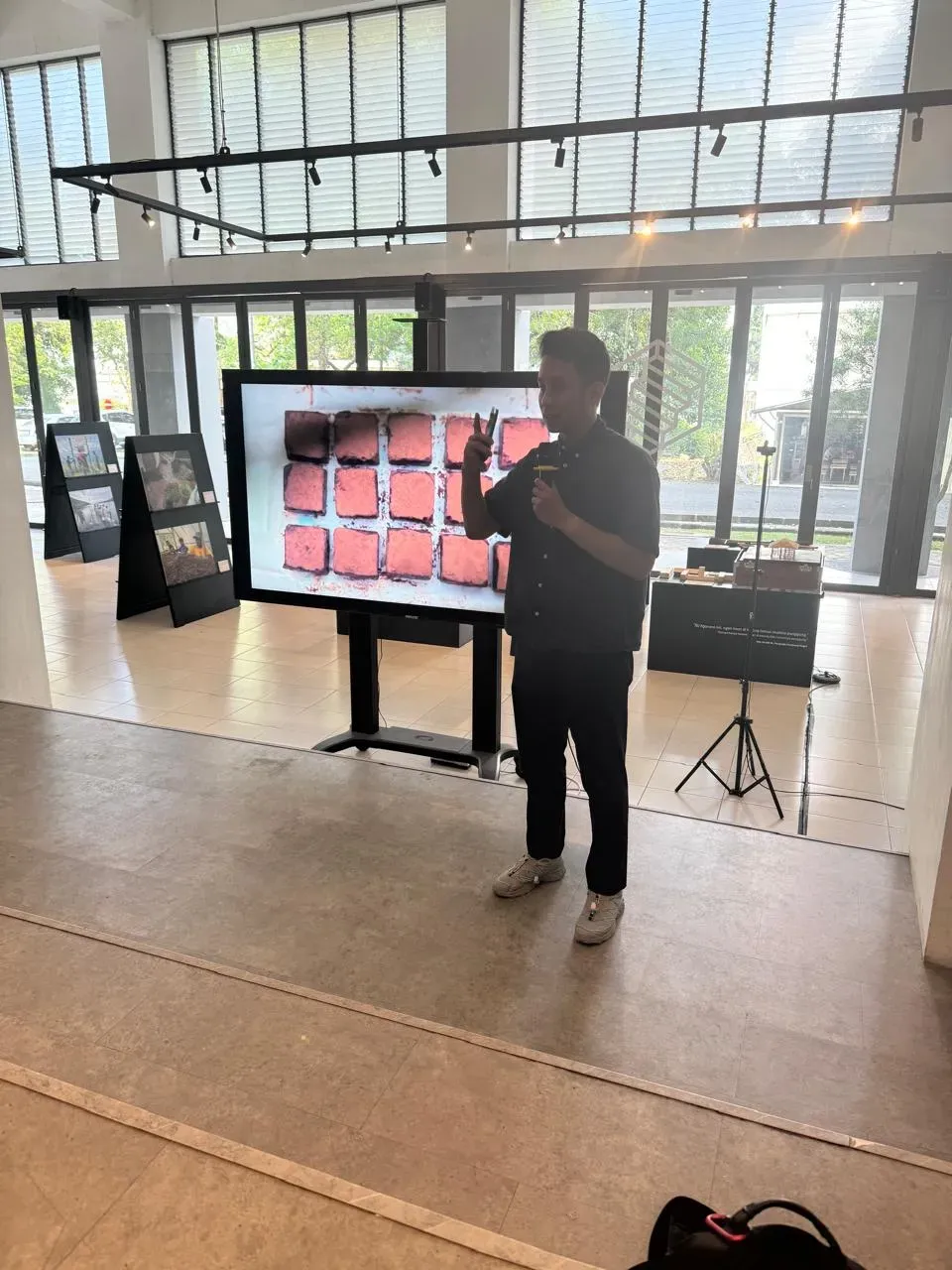
Empathy for Communities
The exhibition presented real stories of community adaptation, creativity, and resilience in developing technological solutions and alternative innovations across energy, medicine, and food.
Grounded in ethnographic and curatorial methods, and a collaboration between ITB's Faculty of Art and Design and the School of Life Sciences and Technology, along with the Pulitzer Center, the exhibition created a collective space for reflecting on the meaning of progress, development, and technological inclusion.
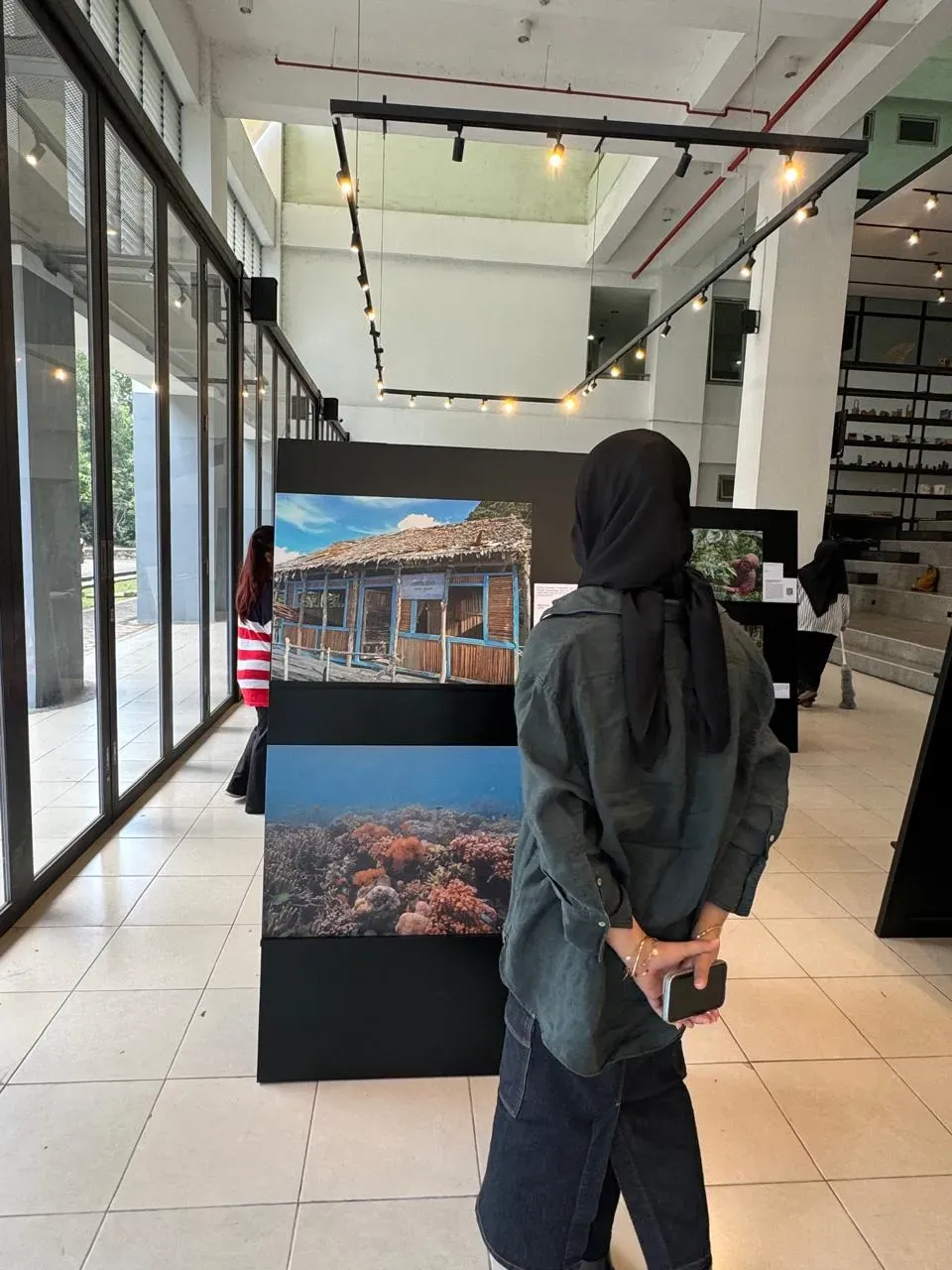
It showcased 16 photographs created by Pulitzer Center grantees. Featuring photo and documentary works by six Pulitzer Center journalists—Alberth Yomo, Engelberth Wally, Breech Asher Harani, Dhana Kencana, Irma Tambunan, and Prayugo Utomo—the exhibition also presented artifacts of everyday innovation: from handcrafted household tools to earthquake-resilient housing models developed by ITB’s Design Ethnography Lab and Seismic Synergy team.
One highlight of the event was the exceptionally positive response from ITB leadership. Andryanto Rikrik Kusmara, vice rector for communication, partnership, alumni relations, and administration, expressed ITB’s strong interest in integrating insights and field reporting from Pulitzer Center journalists into teaching practices to bring a more humanistic and social dimension to life sciences and engineering programs.
After viewing the photo series and attending sessions, he said he was impressed by the empathy shown in the journalists’ perspectives toward the challenges and changes communities face.
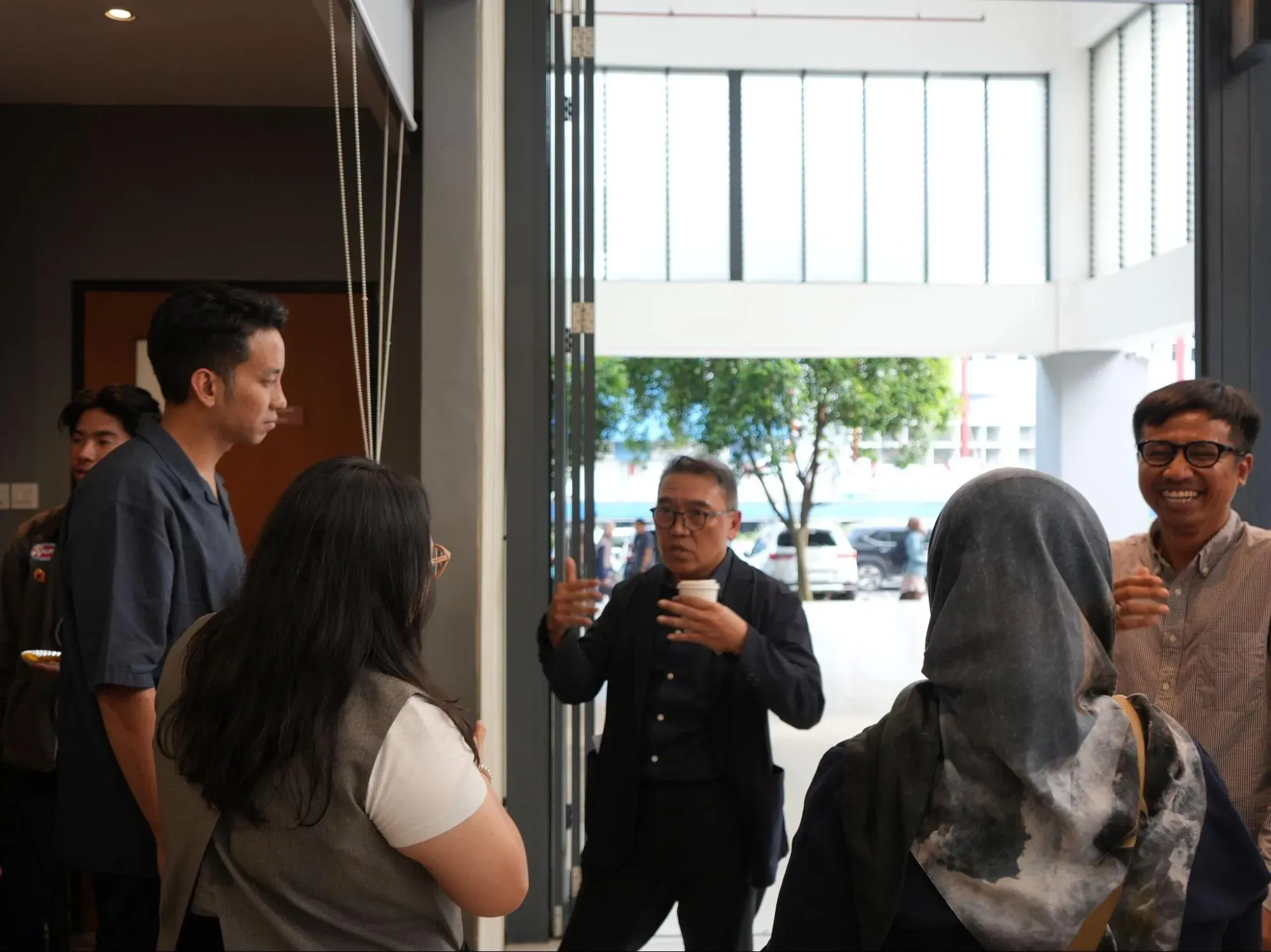
The exhibition aimed to reframe technological narratives that have often been dominated by technocratic elites and global markets. By showcasing real stories from communities across Indonesia, the exhibition sought to elevate local knowledge and grassroots innovation.
Innovation does not always emerge from laboratories or research centers, but from communities who adapt, create, and persist.
By bringing reporting into an academic space, the exhibition opened a pathway for deeper collaboration between universities, journalists, and local communities in building knowledge that is not only rigorous, but also empathetic, inclusive, and deeply human
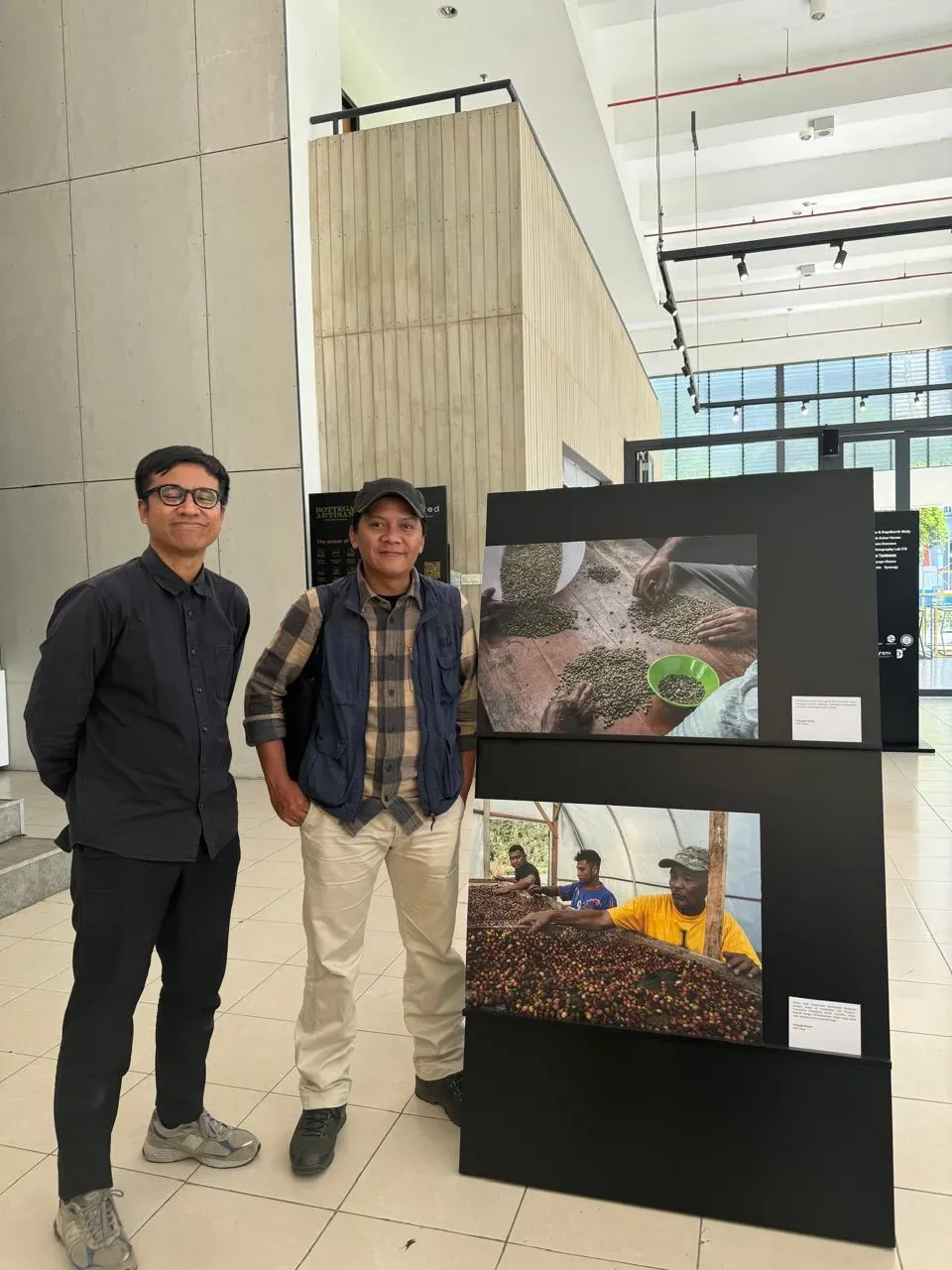
Special thanks to the School of Art and Design at ITB, the School of Life Sciences and Technology at ITB especially Prananda Malasan, Raditya Tapoer, and Angga Dwiartama for the collaboration.
The contribution of Indigenous communities in relation to the marine ecosystem.