Pulitzer Center Update August 10, 2026
Chicago Teachers Connect to Reporting on Wrongful Convictions
Country:

This project looks into one of the criminal justice system's most painful failures: wrongful...

“I am an avid goer to the trainings and I LOVE them! Such a safe space to express myself and most importantly, to learn about others.” — Vanesha Paul, Olive-Harvey College
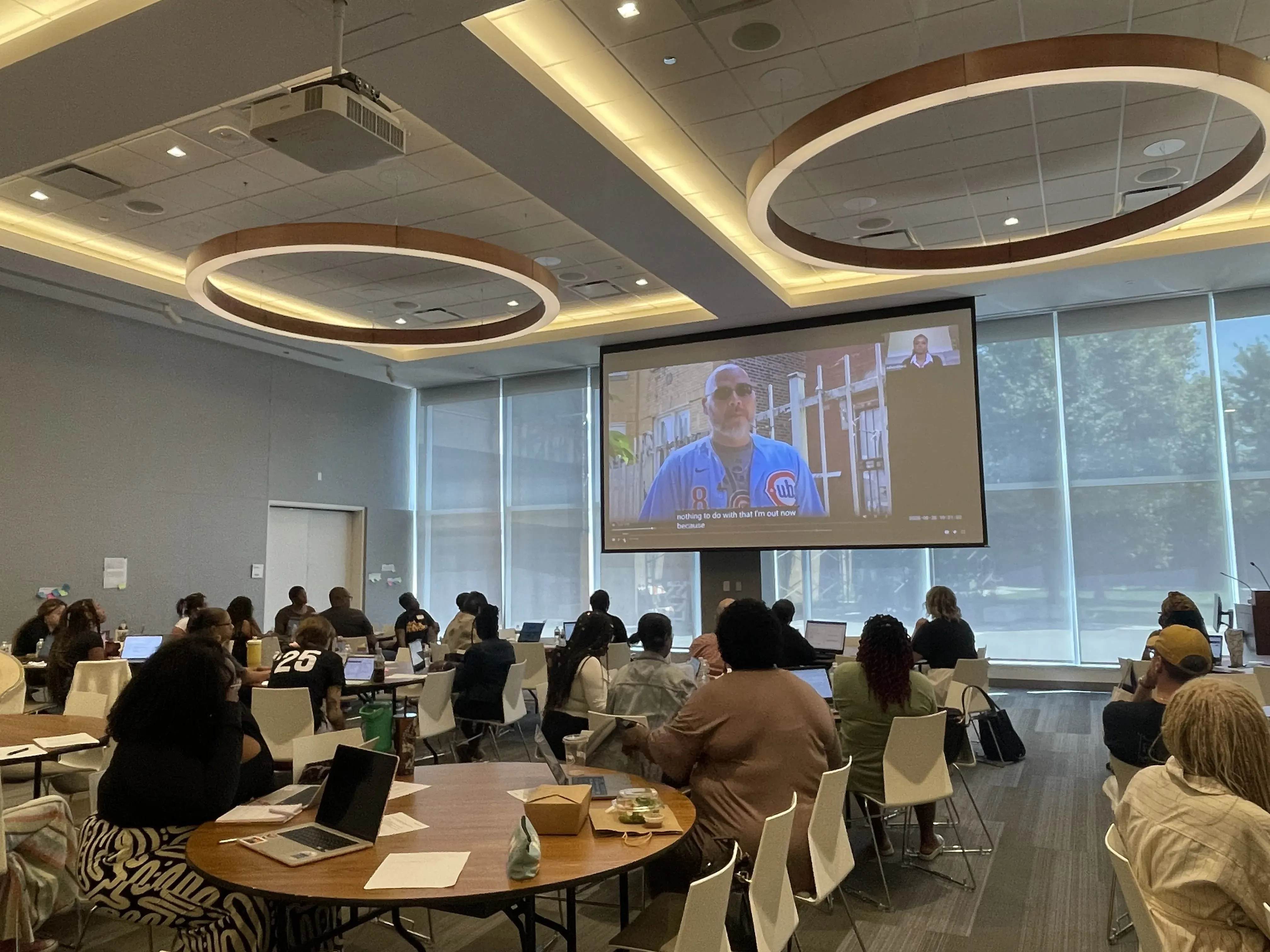
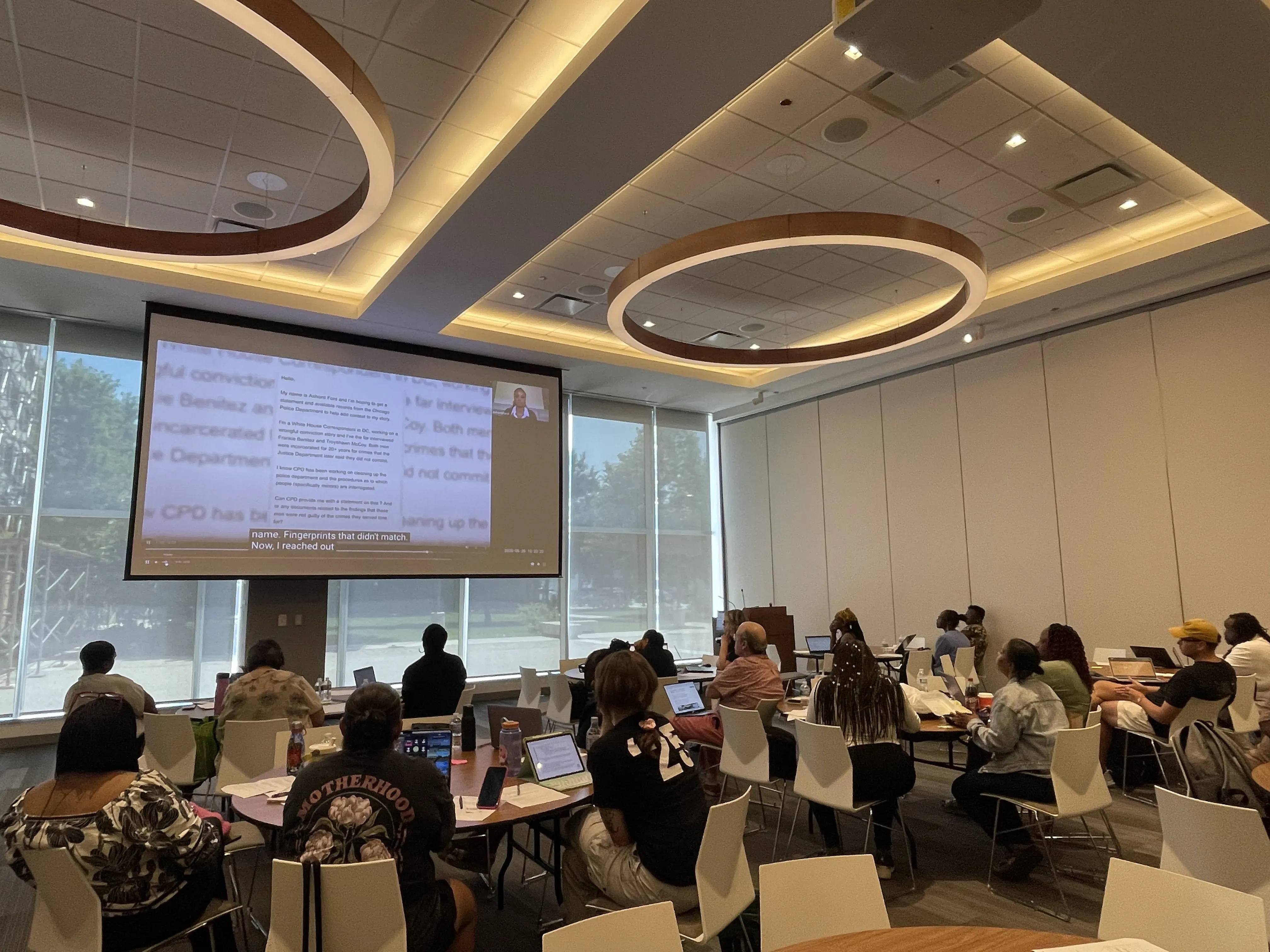
On July 14, 2026, 35 educators participated in the Pulitzer Center’s second Reporting for Reflection & Connection event: a discussion-based workshop designed as a reflective space for educators to connect around global issues. Educators applied the following questions to explore a Pulitzer Center-supported news story about wrongful convictions in Chicago:
- How are we connected to the lived experiences of people, especially young people, impacted by the criminal justice system?
- What responsibilities do educators and schools have in supporting young people impacted by the criminal justice system?
- How can we employ curiosity to connect with other criminal justice news stories and deepen our understanding of a human rights issue?
Participants shared stories and impacts of engagement with local police, connecting their own experiences with Pulitzer Center grantee Ashonti Ford’s reporting about two young men who served decades behind bars after being wrongfully convicted as teenagers.
Teachers listened to personal testimonies of exonerated victims in the criminal justice system and made connections to themselves and their students. Teachers ended the workshop by exploring the Pulitzer Center's criminal justice stories portal, the Chicago Police Torture Archive, and the Reparations Curriculum developed by Chicago Public Schools teachers.
“I think I’ve always been a teacher that's been very open and honest with my students because of the community that we live in, so I definitely know that I will take what I learned today and utilize it to the best of my ability to teach my kids to be more open about the community that we live in and how it interacts with crime and government officials, etc.," said Liza Perez, of Funston Elementary.
In a closing survey, 94% of attendees found the event engaging and saw themselves and their students in the reporting. Also, 94% of attendees reported an increased understanding of criminal justice after the workshop, and 80% reported an increased understanding of human rights.
Almost all of the attendees, 97%, would recommend the workshop to a colleague or friend, and 100% of participants said they would be interested in attending another event focused on leveraging reporting to build connection and community.
When we asked participants what they liked most about the event, they shared:
- Liza Perez, Funston Elementary: “There was a lot that I liked. I love the open dialogue. I loved that all of the other educators were willing to share and have conversation without any judgment. I loved what I learned, and most of all I definitely took away a passion for knowing more about wrongful convictions.”
- Daphanie Bibbs, Gary Comer College Prep: “I enjoyed the whole group share out/reflection surrounding the recorded report we viewed collectively. It was truly amazing to be in a space with like-minded educators who are dedicated to equipping scholars with skills needed to hold themselves accountable and navigate the challenges of the criminal justice system overall, but specifically in Cook County.”
- Jenna Alexander, Communities in Schools: “It was great to connect with educators by sharing our personal experiences and hearing their perspectives. I felt that the workshop was well set-up to encourage conversation, and nothing felt forced. The tone was set from the beginning that it was a safe space to share perspectives and ideas.”
When we asked teachers how they planned to use the resources in their classrooms, they shared:
- Arizbel Preciado, Ruiz Elementary: “I plan to facilitate a workshop for students, parents, and staff in English and Spanish.”
- Lashawn Washington, Parkside S.T.E.A.M. Community Academy: “I plan to utilize this information as a prerequisite to my Civics curriculum for my 8th graders. The objective is for students to understand the importance of being informed power of the legal system.”
- Tiffany Sommerio, KIPP Chicago: “I plan to send out the information to my social studies content team meeting members to use in their classrooms. I may even present a portion of the PD to show educators how impactful this information can be to the students we serve.”
- Gwendolyn Kinard, Institute for Cognitive Literacy: “Continue to review the Pulitzer Website, plan to create a community-wide course of study to address specific criminal justice issues that my community faces.”
- Scott Fleming, Edmund F. Lindop School: “I will be incorporating these topics into our unit on Civil Rights in our 8th grade social studies curriculum for Middle School Social Studies.”
- Jurema Gorham, Gary Comer College Prep: “I will be implementing the tools and information in my Government & Politics course. I am excited to bring in the various case studies to pair with the course content.”
The event was held at Malcolm X College and was supported by the Julian Grace Foundation. It was the second in the Pulitzer Center's Reporting for Reflection & Connection initiative, a series designed for educators to reflect and connect through Pulitzer Center-supported news stories.
Read more about past Chicago workshops that explored racial justice and labor rights, artificial intelligence, and civic engagement.