Pulitzer Center Update December 26, 2025
Behind the Story: What South American Forests Reveal When Journalists Report Across Borders

Project
The Carbon Gap in South America
Who wins, who loses, and what it takes for climate solutions to deliver


Para leer esto en español, haga clic aquí.
Journalist Francisco Parra Galaz says South American countries are key players in the conversation around climate change. Home to vast, biodiverse, native forests, the region has the potential to serve as major carbon sinks, or to become a source of emissions if the ecosystems aren’t protected.
Parra and his team at Climate Tracker América Latina completed a cross-border investigation into how the combination of forest fires, agribusiness, and unregulated carbon credit markets puts the continent’s forests at risk.
“This is particularly important in a region like Latin America, which has a large part of the world's forests and is seen, from the outside, as a major carbon sink,” Parra said. “What we identified is that there are certain characteristics of the region that are affecting the ability of forests to store carbon.”
Based across South America, his team pieced together a comprehensive investigation that leveraged the journalists’ individual regional expertise to show what one forest can learn from another.
At the same time, Parra said, they worked to spark country-specific conversations by adapting articles for local audiences.
“We also understand that it's important to generate that conversation in the countries themselves,” Parra said. “One thing we always say is that good journalism generates debate. That's what it seeks to do: Generate conversation, open up debate, raise new questions in national contexts.”
The reporting required extensive field work and interviews with experts. Journalists also had to read the latest scientific research on carbon sequestration.
“These are methods that this profession allows, which enable citizens to realize that sometimes things are not quite as they are told,” Parra said.
Pulitzer Center Editorial Intern Ella Beiser spoke with Parra about his team’s investigation.
The investigation was a collaborative effort by the Climate Tracker staff, with special contributions from Isabel Alarcón, Marcela Maria Martins, Paula Díaz Levi, Esteban Tavera, and Maximiliano Manzoni.
Beiser's interview with Parra has been edited for length and clarity.
Ella Beiser: Could you introduce yourself and the work you do as a journalist?
Francisco Parra Galaz: I am a journalist born in Santiago, Chile, and I am the director of Climate Tracker América Latina. We are a foundation dedicated to promoting and commenting on climate journalism in the region by training journalists in the coverage we do as a team as well as with the journalists we train, in addition to several other selected activities.
The project we carried out with the Pulitzer Center was an in-depth journalistic investigation into how fires, agribusiness, and the lack of regulation in carbon markets are affecting the ability of forests to act as carbon sinks and [are] instead turning them into major sources of greenhouse gas emissions.
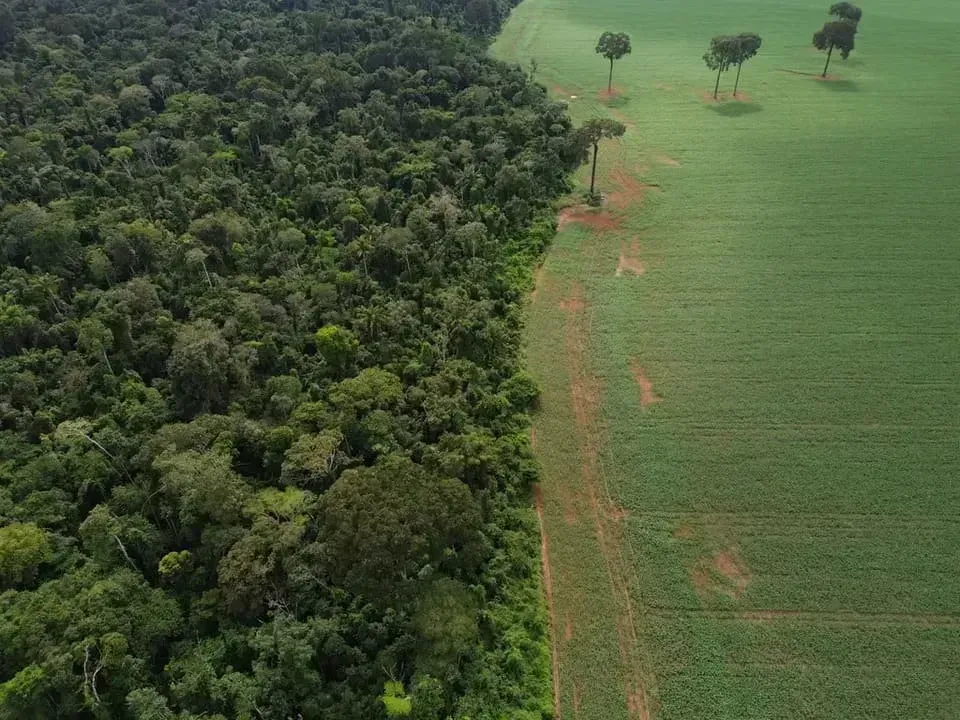
This is particularly important in a region like Latin America, which has a large part of the world's forests and is seen from the outside as a major carbon sink. What we identified is that there are certain characteristics of the region that are affecting the ability of forests to store carbon.
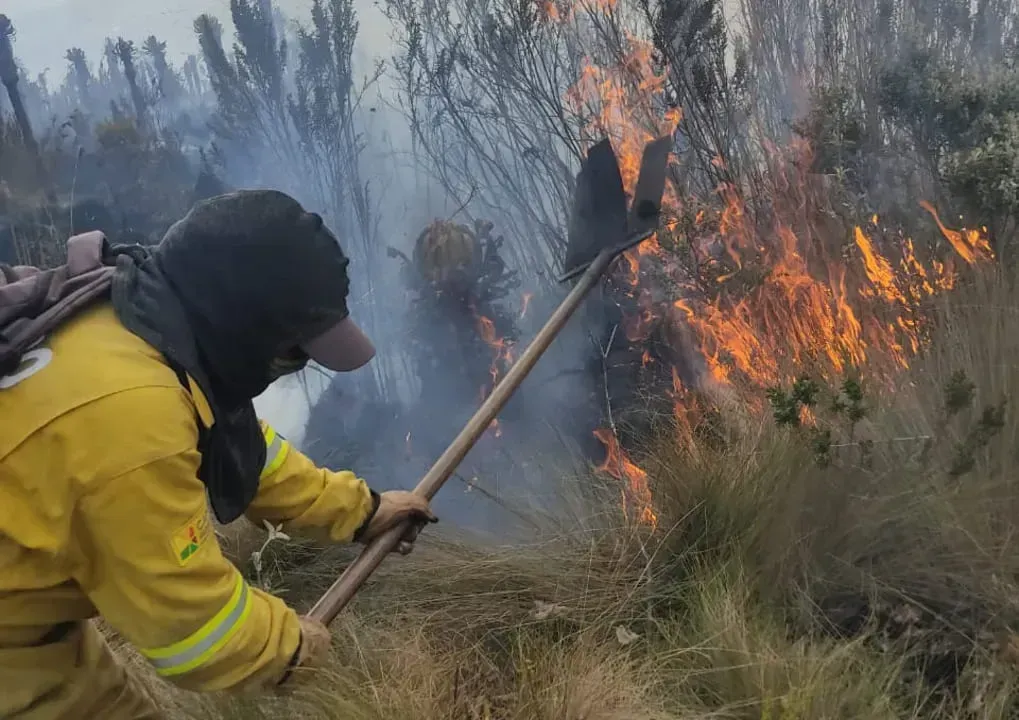
And that is why we divide it into these three broad categories. In the first place, fires, whose intensity is obviously increased by climate change. Secondly, certain industry practices, particularly those related to the forestry industry. And finally, everything to do with the regulation of carbon markets, whether in legal or legislative terms, but also with regards to transparency and community access to the benefits that these markets should deliver.
The project addresses, in a way, these three worlds related to forests in Latin America.
Beiser: How did you or your team come up with this story? And when did you know that this was a story you wanted to write?
Parra: We put this project together in response to the call for proposals from the Pulitzer Center, but it was also a topic we had been monitoring previously, especially in light of COP30 [the United Nations Climate Change Conference in Belém, Brazil, on November 10-21, 2025].
We are a team spread across different countries in the region. Our team is in Chile, Paraguay, Brazil, Colombia, Ecuador. And in having conversations about this call from the Pulitzer Center, we incorporated certain previous findings we had in order to put together this joint investigation.
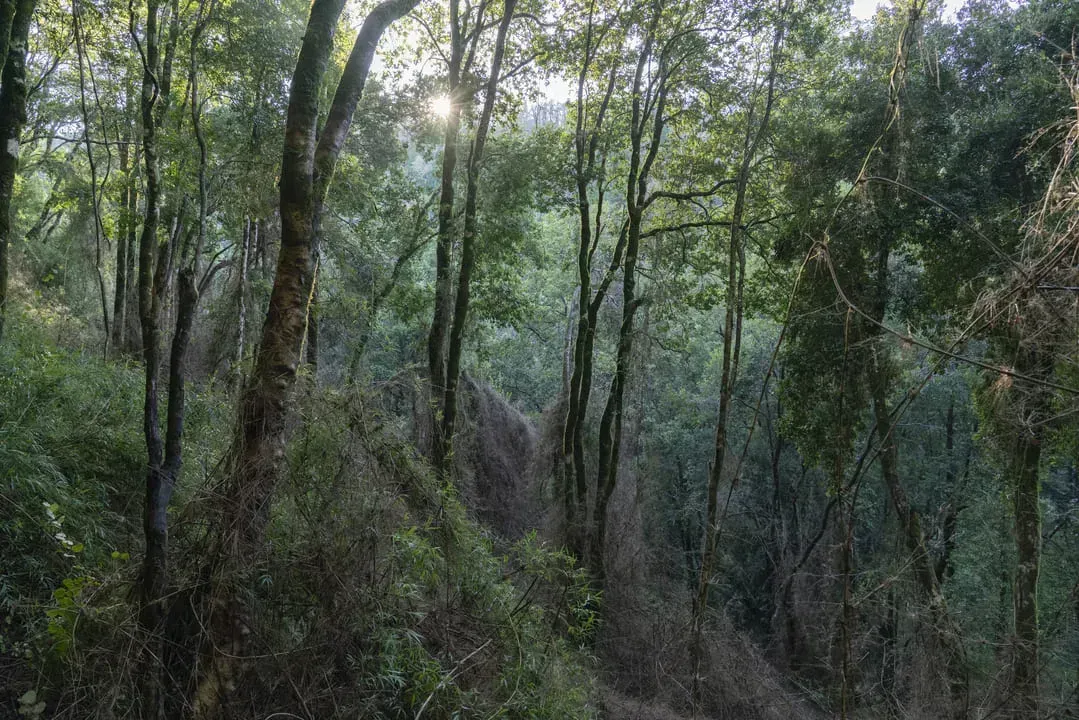
For example, we already had information on how fires were affecting the capacity of Chile's forests to be carbon sinks because our team in Chile had already been reporting on it. Chile is unique in that, unlike other countries in the region, its forests absorb much more carbon than they emit. Why? Because here, there is no problem with deforestation.
And what we had identified from the official communications of the Chilean government to the United Nations Framework Convention was that the fires in 2023, in particular, had been so intense—affecting nearly 400,000 hectares—that the level of CO2 emissions related to the fires was so high that it completely unbalanced the greenhouse gas inventory. So, for a country like Chile, which depends heavily on its forests to achieve its carbon neutrality goals, we identified that point as a key factor that could impact that objective.
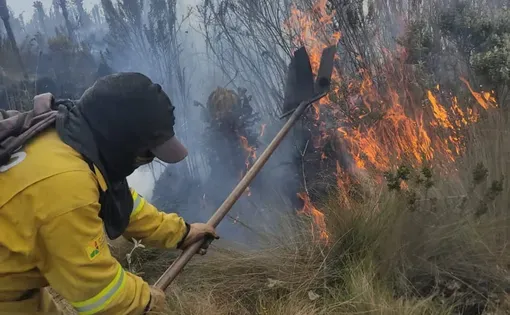
In talking with the team, we realized that Ecuador is experiencing a similar situation, particularly with the fires that were occurring in the Páramos [high-altitude ecosystem], which were increasing in number and were also a major source of greenhouse gases.
In Paraguay, one issue we had been monitoring for some time was how Apple was using carbon markets. We thought that this could be linked to our same project. Later, in our own journalistic investigation, we identified that something similar was happening in Colombia with a different company.
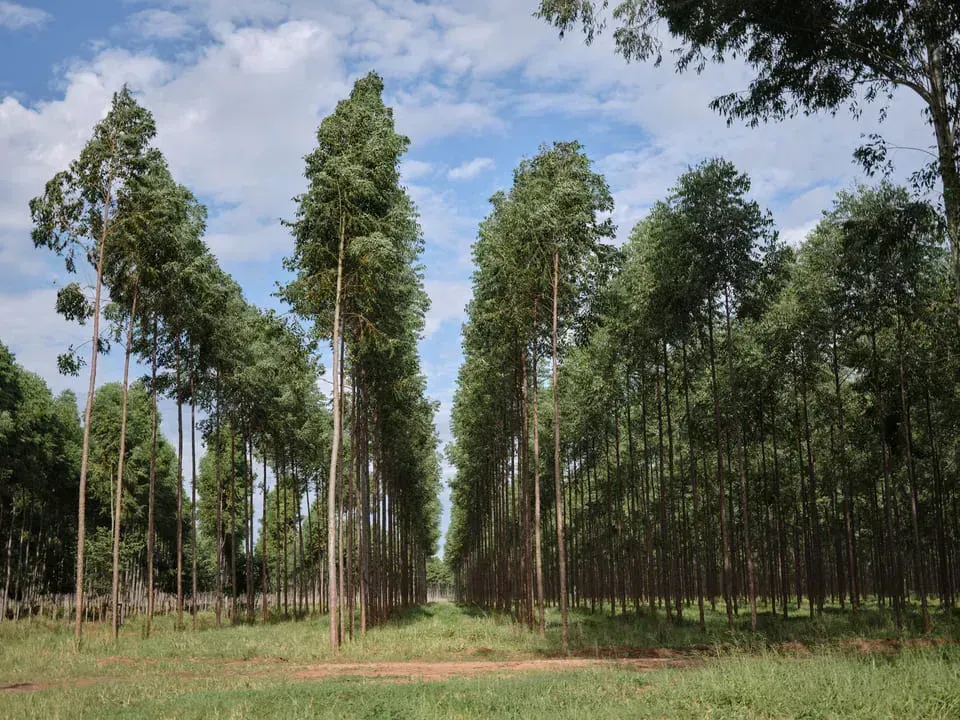
We discovered that not only was Apple using the carbon market in Paraguay, but the credits were bought from land full of agrochemicals that have been banned in Europe. This had a number of impacts, especially on the children living near the community where the investment was being made, which was in eucalyptus plantations, an exotic species associated with a number of ecosystem problems.
There is a lot of debate on eucalyptus trees because while they absorb CO2 quickly, they generate other problems related to water availability in the area. This is exacerbated by the fact that CO2 that is captured is released once those trees are cut down.
Beiser: Did you have a single audience in mind, or several, given that the story took place in different countries?
Parra: It's always a challenge to write a text that spans different countries because the logic that we always operate with is to speak to the audience that reads you. But what we did, and what we've been doing for quite a few years now, is basically identify those points of conversation where the case of Chile converses with the case of Ecuador or the case of Colombia converses with that of Paraguay.
In Chile, for example, on the issue of carbon markets, we understood how it was more interesting and we were going to present a regional overview of the regulation, addressing cases that have those differences that can be the subject of debate, such as the case of Chile, the case of Colombia, and the case of Brazil.
And that’s why I think it's very important to talk within the team. We have meetings that are often a bit long, where we look at what we have and how we can connect each case. We understand that we are also an international organization and that our audience is international in that sense.
We also believe that it's important to generate that conversation in the countries themselves. One thing we always say is that good journalism generates debate. That's what it seeks to do: Generate conversation, open up debate, raise new questions in national contexts.
So, one strategy, and this has more to do with the dissemination we do, is that in conjunction with this special investigation, which consisted of five main written articles, we also adapted versions to disseminate in each of the countries where we are working.
Beiser: Why do you think this investigation is important, and what do you hope readers will learn from this series?
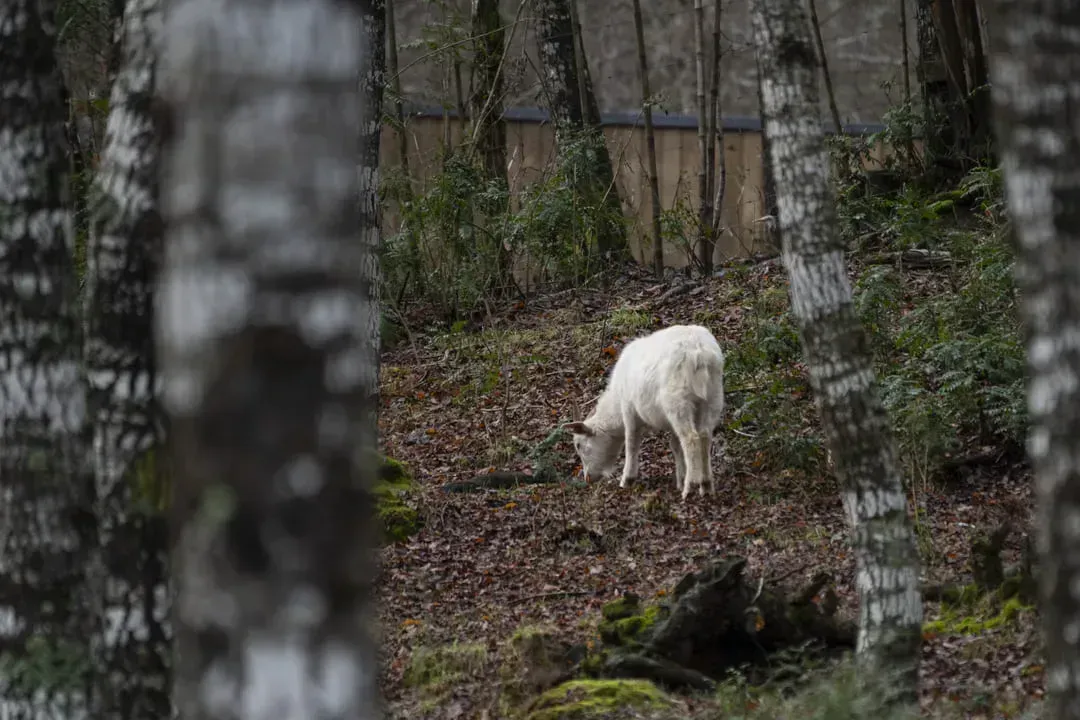
Parra: I think it's important because South America plays a key role in climate action today due to its conditions. Above all, because of the role its forests play and the intention to protect them. Not only is there a lot of talk about the Amazon, but sometimes the Amazon detracts from the importance of other forests in Latin America, even though all forests play an important role due to their capacity to store carbon and conserve, basically.
And what we see is that there are challenges that must be resolved by our countries in order for that to be possible. The region is not a major emitter of greenhouse gases in terms of the research objectives of the Paris Agreement. What Chile or Ecuador does will not have an impact. What Brazil does will have a slightly greater impact because of its size, but that does not mean that our countries should not be part of the conversation.
And I think the way to be part of the conversation is precisely by addressing this issue, which is key for the world, especially in this particular year, when COP30 was held for the first time in the Amazon [November 10-21, 2025] and, after 10 years, in Latin America.
Beiser: What lessons have you learned from this project?
Parra: As a lesson, I would say that you have to pay attention to all the details when this type of project comes up. I think there's always more to say when you hear something that sounds too good to be true. When you're presented with a project that's going to be carbon neutral, that's going to help solve climate change. Climate change is a very complex issue. It usually involves many interacting factors, and it's not usually black and white.
For example, when Apple says that its Apple Watch is carbon neutral, that sounds great. It appeals to consumers. The people who buy an Apple Watch can say, “Well, at least I'm not contributing to the environmental crisis we're living through with this.”
But there's a slightly more complex background to that. It's not so easy to declare carbon neutrality. Shortly after we launched this series, a court in Germany ruled that Apple could not say that its Apple Watch is carbon neutral because of a series of impacts that this generated. And basically because the credits they were using weren't permanent. So they couldn't say that this was going to be carbon neutral if it was going to emit emissions.
So, my recommendation is to understand the tools that journalism has to expose these kinds of cases, to be able to look into these things. And what tools am I referring to? How to interview experts, how to do fieldwork. These are methods that this profession allows, which enable citizens to realize that sometimes things are not quite as they are told.