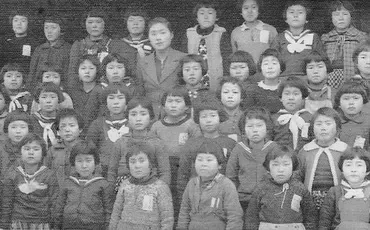
This letter features reporting from “What Japan’s Atom Bomb Survivors Have Taught Us About the Dangers of Nuclear War” by Scott Michels
Dear United States Senator Durbin,
My name is Beckett Fox. I am a sixth grader at Mitchell Elementary in Chicago Illinois. I want to talk to you about a problem that I learned about in the article, “What Japan’s Atom Bomb Survivors Have Taught Us About the Dangers of Nuclear War” written by Scott Michels for RetroReport and the Pulitzer Center. What I learned specifically is that nuclear weapons can be lethal if used. We need to prevent this. Nuclear warheads can destroy this beautiful world. If we look at past bombings like Hiroshima and Nagasaki, those are weak compared to nukes being built and stored now, tens of times more powerful than previous versions. Since we know how terrible this potential level of destruction could be, we need to find compromises and fast.
What I have learned from the survivors of Nagasaki and Hiroshima nuclear blasts is that many of them suffered from lifelong illnesses and many lost family and friends to deadly diseases like cancer from radiation exposure. Many people die from these events and their tragic stories from the bombs of Hiroshima and Nagasaki give us insights into that. This issue is important to me because personally I would be devastated if I lost family and friends to deadly diseases or complications of radiation exposure, and I'm sure you would be devastated too. Also the communities of Hiroshima and Nagasaki were decimated and leveled by the bombs, and I could not imagine if something like Hiroshima and Nagasaki happened to the communities we are all attached to. Another reason this is important is that according to Scott Michels, “The risks of nuclear conflict remain high, with more than 12,000 nuclear weapons stockpiled globally, some many times more powerful than the ones dropped on Hiroshima and Nagasaki.” This shows that with so many nuclear bombs in the world there might be a time when a lot of those bombs could be detonated, and kill a lot of innocent people.
I'm asking you, Senator Durbin, to help and take action on this risk of nuclear warfare. I believe our government can take the lead as a world power to lead all of the other countries to commit to a world treaty to not use nuclear weapons on any country. The reason this is being addressed is to save the lives of millions of innocent Americans from any dangers of nuclear war/weapons. Because of what I learned, I hope you can help make sure something like this never happens again. I think you can help by making sure our country works with other countries to get rid of nuclear weapons so no one ever uses them again. You could also help people learn more about what happened in Japan by supporting schools and museums that teach kids like me about it. I hope you can make sure the survivors get the care and respect they deserve, and that our government tells the truth about how dangerous these weapons really are. I just want the world to be a safe and peaceful place when I grow up, and I think you can help make that happen. Thank you for taking the time to read and taking it into consideration.
Sincerely,
Beckett Fox
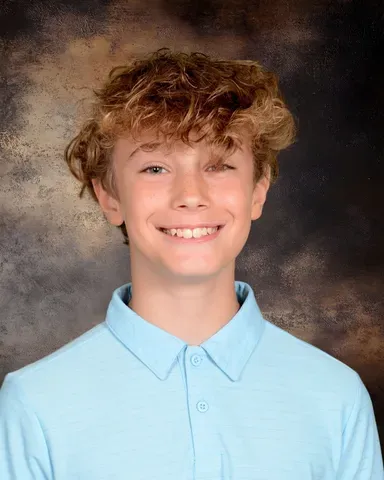
Beckett is a sixth-grade student at Mitchell Elementary who is deeply curious about learning new topics and enjoys being challenged academically. As a Chicago Public Schools student, he values advocacy and civic responsibility. His award-winning letter emphasizes the importance of awareness around nuclear warfare, how public policy can drive meaningful improvements, and the need to remember and learn from the past. Outside of school, Beckett enjoys spending time with friends, snowboarding, and playing soccer.
Read more winning entries from the 2025 Local Letters for Global Change contest!
Student letters reflect the authors’ views. Students choose their own topics and act independently if they decide to share their letters outside the classroom. The Pulitzer Center is a nonpartisan 501(c)(3) organization that does not endorse candidates, parties, or specific legislation. Our publication of student work is for educational purposes.