
This letter features reporting from “The Black Box” by Arijit Douglas Sen and Derêka Bennett
Dear Chief Lambert,
I want to begin by expressing my appreciation for your leadership in ensuring the safety of students across Fairfax County Public Schools (FCPS). In a time when school safety is becoming more complex and urgent, your role is vital in protecting lives and fostering trust within the community.
I am writing to you with concern about the growing reliance on artificial intelligence tools like Social Sentinel in school safety. While AI can be a powerful tool in identifying potential threats, its use must be carefully balanced with human oversight to avoid overreliance and misjudgment. Especially in critical environments like schools, we cannot afford to treat AI as a substitute for trained professionals.
A 2022 Pulitzer Center-supported article titled “The Black Box” revealed that Social Sentinel flagged an overwhelming number of irrelevant posts, with an estimated 99.9% of alerts not being actual threats. The article stated that the system often crashed due to the number of false positives it detected, and none of the schools contacted during investigation could point to a single life saved as a result of the service. This flood of noise not only wastes resources, but risks desensitizing the staff to real threats, undermining the safety of the system it's meant to protect.
Moreover, the funding allocated to these AI systems often comes at the expense of proven safety measures, such as expanding mental health services or training staff in threat assessment. When technology fails to deliver and diverts resources from human-centered solutions, it becomes a liability rather than a tool.
A Stanford study titled AI Overreliance Is a Problem. Are Explanations a Solution? further underscores the danger of blind trust in AI. It found that when AI systems provide complex explanations, users are more likely to accept its conclusions without question. In contrast, simpler explanations encourage users to engage with the AI’s response. This insight shows that AI can play a role in school safety systems, but is best moderated with human judgement, to enhance safety.
I urge FCPS to review the AI-based safety tools currently in use, including their cost, accuracy, and impact. Having human personnel that are trained to review AI alerts would also increase safety, with human judgement being the largest factor. Even with AI, funding for human-led safety initiatives, including mental health support, should be prioritized. With this, more human connection will be present in schools, increasing safety more than base level threat monitoring. To ensure transparency regarding the AI tools, regular public reports on the performances of the AI tool in threat detection and school safety would be greatly appreciated. This would allow students and parents to be more aware of how the issue of safety is handled, in relation to AI.
These steps would not only improve safety outcomes but also rebuild trust among students, families, and staff. Technology should serve as a support system, not as a replacement for human care.
Thank you for your attention to this matter. I believe that with thoughtful consideration, Fairfax County can set a national standard for responsible, student-centered safety innovation.
Sincerely,
Armaan Sheoran
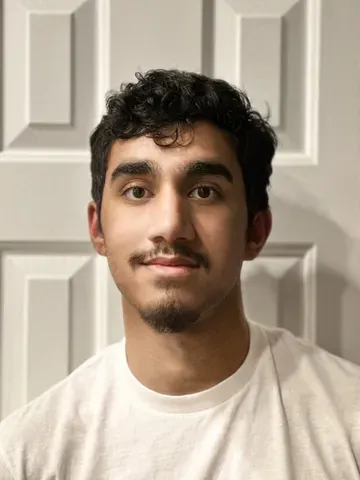
Armaan Sheoran is a senior at Thomas Jefferson High School for Science and Technology who enjoys running track and field, reading, hiking, and exploring complex ideas. With a strong background in STEM, he is drawn to problems that require careful analysis and evidence-based reasoning. Writing his letter allowed him to apply these skills beyond the classroom, examining the broader societal implications of artificial intelligence and the importance of responsible decision-making when addressing global challenges.
Read more winning entries from the 2025 Local Letters for Global Change contest!
Student letters reflect the authors’ views. Students choose their own topics and act independently if they decide to share their letters outside the classroom. The Pulitzer Center is a nonpartisan 501(c)(3) organization that does not endorse candidates, parties, or specific legislation. Our publication of student work is for educational purposes.