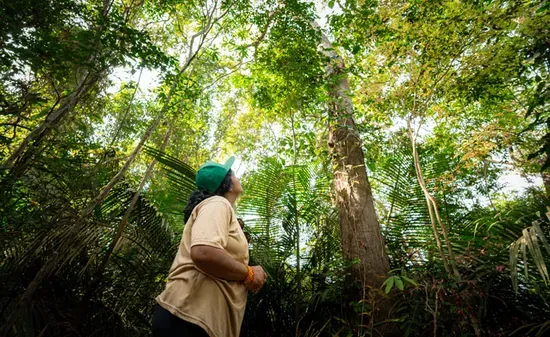
This letter features reporting from “Seeds are Key to Restoring the Amazon Rainforest - and AI Can Speed the Process” by Alice Martins Morais and Daniel Nardins
Dear Mayor-Elect Moreno,
I am writing to you as a student and resident of New Orleans to urge you to take stronger action on urban tree canopy expansion and local climate resilience, an issue that matters not only to our city but to the entire world.
A 2025 Pulitzer Center-supported article, “Seeds are Key to Restoring the Amazon Rainforest - and AI Can Speed the Process,” reports that the Amazon is deteriorating at an alarming rate. In September 2024 alone, over 20,000 square kilometers of forest were degraded, an area “more than 13 times the size of São Paulo city.” This degradation reduces the rainforest’s ability to store carbon, worsening global climate change. Scientists in the article emphasize that “we have no time to lose,” and are now turning to artificial intelligence to rapidly identify the native seeds best suited for large-scale forest restoration.
This is globally significant because tropical forests like the Amazon help stabilize the world’s climate. When they degrade, carbon emissions rise, extreme weather becomes more frequent, and sea levels increase - all consequences that directly affect New Orleans. Our city is already deeply vulnerable to climate impacts: intense heat waves, stronger hurricanes, and chronic flooding will only worsen unless global and local climate efforts work together.
While New Orleans is far from the Amazon, the story’s urgency is relevant to us. Just as scientists race to restore the rainforest, Louisiana is racing to restore our disappearing wetlands and protect our communities. Our neighborhoods also suffer from low tree canopy coverage, especially in areas like Central City, New Orleans East, and parts of Gentilly, resulting in dangerous heat islands. Higher temperatures contribute to heat related illnesses, worsen energy burdens for families, and reduce overall community resilience.
Fortunately, we do not have to start from nothing, as effective solutions already exist both globally and locally. The Pulitzer Center story highlights how coordinated seed collection, mapping, and AI-supported reforestation in the Amazon have dramatically improved restoration success rates. These same principles (strategic planning, tracking biodiversity, and community involvement) have also worked in U.S. cities such as Atlanta, Houston, and Los Angeles, which used targeted canopy programs to lower surface temperatures and reduce flooding. Locally, organizations like SOUL NOLA have already planted thousands of trees in underserved neighborhoods and shown measurable cooling and drainage improvements. A city-led initiative could strengthen their work by providing funding, data support, and citywide coordination. By building on models already proven effective, New Orleans can accelerate canopy growth efficiently and equitably.
I am writing specifically to you because of your leadership on climate, renewable energy, and community safety. You have consistently advocated for policy that protects residents, improves infrastructure, and builds a healthier city.
I respectfully ask you to lead the creation of a “New Orleans Green Canopy & Global Forest Partnership Initiative,” which would:
1. Increase New Orleans’ tree canopy by a measurable percentage over the next five years, prioritizing neighborhoods with the highest heat burden.
2. Integrate climate forest education into youth programs, connecting global forest loss (like in the Amazon) to local challenges in New Orleans.
3. Publish an annual “Urban Canopy Report” teaching progress on tree planting, heat-island reduction, and community involvement.
Research shows that expanding urban forests cools temperatures, reduces flooding, stores carbon, improves air quality, and strengthens neighborhoods. By investing in these efforts, New Orleans would be taking a leadership role in both local resilience and global environmental responsibility.
Thank you for your time and your service to our city. I hope you will consider this proposal and help build a greener, safer, and more climate-resilient New Orleans.
Sincerely,
Alvin Su
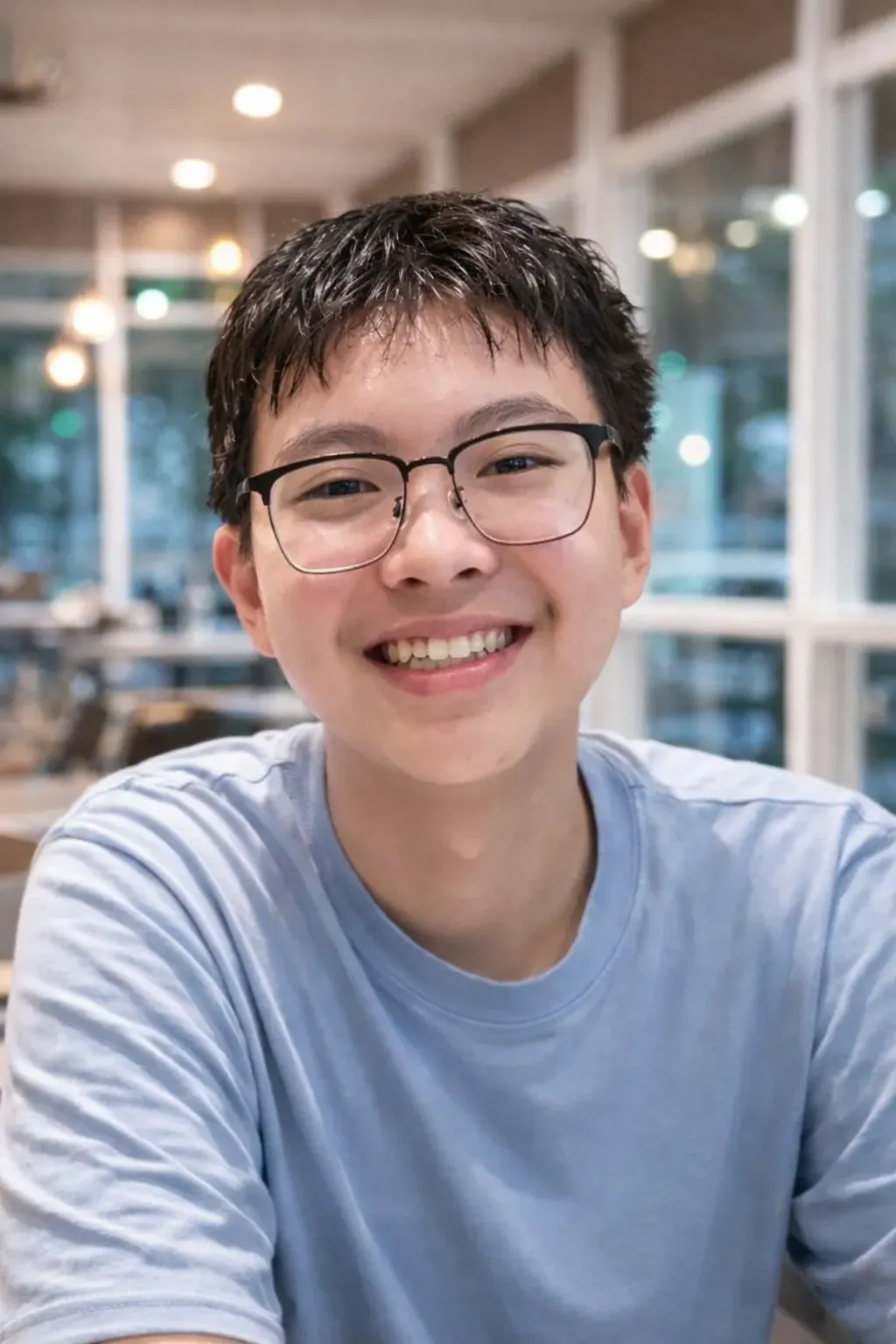
Alvin Su is a sophomore at Benjamin Franklin High School in New Orleans, Louisiana. He served as Communications Officer for the New Orleans Mayor’s Youth Advisory Council and is currently serving as a member of the Superintendent’s Student Leadership Council. He co-founded Voices in Motion, a youth-led organization advancing sustainability and civic engagement while increasing Asian community involvement. Alvin advances cultural inclusion through Mardi Gras by playing a key role in a Zodiac-themed float project celebrating Asian heritage and leading a bead reuse drive to foster sustainability. He also spearheads climate initiatives to reduce single-use plastics and conducts research on sustainable materials in his spare time.
Read more winning entries from the 2025 Local Letters for Global Change contest!
Student letters reflect the authors’ views. Students choose their own topics and act independently if they decide to share their letters outside the classroom. The Pulitzer Center is a nonpartisan 501(c)(3) organization that does not endorse candidates, parties, or specific legislation. Our publication of student work is for educational purposes.