Story
 September 18, 2026
He Was One of the World’s Most Wanted Men. So He Bought a West African Country
Country:

Project
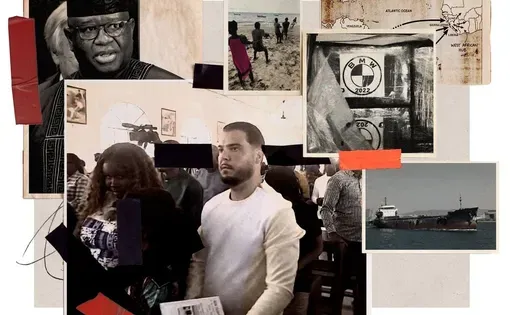
The World’s New Cocaine Highway
Over the last decade, West Africa has emerged as a major new cocaine conduit from Latin America into...
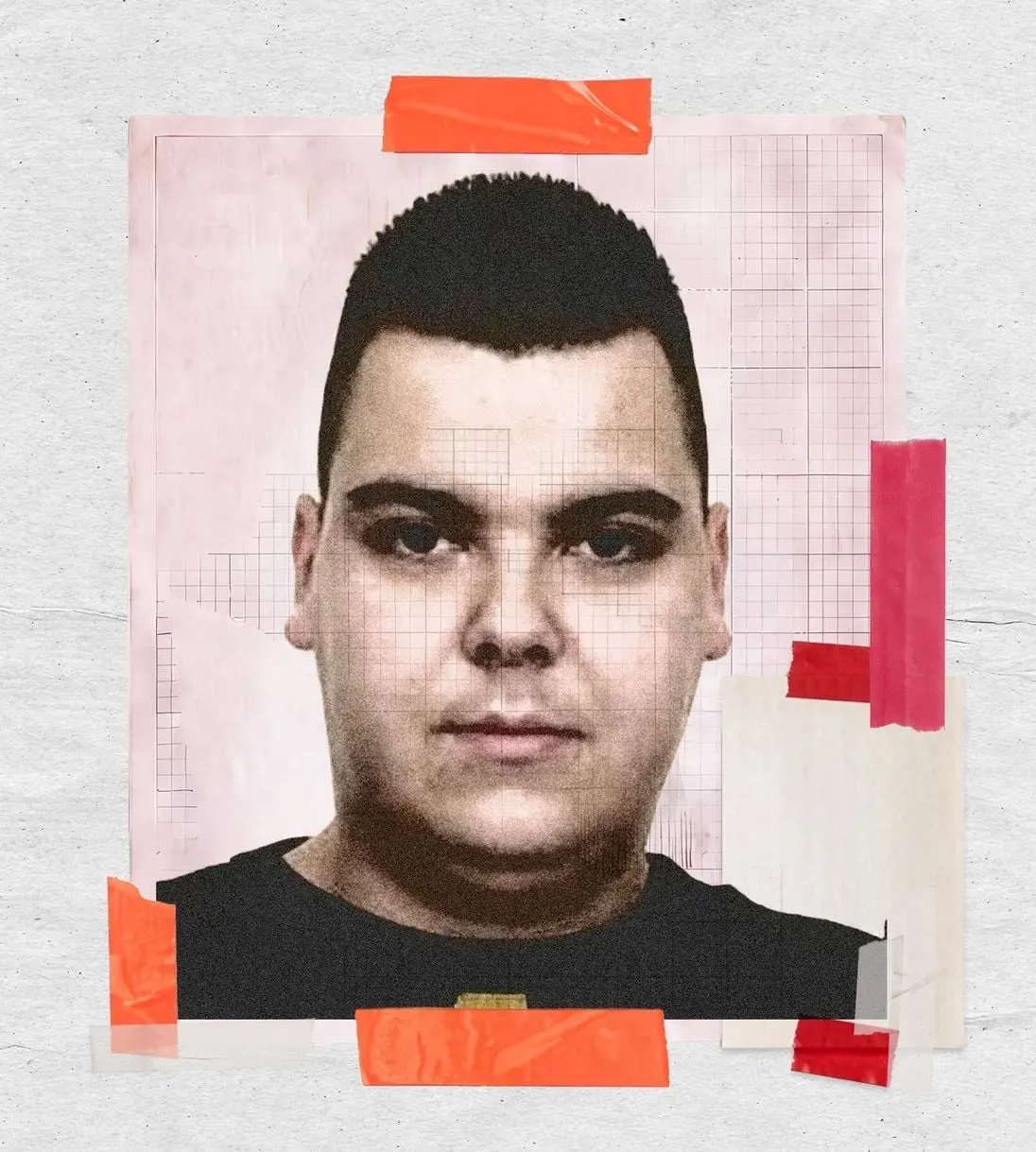
How Jos Leijdekkers turned Sierra Leone into a drug-dealer’s paradise
According to the rumour, the man was a Turkish investor called Omar Sheriff. He looked young, with the flabby cheeks of a teenager, but was soon asserting his authority around Freetown, the capital of Sierra Leone. From the tiers of slums south of the city his black G-Wagon was seen cruising up and down the Atlantic coast. At weekends he could be spotted ordering bottles of Jack Daniel’s at Sky Bar, rubbing shoulders with the Chinese card-sharks at the Grand Leone Casino across the street, or receiving government ministers in his waterfront suite at the 2 Seasons Resort, where they were sometimes observed by road-workers departing with flowers or envelopes tucked under their arms. He astounded local fishermen in the villages near Freetown with handouts of cash—sometimes $300 or more—and bags of rice distributed from a fleet of Land Cruisers.
Four months after his arrival, an unfortunate incident tarnished his good name. In the early hours of New Year’s Day 2023, one of his bodyguards discharged seven bullets into the kneecap of a young playboy named Hussein Fawaz at a Freetown nightclub called Scarlet. The Lebanese commercial elite of Sierra Leone—exporters of diamonds, importers of Toyotas, financiers of Hizbullah—were forced to confront the strange new threat to what they thought was their patch. “We tried to punish the man but couldn’t,” Hajj Fawaz, the victim’s uncle and one of Sierra Leone’s biggest construction tycoons, told me. “By the time we reached his house he had been moved away.”
As a nonprofit journalism organization, we depend on your support to fund more than 170 reporting projects every year on critical global and local issues. Donate any amount today to become a Pulitzer Center Champion and receive exclusive benefits!
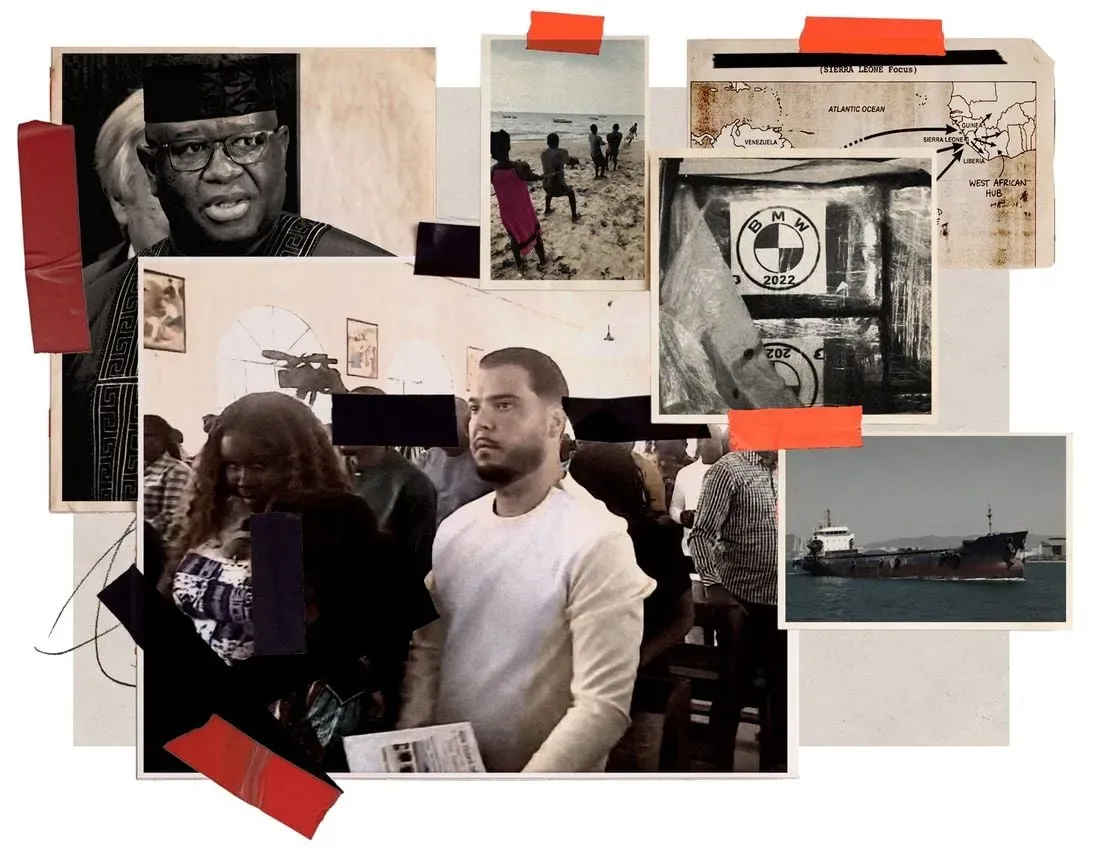
Exactly two years after the shooting, the Turkish investor re-emerged in the jungle interior of Sierra Leone. On New Year’s Day 2025, he was momentarily captured on video at an intimate mass held at St Joseph’s Catholic church in the village of Tihun, seated two pews behind Julius Maada Bio, Sierra Leone’s president, and listening intently to the sermon. A source sent the recording to Dutch reporters, who made a startling identification. The man was Jos Leijdekkers, known as Chubby Jos, one of Europe’s most wanted criminals. “It was like, ‘Wow!’” Yelle Tieleman, an investigative journalist who helped break the story for the Dutch daily Algemeen Dagblad, told me. “This can’t be true. Jos Leijdekkers has been there this whole time? Hiding in plain sight?”
Leijdekkers’s career is a marvel. Less than a decade ago he was a hitman stalking the streets of Antwerp
In the shadowy world of international narco-trafficking, Jos Leijdekkers is a gangster of flair. Over the past five years, bricks of cocaine stamped with his underworld moniker—“Holly”, short for Hollywood—have been found everywhere from the Ecuadorian banana port of Guayaquil to the North Sea. In his native Netherlands, his exploits have spawned biographies, podcasts, comedy skits, battalions of YouTube sleuths and, this February, a portrait of his unsmiling face and a seven-foot knife blade, spraypainted on a railway carriage in the somnolent city of Eindhoven. For criminologists, Leijdekkers’s career is a marvel. Less than a decade ago he was a hitman stalking the streets of Antwerp. He has since created a trafficking network spanning Latin America, Europe and the Middle East that brings in more than $2bn a year.


Leijdekkers’s greatest caper yet looks to be the takeover of a country. In half a decade Leijdekkers has turned Sierra Leone, a place previously best known for blood diamonds, into a hub for billions of dollars’ worth of Colombian cocaine, disguised as rice or plantain chips, which pass through each year en route to Europe. By funnelling a share of the profits to Sierra Leone’s political elite and funding large parts of the state itself, Leijdekkers has amassed perks that would be the envy of a Bond villain. He is believed to have a Sierra Leonean diplomatic passport. The police and military establishment bow to him, squadrons of container ships and submarines ply the shores at his command, and he is escorted in a motorcade by the presidential guard beneath a cloud of drones. Leijdekkers is celebrated in krio rap, the English-based creole spoken in Sierra Leone—“Ar change di game e name lek Umar Sheriff” runs a lyric of Drizilik’s recent hit “Sabi Road”—and, last September, he fathered a child with Agnes Bio, the president’s favourite daughter. (1843 approached the president’s office, the police and the armed forces about allegations raised in this piece and received no response.)
Go to Freetown today and behold a nation in the throes of narco-capture. Its beaches thrum with nightclubs, its skyline bristles with empty highrises, its streets shimmer with Corvettes and Tesla trucks. It took gangs decades to transform Mexico and Montenegro. In Sierra Leone it has taken just four years for a 35-year-old Dutch convict, boasting little more than a smartphone and a network of suppliers, to transform a beautiful stretch of west Africa into his personal fief. How did he do it?
For decades Africa played a minor role in the world of cocaine trafficking. In the 1980s, when the mass export of Latin American cocaine began, the smugglers sent their product straight to Europe aboard cargo ships. By the 1990s Rotterdam, the continent’s biggest container port, had emerged as the preferred destination. In 2000 a quarter of the 200 tonnes of cocaine reaching Europe was believed to enter through its docks. Within two decades nearly 50 tonnes were being seized each year at the port by customs officials, who estimated that they found less than a fifth of the cocaine dispatched to their quays.
Fighting the narco-traffickers was a game of cat and mouse. In the 2000s Dutch officials rolled out new mobile scanning units that could manoeuvre around a port and examine any container with ease. In response, the cartels built their own version in the Colombian Amazon, which they used to determine whether cocaine could go undetected within a consignment of cocoa beans (it could not) or be successfully smuggled inside sections of steel machinery (it could). In the late 2010s, when it had become clear that the criminal organisations also had some Rotterdam customs officials in their pockets, the port authorities took countermeasures: customs-workers were no longer told in advance which containers they would handle on any given day.
The tenfold increase in seizures between 2017 and 2021 seemed to be evidence that the port’s methods were effective. Yet when I arrived in Rotterdam this May, I found that seizures had slumped again, from 70 tonnes in 2021 to 12 in 2025. Plenty of cocaine is still being manufactured: production volumes in Colombia are believed to be at an all-time high. And plenty is reaching Europe: the current street price is €15,000 ($17,400) per kilo, the lowest figure ever recorded. Sewage samples confirm that up to 60,000 lines of cocaine are snorted every day in Rotterdam alone.
So how are drugs reaching Europe? One answer is the African connection, the importance of which has soared in recent years. In the mid-2000s, Latin American gangs looking to diversify their trafficking routes began to send some of their goods by fishing boat across the Atlantic to west Africa. The cargo would be hustled northwards by pickup through the Sahel or by trawler to the Mediterranean. At first the main entry point was the minuscule nation of Guinea-Bissau. By 2006 so much cocaine was passing through that fishermen took to whitewashing their houses with it.
Fast forward two decades and it is estimated that one-third of the cocaine reaching Europe now arrives via west Africa. Guinea-Bissau has been superseded by Côte d’Ivoire, Senegal and Cape Verde, but the logistics remain the same. Cocaine is kept in warehouses, often for months at a time, before being dispatched in small boats to the Mediterranean. Sometimes the destination is a mid-size port like Marseille or Gioia Tauro in Calabria. Other times, it is just a remote beach. “The problem used to be Rotterdam, Antwerp and Hamburg,” a customs analyst in Rotterdam told me. “Now it’s the entire southern coast of Europe!”
It’s easy to see why Sierra Leone, which sits between Guinea-Bissau and Côte d’Ivoire, presented such a mouthwatering opportunity for the narco-trade. Not long ago the country was wrecked by an 11-year civil war involving diamond-grabbing rebels, child soldiers, Liberian string-pullers, South African mercenaries and a panoply of peacekeepers. The conflict left 75,000 dead and displaced half the population. When it ended, international attention turned elsewhere, leaving behind a devastated country with a pliable political elite. Its Lebanese diaspora, which controlled much of the banking and construction sectors, offered a promising conduit for cleaning up earnings. Sierra Leone was also English-speaking and gorgeous, with teal waters and beaches of honey-golden sand. Some offered ideal harbours for cocaine arriving from Latin America; along others you could pitch hotels to launder the proceeds.
In half a decade Leijdekkers has turned Sierra Leone, a place previously best known for blood diamonds, into a hub for billions of dollars’ worth of Colombian cocaine
Today, Sierra Leone is the hub of a network that handles the equivalent of one-quarter of its GDP in cocaine each year. It is problematic enough when countries such as Ecuador or Serbia are infiltrated by so much narco-capital: it enters the political system, scares off legitimate investors and proves all but impossible to eradicate from the property and banking sectors. But in a place like Sierra Leone—where half the population survives on the equivalent of less than $3 a day and even parliamentarians make less than a waiter in Amsterdam—such an influx invariably ends up propping up much of the state itself, from public salaries to military expenditure to infrastructure.
Outside Sierra Leone, people ask how a country so desperate for European aid could possibly protect one of the continent’s most wanted men. Within it, a rather different concern is making the rounds. Between the luxury cars Leijdekkers has reportedly given to government ministers, the spate of new mining companies he is believed to be financing, the journalists he has bribed, the police and army units he is funding, and a forthcoming election in which his cash will probably play no small role, the question on everyone’s lips is how can Sierra Leone ever conceive of letting the man go.
In April I arrived in Sierra Leone to find a country in which hardly anyone could stop talking about Jos Leijdekkers even as I was reminded—sometimes discreetly, often not—never to inquire directly about the man. A UN mission head likened him to Clint Eastwood, the new sheriff in town. A hotel owner on the Banana Islands, an archipelago off Sierra Leone’s coast which Leijdekkers sometimes visits by yacht, compared his connections to those of Jeffrey Epstein. An army officer told me that one of the first things Leijdekkers did in Freetown was to visit a military barracks and fund the renovation of its gym out of his own pocket. His former driver told me that he does not like being looked in the eye. The “Big Boss” had a way of instilling confidence in workers who expressed fears over getting caught trafficking drugs. “Do not worry,” Leijdekkers would say. “This is normal.”
“These kinds of people, we are always seeing them in Africa. They come, they disappear. But the moment we learned who he was, it freaked me out,” Hassan Salman, a Lebanese car-dealer and one of the first people to sell a motor to Leijdekkers, told me. “I left Sierra Leone after finding out. I became really scared. Not small scared.” Sophie van Leeuwen, a Dutch correspondent for RTL News, told me she “had the strong feeling I was being followed by the secret police” during the first days of a reporting trip she took to Sierra Leone in February 2025. She was arrested outside a villa where Leijdekkers was believed to reside, informed that she had intruded upon a “special security situation”, and questioned for 15 hours. Her camera and computer were searched and scrubbed. The Flemish owner of her hotel was interrogated over her alleged role in seeding a European spy network in Sierra Leone.
One evening in the hills above Freetown I attended a cocktail party where Western diplomats mingled with aid-workers. “Careful with that,” a European mission head told me when I mentioned why I had come to Africa, swivelling her blue eyes round the room. A Norwegian mining investor assured me that there would only be one way of knowing whether I was making progress in my investigation: “The government will arrange a car crash for you.”
Across the political spectrum, Leijdekkers is afforded the peculiar privilege of not existing. President Bio has never publicly acknowledged the presence of the man who fathered his grandchild. Three times Kaifala Marah, a former governor of the Bank of Sierra Leone, pretended not to hear my question when I asked about Leijdekkers. Abdul Kargbo, head of the parliamentary opposition, stopped texting me when I mentioned his name.
It took two years from Leijdekkers’s arrival in Sierra Leone for Dutch authorities to confirm his presence in the country. In 2024, a member of his inner circle was flipped and presented them with a disposable coffee cup from which Leijdekkers had sipped, the lid of which was found to contain his DNA. (The source told me he was paid €750 for his bravery.) Yet to this day Leijdekkers’s precise location remains a mystery. In exchange for such information, the Dutch government has upped the bounty to €200,000, an amount designed to match the sum Leijdekkers is known to pay assassins to knock off his competitors. The number of confirmed sightings of Holland’s most wanted man can nevertheless still be counted on a single hand. The latest came in March 2025, when Leijdekkers was snapped at a rooftop restaurant in Freetown wearing a $700 Versace shirt and giving a Rolex to Alusine Kanneh, Sierra Leone’s chief immigration officer—who, during Leijdekkers’s first two years in Sierra Leone, bought three properties in the United States for $1.9m in total and was sacked soon after receiving the watch. (“I have no association with the person in question,” Kanneh responded when asked about the gift and properties.)
The trail had since turned cold. The most pervasive rumour is that Leijdekkers is migratory, covertly moving every few days between heavily guarded compounds in and around Freetown.
From the capital I set out down the Peninsula Highway, a boisterous torrent of motorcycles and tuk-tuks. Smoke twirled from bonfires of rubbish in the slums that blanketed the hills. On one side hulked jagged green mountains, which Portuguese sailors likened to lions’ teeth, bestowing Sierra Leone with its name. On the other stretched the Atlantic, a turquoise sheet upon which cargo ships and oil tankers clung like beads on a string. “The resort of invalids”, a 19th-century British traveller wrote of the coast, where slave traders from Devon and Cornwall had arrived a century earlier and married tribal princesses. They turned delirious with the heat and drink, and renounced their homeland, declaring themselves kings of islands the size of village greens. It would take decades for the Royal Navy, whose cannons still litter the coral reefs, to quash their descendants.
He gently but unequivocally forbade photos to be taken in his presence. He detested noise, going so far as to pay the bills of guests who chatted too loudly in exchange for them leaving the hotel
The beach town of Tokeh is a disorderly scattering of squat houses. Leijdekkers, who often spends a few days every month at a nearby resort, has expertly fed his reputation among its residents as a local Robin Hood. He buys exercise books for Tokeh’s children, pays their school fees and, every Ramadan, gives a bag of rice and 600 leones ($26) to each of its thousand-odd families—or so I was told by a fisherman who sometimes caught barracudas for Leijdekkers. The fisherman believed his patron to be Colombian and knew him only as “Jagaban”, a Yoruba word for a chief of great wealth.
A similar description was offered by one of Leijdekkers’s former waiters at the 2 Seasons Resort, who spoke to me on the condition that we meet days later in a different village and that I never learn his last name. On December 3rd 2022 Leijdekkers had checked into the resort and stayed for a month, the man recalled. Certain eccentricities stood out. He claimed to come from Turkey and had a bulky retinue of bodyguards from Ghana and South Africa. He gently but unequivocally forbade photos to be taken in his presence. He detested noise, going so far as to pay the bills of guests who chatted too loudly in exchange for them leaving the hotel. He owned at least ten mobiles (“Pixels and iPhones”), many cars, including “Cadillacs like the ones Donald Trump has”, and frequently hosted politicians and, on one occasion, the then-Chinese ambassador (1843 approached the Chinese embassy for comment and received no response.)
Leijdekkers’s own story begins in the old-money town of Prinsenbeek in the Catholic south-east of the Netherlands, in a neighbourhood where fat mansions rise above manicured hedges. “You’re looking for Jos? He’s just upstairs, let me get him,” the current owner of Leijdekkers’s childhood home—a white brick two-storey with a flagpole in the front yard—said to me. “You’re not the first to come asking.” He then shut the door in my face.
Leijdekkers had come to wealth by unconventional means. A few kilometres from Prinsenbeek, in the placid city of Breda, the red door of a glum brothel called Club Reeperbahn still glowers at a seedy intersection. It was once owned by Jos’s father, Joseph Leijdekkers, who did well enough from the sex trade to buy his family a summer home on Spain’s Costa del Sol. (1843 approached Joseph Leijdekkers for comment on the matters raised in this article via his lawyer and received no response.)
His son Jos developed a reputation for intransigence from his childhood years. Leijdekkers’s first wife, Hanane Alla, told me that her husband earned the nickname Chubby Jos not for his weight, but because he was born with a digestive disorder that made him bloated after eating spicy foods; he underwent two stomach surgeries rather than adjust his diet. A therapist who met Leijdekkers when he was 17 found him to be obsessive about “proving himself correct”. The evaluation followed an incident in which Leijdekkers observed with vacant detachment as three of his friends beat a boy to a pulp on a bike path outside Prinsenbeek.
He was still the local bully when he served the first of his prison stints in 2011. That February, Leijdekkers entered a pub outside The Hague and picked an argument with two Moroccan brothers over a barstool. Proposing that they take matters outside, Leijdekkers pulled a pistol from his red bomber jacket, shot one in the lung and the other in the leg. Both barely survived. A Dutch judge sentenced him to six years in prison; he served four.
By the time Leijdekkers was released, prison contacts helped propel him into the Dutch underworld, which had been taken over by the Mocro Maffia, a gang mainly comprising men of Moroccan descent. The Mocro Maffia had started out in the 1990s trafficking hashish from north Africa, but in the 2000s the group shifted to cocaine. Soon it began to upend Dutch society. By 2016, four out of five assassinations in the Netherlands were related to fights over turf rights and cocaine-smuggling routes.
Chief among the Mocros was Ridouan Taghi, a former restaurant manager. By 2016 he was on the run following a trafficking conviction, so he commanded his soldiers from the United Arab Emirates. There it was easy to meet fellow criminal bosses, expand his operations and grow rich by flooding Europe with cocaine from the safety of his penthouse. By the late 2010s Taghi was running with an all-star cast of Dubai-based traffickers that some observers termed the “super cartel”: members ranged from the Irish gangster Daniel Kinahan to the Bosnian kingpin Edin Gacanin to Raffaele Imperiale, a Camorra don.
Leijdekkers handled Antwerp for Taghi—Europe’s second largest port and a smuggling entrepot. In late 2019 photos were found on Taghi’s Blackberry showing a woman in her 50s beaten to death on the ground, mouth duct-taped and a finger and toe hacked off. The building bore strong resemblances to a warehouse where Leijdekkers was known to store drugs. By the time Dutch authorities attempted to arrest Leijdekkers, he had disappeared, first relocating to Spain, then joining Taghi in Dubai, where he took up residence on Palm Jumeirah.
In December 2019 Taghi was arrested and extradited back to the Netherlands, where from a prison cell he waged a campaign of savage retaliation against the Dutch establishment, ordering hits on bloggers and lawyers, and threatening to kidnap Crown Princess Amalia and assassinate Mark Rutte, the prime minister. Amid the pandemonium Leijdekkers quietly began sweeping up Taghi’s contacts and funding shipments of his own.
Leijdekkers’s modus operandi was laid bare in a trove of messages revealed in 2021. That year, French, Belgian and Dutch investigators succeeded in cracking SKYECC, an encrypted messaging service favoured by the global underworld. Overnight, half a billion messages revealed its innermost workings.
Sewage samples confirm that up to 60,000 lines of cocaine are snorted every day in Rotterdam alone
Among them were tens of thousands of messages sent and received by Leijdekkers, who used at least eight aliases on the service. The quantities of cocaine he discussed importing were staggering. When nearly two tonnes were seized in 2019 in Rotterdam, he waved it off as a passing inconvenience, bragging that at any given moment he had a tonne en route to Europe. No less remarkable was the violence. In the same year, a tipoff from Uruguay led to the confiscation of four tonnes of his cocaine. Leijdekkers assured his men that “we will kill all families there tomorrow”. In Finland, two oblivious civilians came into possession of 500 kilos of his product. Leijdekkers ordered his men to retrieve the drugs, zip-tie the men and “dominate them”.
In 2020 Leijdekkers surfaced in Turkey, where the government was trying to incentivise people to deposit foreign currency or gold in local banks by offering regular amnesties. Over the next three years Leijdekkers would repeatedly fly into Istanbul, sometimes under his own name, at others with one of three fake German passports.
There he forged connections with Turkish shipowners and arms-dealers who would help him move drugs. He met Kurds who hustled ecstasy into the former Soviet Union, Montenegrin clan leaders who had infiltrated some of the world’s biggest shipping lines, and an adviser to the vice-president of a small west African nation who gave him a diplomatic passport and the offer of refuge whenever it might be required. Leijdekkers started living a life of preposterous luxury, travelling in a Lamborghini and a pair of private jets, renting a yacht for €62,000 a week and spending months in a villa outside Bodrum that, Turkish court documents would later show, he had bought under a false name with €500,000-worth of gold bars flown in from Dubai. The investment brought him Turkish citizenship.
In May 2023 a warrant for his arrest was issued in the wake of the SKY revelations. Dutch authorities warned their Turkish counterparts that Leijdekkers was expanding Taghi’s narco-empire from a glittering apartment overlooking the Bosporus. A raid was launched and around $2m in cash was seized from apartments across Turkey, along with caches of gold-plated weapons. The police apprehended 51 gangsters. The only person who went untouched was Leijdekkers himself, who was seemingly allowed to leave the country on a private plane as rumours of jaw-dropping backhanders to Istanbul judges began swirling through the national press.
Europe, Dubai and Turkey were no longer safe. Whither next? In 2025 the Dutch crime writer Hans Werdmölder concluded his 160-page biography with the rumour that the 34-year-old narco-baron had smuggled his way up the Black Sea coast, then vanished without trace somewhere in the mountains of the breakaway Georgian republic of Abkhazia.
In a bar outside Freetown I met a former customs agent whose teeth chattered with nerves for the first few minutes of our conversation. In late 2022, a period that coincided with Leijdekkers’s relocation to Sierra Leone, the agent observed changes at Queen Elizabeth Quay, the country’s deep-water port. Once every three months the port’s director-general, who was President Bio’s nephew, would arrive in the evening in a black SUV and instruct employees to start packing up. “Orders from above,” the dockworkers and inspectors were told by superiors. Then, near midnight, as many as 20 soldiers would show up. The tracking numbers of particular cargo containers were known in advance to the soldiers, who were responsible for escorting them away from scanners and loading them onto trucks. (1843 approached the port authorities about these allegations and received no response.)
In January 2025, the month that news of Leijdekkers’s presence in Sierra Leone broke, seven suitcases of cocaine were found inside a vehicle belonging to Sierra Leone’s embassy in neighbouring Guinea. State networks now seemed to pose too great a risk. The customs agent told me that, by spring 2025, the director-general and soldiers stopped making unannounced visits.
But the cocaine kept coming. Last July a blue trawler ran aground halfway between Freetown and Leijdekkers’s resort at Tokeh. The Agios beached near the village of Hamilton, a rusty warren of shanties roamed by gaunt dogs and feral pigs. According to a fisherman I met on the beach, the incident happened at night, while the men were out at sea with their nets. The engine’s sputter woke up the women, he said; they went to investigate, using their phones as torches, and inside the boat found “four white men, packages and lots of money, foreign currencies”. Before any additional investigation could be attempted, soldiers turned up, led the boat’s crew members away and carried off the packages and cash. “Nothing of police interest or security concern discovered,” claimed a government press release. Weeks later a crane arrived to try to push the vessel out to sea, to no avail. Nearly a year later, the Agios still lies stranded on a sand dune, an object of ongoing fascination for locals. A man dozing inside snapped awake when I pulled out my phone to take a photo. Behind him, state-issued fatigues dangled from a hanger.
I headed farther south. A peninsula of ancient fishing villages was giving way to construction, tourism and drugs. Along roadsides, men pounded boulders with sledgehammers to clear land for hotels. Beaches were being excavated for sand to feed the concrete industry. A mammoth, Chinese-funded fishing port was under construction, poised to crush what remained of the traditional economy of wooden boats and hand-stitched nets.
A UN mission head likened him to Clint Eastwood, the new sheriff in town. A hotel owner on the Banana Islands compared Leijdekkers’s connections to those of Jeffrey Epstein
Two miles from a place called Black Johnson, I met a number of men who, last January, were privy to a bewildering incident. Just after 6am, a construction worker named Victor Dixon (a pseudonym) awoke in his beach hut to cries for help from a white man waving from atop of a metal tube. The man’s vessel had become lodged in a crevice, observed Dixon, who went to help and briefly managed to peer inside what turned out to be a submarine. “There were so many cartons in there,” Dixon told me. Within an hour the security services had come and hidden them in the nearby bush. They distributed wads of dollars to locals who had witnessed the scene and barred onlookers with a stricture that has become customary along the coast over the last year: a land survey was being conducted, requiring road closures. “I wanted to see the submarine for myself,” the councillor of a nearby village later told me at his house. “But when I got there I received a call from State House: ‘Don’t touch it.’”
The fate of other consignments of Leijdekkers’s cocaine has been stranger. On the evening of April 10th, my first Friday in Freetown, a freak storm lashed the city, shooting beach chairs into orbit and sending acres of mud cascading through the slums. In the days that followed rumours began circulating of “bibles”—packages of cocaine that resemble thick books—which had fallen off tenders motoring out to a container ship at sea.
For thousands of fishermen, these were the most valuable catch imaginable. Along the headland of Aberdeen, several bibles were said to have washed ashore near the Leone Casino; a fisherman called Kenneth Sherbro (also a pseudonym) told me that a boy who found them had been shot by police. Other bibles had floated farther afield. Two days after the storm, on the afternoon of the 12th, I was sent a photo by a fisherman who refused to share his name. It showed 17 stacked bibles packaged in black plastic and stamped with the letters BMW, one of several emblems that have been tied to an Albanian mobster operating in Guayaquil. They had washed up a day earlier at a shantytown called Funkia, five miles to the south.
I set out to Funkia at once. Along the shore, women washed clothes in saltwater pools and men chanted as they pulled in from the Atlantic canoes adorned with the logos of European football clubs. The slum was filled with the sour stench of kush, an omnipresent street drug. I wandered through a thicket of shacks towards a ghetto known as the Zone, where men sucked on joints the size of matchsticks, mumbling gibberish to themselves. On a clapboard plank the rules of Funkia had been inscribed: “Fighting: 20 leone fine. Stealing: Police case. Abusive language: 20 leone fine. Smoke where U buy”. Below them was written the name of the slum’s enforcer: Catfish.
Catfish was a scrawny man with a necklace that read “KING” in gold letters. When I asked about the bibles, he issued a tight smile. “Some boys finally got their lucky day.” Leijdekkers had local bigwigs up and down the coast who were paid to look for wayward packages of his cocaine, Catfish explained, but every so often bibles managed to slip through. Leijdekkers tended to be understanding of such situations. If a boat of fishermen found a bible, a $15,000 reward was split among its crew; slum boys who located packages were directed to individuals in Freetown who might give them a plot of land, or even a house. But no matter who found Leijdekkers’s bibles, everyone was aware of two rules. First: once you had accepted cash or land in exchange for a bible, it was advisable to leave Funkia and never come back. Secondly, Leijdekkers had ways of finding out about bibles that went unreturned. “Those are the boys who disappear,” Catfish told me.
One afternoon I climbed to the top floor of a stifling beach bar called Hardees, south of Freetown. A muscular young man wearing a gold watch around a tattooed wrist was waiting for me. He introduced himself as Wurie Jalloh, a 35-year-old shopworker who, over the next hour, continually eyed the staircase behind us, as though expecting eavesdroppers or worse.
Six months earlier, in October 2025, Wurie, his 40-year-old brother Alan and two friends—one of them a celebrity footballer who had once relocated to Cyprus to play professionally—decided to treat themselves to a weekend at Freetown’s Lumley Beach. They splurged on a couple of rooms at the Pearl Hotel at $200 a piece. Wurie’s older brother was popular, successful with women and an up-and-coming businessman. He had recently bought a liquor store.
That Saturday afternoon the four men drove from their hotel to a supermarket to buy some beers, only to realise they had no cash. “I’ll get some,” Wurie volunteered and returned to the hotel. By the time Wurie arrived back at the supermarket, just a few minutes later, three doors of his brother’s blue Ford were hanging open. No one was inside. “Have you seen my brother?” Wurie asked a nearby fruit seller, who explained what had happened. A black SUV had pulled into the parking lot. Three men—one white, two black—had emerged from it in balaclavas. The white man drew a handgun, fired a silenced pistol into a tyre of Allan’s car, forced the three men into his own vehicle, then drove off.
An hour later Wurie received a call. It was his brother, who explained that a car was heading to the Pearl Hotel with his ID and bank card. Wurie was to withdraw $28,000 and “give $4,000 to the men”. Wurie received the cards through the cracked window of a black SUV, took out the cash from the bank, and handed it to the men in the car. He still had little idea what was going on.
That night Allan’s phone was turned off. It has never been turned on since. Over the following weeks Wurie used every means to find his brother. He contacted journalists, took to social media, explained to police over and over what had happened. “Three Sierra Leoneans were kidnapped in broad daylight! A famous footballer!” he exclaimed to me before calibrating his voice back to a whisper. “It happened down the street from the First Lady’s office.” The police demanded $400 for the fuel needed to conduct a search, then never lifted a finger. Even though Wurie and Allan are related to Mohamed Jalloh, Sierra Leone’s vice-president, politicians refused to get involved.
There must have been some mistake, Wurie insisted. The kidnappers had taken his brother by accident. A month into his search, however, Wurie says he was pulled into the cloakroom of a police station and informed that no mistake had been made. “Don’t bother with this anymore,” an officer told him. “This was ordered from higher up.” I asked Wurie where he thought his brother had been taken. He shook his head. “My brother was murdered,” he said, pushing back tears, then rising to leave.
Allan and his accomplices entered the warehouses at night and swapped Leijdekkers’s cocaine for flour
I heard a conflicting and darker version of this story nine days later, from a source within Sierra Leone’s government. Allan Jalloh was a petty criminal who, desperate for cash, had placed himself at the mercy of the cocaine underworld, the source said. As a young man, Allan had spent 13 years in Sweden, where he worked in airports and learned a thing or two about moving contraband. Upon returning to Freetown, he kept up his scams, hawking bars of fake gold to American investors, only to get caught. Pursued by lawyers and debt collectors, he shifted to drugs, running in a circle of small-time cocaine traffickers, some of them police officers and soldiers.
Early last year they hatched a plan. Leijdekkers’s warehouses along the Peninsula Highway were stuffed with cocaine awaiting dispatch to Europe. Why not export some of it themselves? It started with a bible here and there. Allan and his accomplices entered the warehouses at night and swapped Leijdekkers’s cocaine for flour. They stashed their haul within secondhand car parts, rented boats and smuggled it into neighbouring countries of west Africa.
But they got greedy. In September 2025 Allan and his crew learned of a huge consignment that Leijdekkers was preparing for export. Shortly before it was slated to leave Sierra Leone, they withdrew the cocaine from one-third of the bibles. Less than a month later, I was told, news reached Leijdekkers that a shipment of his cocaine had arrived in the Middle East, where it was tested and found to be flour.
It took half that time for Leijdekkers and his contacts in Sierra Leone’s security services to find and flip a member of Allan’s gang. In the following weeks those involved in the theft—22 men in total—were tracked down in Freetown in an operation that, by all appearances, seemed to be co-ordinated with Sierra Leone’s army. On the afternoon of Allan’s kidnapping, his liquor shop was shaken down by two masked men, one of whom turned out to be a police sergeant, the other a member of the military police. “Jos Leijdekkers has Sierra Leone wrapped around his finger,” I was told by the government source who, six days after we met, cut off contact when, leaving work one evening, they found their car smashed to pieces.
Leijdekkers remains wanted in Europe for a litany of crimes. In Belgium he has been sentenced to 57 years in prison for cocaine-trafficking, theft and conspiracy to murder. He owes the Dutch state €96m in fines and has been sentenced in absentia to 24 years in prison on drug-trafficking charges. He remains under investigation for potential involvement in at least 12 murders. Any chance of his extradition from Sierra Leone appears slim, in part because no extradition treaty exists with either Belgium or the Netherlands, in part because officials insist that a full investigation into how exactly Leijdekkers entered Sierra Leone must first be concluded.
This hasn’t stopped European prosecutors from trying to nibble away at the edges of Leijdekkers’s vast financial empire. In May I attended the trial of Leijdekkers’s father, mother and sister on money-laundering charges in Rotterdam. The sums in question were paltry compared with the value of cocaine Leijdekkers has in transit at any given moment: an apartment in Dubai, two Bentleys, watches and jewellery, designer bags and a bit over €20,000 in cash. But it was the closest Dutch prosecutors could get to holding the man to account.
The lawyer for Liesbeth Leijdekkers, Jos’s sister, spoke first. For years Dutch police had listened in on her phone, hacked her computers, tailed her as she walked her dogs, and stationed undercover agents at parties she attended. One day she noticed that her dishwasher was broken. A repairman located a bugging device inside it. When Liesbeth called the police to confront them, they admitted that the device was theirs and asked if she would return it to them. “All this attention is because of her brother, Jos Leijdekkers. There wouldn’t be this circus without him,” exclaimed her lawyer.
Next came Jos’s father, Joseph, who seemed bored by the affair, picking his nails through the proceedings. “I have never received anything from my son,” he pronounced. The prosecution alleged that Leijdekkers gave him a €110,000 Patek Philippe in 2019; he claimed he bought it himself two years earlier in Dubai. “It’s weird that I’m even here. I read all these stories about my son. It’s insane that they are allowed to write all of these things.”
Two weeks later the rulings were handed down. The trials of Liesbeth Leijdekkers and her mother were postponed by six months; the court did not find sufficient evidence that Joseph Leijdekkers had knowingly benefited from his son’s criminal dealings. He could keep his watch.
Confiscating some of Leijdekkers’s cocaine has proved easier than convicting his family of anything. At the beginning of May a boat called the Arconian, which had left Sierra Leone 11 days before, was boarded by Spanish police off the coast of Western Sahara. They found 1,279 bales of cocaine weighing more than 30 tonnes—the largest known cocaine shipment in history, destined to supply Europe with a summer’s worth of drugs. One month later, an apparent back-up plan was foiled. In the German port of Wilhelmshaven, authorities found another eight tonnes of cocaine within a container of cocoa beans dispatched from Sierra Leone. In July, a third plan was thwarted when nearly four tonnes of cocaine was seized in Liberia en route to Britain. The authorities contend that all three shipments were organised by Leijdekkers.
Dutch law enforcement has also been circling the man himself, drumming up schemes to nab him. A former member of Leijdekkers’s inner circle told me that, last year, he was enlisted to hand over a blueprint of Leijdekkers’s office in Freetown to Dutch officials, so they might deploy special forces by helicopter and whisk him away. This plan was rejected in favour of a more feasible one to snatch him from a seaside resort by speedboat. “They wanted to know everything. Where his room is, how he sleeps,” the source told me. “But in the end they thought it too risky. And they had no permission [from Sierra Leone] to do this.”
Leijdekkers owes the Dutch state €96m in fines and has been sentenced in absentia to 24 years in prison on drug-trafficking charges
Two weeks after the Arconian’s seizure, and after nearly two years of pleading with Sierra Leonean authorities to extradite Leijdekkers, the Dutch finally made their move. According to De Telegraaf, a Dutch newspaper, special forces were positioned in a vessel off the coast of Liberia: they planned to capture Leijdekkers in international waters as he headed south of Sierra Leone on one of his occasional tours of west Africa. At the last minute, however, Leijdekkers did not board his boat and the raid was called off. Dutch authorities would lament that they were thwarted by “external factors”. A tipoff—or perhaps gut instinct, sharpened by years of elbowing his way through the trigger-happy cocaine underworld—told Leijdekkers that something was amiss.
On the afternoon of my tenth day in Sierra Leone I was driving along Peninsula Highway when five vehicles whizzed past me in the direction of Freetown. Unlike the cavalcades that transport President Bio and other dignitaries, this one had no flashing lights, sirens or motorcycles. Three white Land Cruisers were bookended by two pickups, their beds full of soldiers. Over the next 20 minutes I tailed them by motorcycle towards the capital. At an intersection near Juba Hill the convoy continued up the coast. But one Land Cruiser tacked right towards Freetown’s downtown. I followed it as it coiled towards a busy four-lane boulevard called Wilkinson Road, then turned into the car park of a police station where an automated blue gate wheeled shut behind it. It proceeded up a road ramp towards the station, where it idled.
On the opposite side of the boulevard, an elevated branch of United Bank for Africa offered an unobstructed view of the car park. From there I observed a large white man emerge from the back seat of the Land Cruiser. He wore a brown T-shirt. Above his waist sat a muffin top of fat. A bald patch glistened from the crown of his small-eared, shaven head. A man in a black shirt approached him, shook his hand, then led him towards the station, where several uniformed officers saluted them with taut deference.
With a rush of disbelief, I watched them enter the building. For even at the distance of a football field away, there could be no mistaking the figure. At long last I had set eyes on Jos Leijdekkers.