Story
 July 1, 2026
Facing Renewed Scrutiny, Afghans in the U.S. Struggle With Uncertainty Once Again
Country:

Students report on various issues around the world.


They live in doubt after Trump pledges to re-examine visas given to individuals from 'high-risk countries'
SAN FRANCISCO—Arriving in the United States after a two-year-long wait in Albania, Hasina, who asked to be identified only by her first name, was overcome with emotions. Here, she said, “I finally have some clarity; I have a destination to land.”
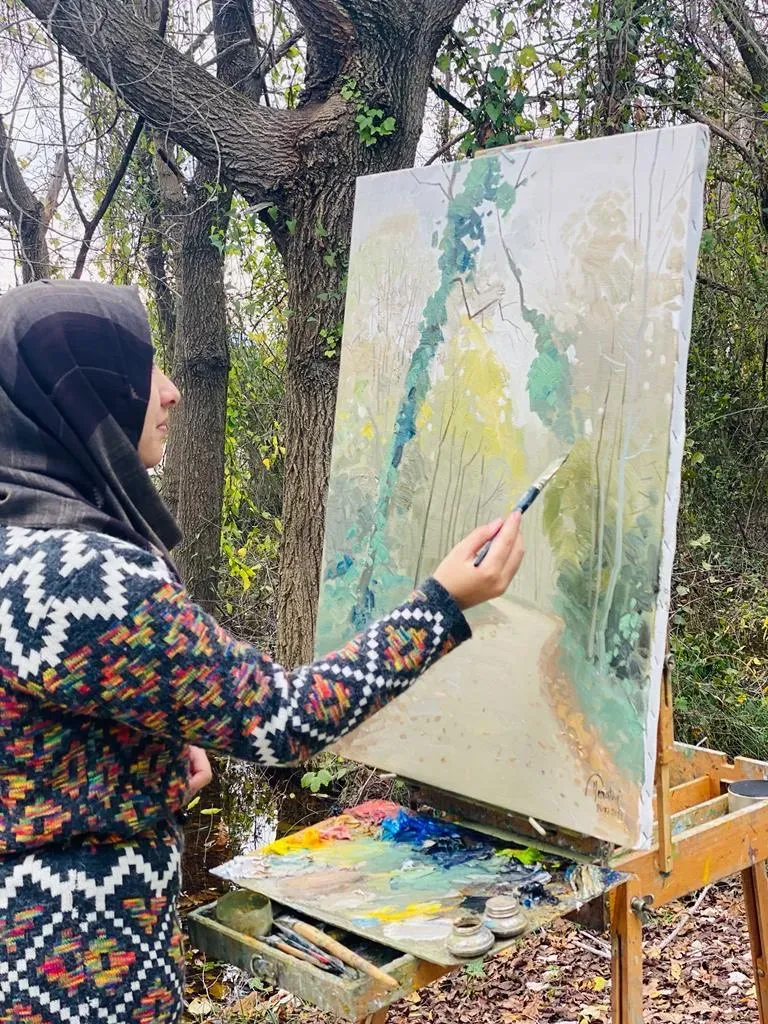
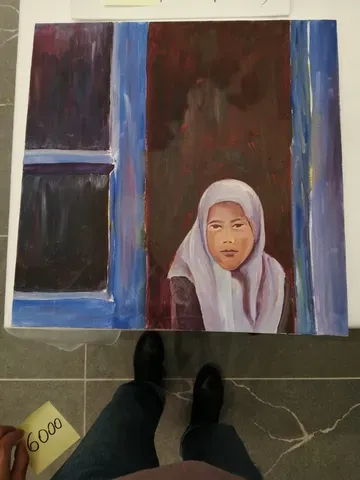
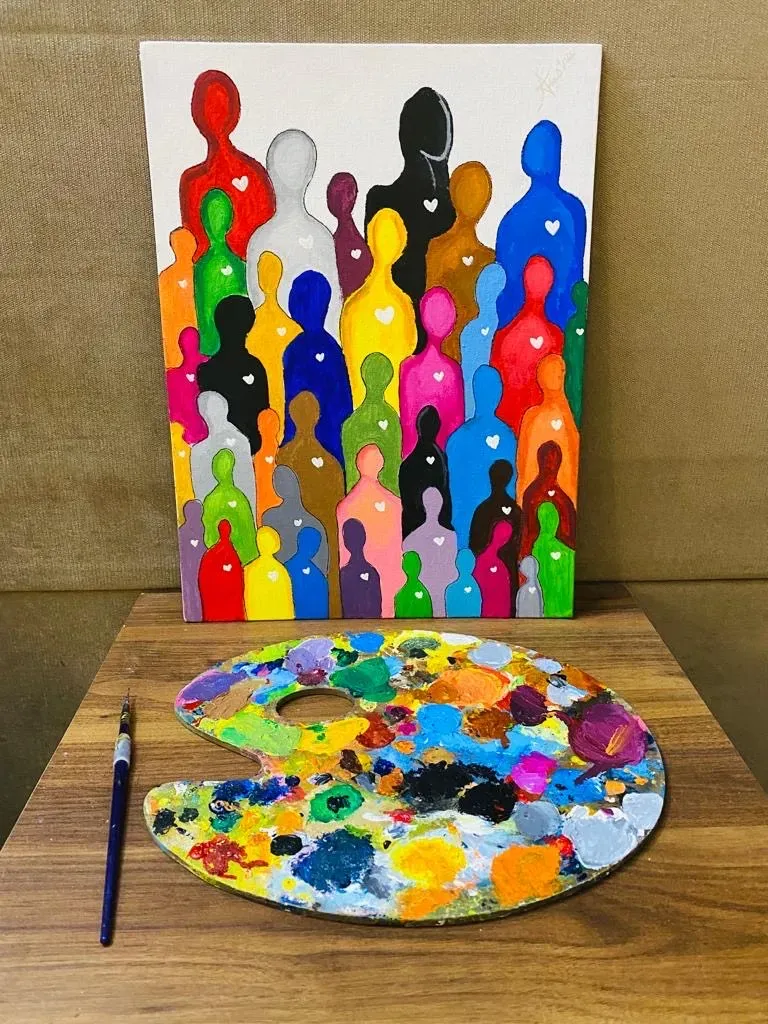
Almost five years after the fall of Kabul, Hasina is one of many Afghans who have found their new normal in the United States. She works in education, helping children learn English as a second language. As an artist, she spends her free time exploring new mediums like ceramics and woodburning.
Yet over the past year, Hasina and thousands of her fellow Afghans in the United States have faced renewed scrutiny by the Trump administration. After the shooting of two National Guard members near the White House in November 2025—in which an Afghan man was identified as the suspect—President Trump pledged to re-examine all immigrant visas given to individuals from “high-risk countries” during the Biden administration. It remains unclear when or whether this review will take place.

As a nonprofit journalism organization, we depend on your support to fund more than 170 reporting projects every year on critical global and local issues. Donate any amount today to become a Pulitzer Center Champion and receive exclusive benefits!
“A lot of people who are Afghans who have been here for a few years and starting to feel settled, now are fearful that they’ll have to return to Afghanistan, or their family who has been waiting to come won’t be able to and will be stuck there,” said Jims Porter, external affairs manager at Opening Doors, a resettlement agency operating in Sacramento, California. “And I think those things would cause distress in any of us, but it also retraumatizes folks as they relive what they fled and the fear of going back.”
Opening Doors serves the largest Afghan community in the United States. Since Trump’s policy changes in November 2025, the group has seen an increase in legal aid requests from Afghans, placing additional stress on an already overburdened system.
Soon after his inauguration on January 20, 2025, Trump signed a wave of policies aimed at restricting immigration.
Most Afghans in the U.S. were legally protected because of their status as Special Immigrant Visa (SIV) holders. The SIV program was a pathway created specifically for Afghans who had worked, directly or through contractors, with the U.S. government. Under the current Taliban rule, these individuals and their families face the threat of retribution and violence. Other Afghans arrived through Temporary Protected Status (TPS) or humanitarian parole.
The proposed review of previously approved immigrant applications would include SIV holders. The Trump administration has argued that Taliban control of Afghanistan has complicated the issuance of passports and other identifying documents, leading to inappropriate screening and vetting measures.
Diminished protections for Afghans in the U.S. began in July 2025, when Afghanistan was removed from the list of countries from which individuals could be granted TPS. The Department of Homeland Security (DHS) determined that the country was no longer experiencing economic and political instability.
But the United Nations notes that 75% of the population in Afghanistan struggles to meet daily needs and the country upholds a system of “gender apartheid,” where regulation specifically targets and restricts women and their rights. An ongoing border dispute with Pakistan, internal violence against minority ethnic groups, and natural disasters have claimed thousands of lives in Afghanistan over the past year.
In the United States, situations that never resulted in detention a few years ago, like attending a green card interview or hearing, have ended with people in jail, said David Tarr, a lawyer for the Council on American-Islamic Relations. The uncertainty has become “a source of great anxiety among the community.”
Here in America, Hasina said, it feels like people are stuck “in their own world, in their own bubble of struggles, by themselves, alone.”
Funding cuts weaken an already fragmented resettlement sphere
Following the Refugee Act of 1980, resettlement agencies emerged with the hope of filling gaps in the system that greets newcomers, whether in housing, employment, English-language classes, or general financial assistance. Today, organizations can range from local grassroots efforts to widespread national systems. While there are only nine overarching refugee resettlement agencies, hundreds of partner and affiliate organizations provide assistance.
“The core framework of resettlement, even in the best-case scenario, there’s not enough scaffolding to fully integrate a family,” said Mitchell Margolis, the executive director of the Oakland, California, office of the International Rescue Committee.
Providing initial housing and finding a “survival job” barely scratch the surface of creating a new life in a country with a new set of rules. Programs focused on learning to drive, using a credit card, or supporting mental health may seem menial, but these help color in the edges of the resettlement sphere. These programs are also some of the first on the chopping block when money gets tight.
“We’re just trying to figure out how we continue to support the community with what they need in this environment where we don’t have the resources,” Opening Doors’ Porter said. The sustainability of these organizations, the resettlement ecosystem itself, is on the line.
Many of the organizations helping immigrants have endured the past year in part because of changes made after the first Trump administration. Several employees from different institutions spoke of a focus on diversifying funding rather than remaining reliant on fluctuating federal money. Some private partners have stepped up to the challenge. However, this support cannot cover the significant gap left by federal funding, often resulting in cuts to staff and programming.
The ongoing national spotlight on immigration has spurred increased interest in volunteering and small-scale donations from individuals, businesses, and local government. Requesting financial help on a state and county level has been met with varying degrees of success. While many areas are sympathetic to the immigration cause in theory, providing financial support can often prove more difficult.
“We’re really trying to mobilize people, and I think that’s what we need now—for the community to understand that they need to act, not just give symbolic gestures and support,” said Giselle Garcia, the programs director of mutual aid organization NorCal Resist.
With immigrant families facing the loss of their primary breadwinner due to deportation or the end of work authorization, several agencies have expanded offerings of basic services like food and clothes this year. The numerous changes to immigration policies have sent “ripple effects” through the entire system—for both organizations and individuals.
“We are here to provide humanitarian assistance,” Margolis said. “We follow a federally defined playbook and, in that way, while it’s very hard work, it’s very cut and dry—it’s a checklist—but when those things are in flux or changing, that can make our lives difficult.”
Left behind: Afghans abroad
The federal government halted funding for the International Organization for Migration back in early 2025, leaving Afghans with approved SIVs stuck without the financial means to fly to the U.S. No One Left Behind (NOLB), a nonprofit organization, stepped up to provide financial assistance, helping over 3,000 Afghans with SIVs reach the United States from other countries. The effort cost USD $4.2 million, said Andrew Sullivan, executive director at NOLB. Typically, the organization operates with a yearly budget of around USD $3 million.
After two decades in Afghanistan, the U.S. government has extensive background screening, paycheck records, and biometric information on many SIV applicants. Yet, none of that information is readily available. Instead, the onus is on the individual to demonstrate their eligibility to both the Department of State and U.S. Citizenship and Immigration Services (USCIS). Acquiring the proper documentation can take months or even years—and that’s just the first step.
The second part of the process includes further rigorous vetting: in-person interviews, interagency background checks, recommendation letters, and medical exams. Even then, only a certain number of visas are approved each year by Congress.
“You would think that if you’re eligible for the SIV program, we’d have a visa available for you. That’s not the case,” Sullivan said.
For the fiscal year of 2025, there were 12,000 SIVs available. A letter signed by over 100 members of Congress with bipartisan support requested 20,000 SIVs for the next year. However, as of January 1, 2026, the State Department has suspended all visa issuance to Afghan nationals, including SIVs.
Many wait for visa approval outside of Afghanistan—typically in neighboring Pakista—paying for a hotel room for months on end. One Afghan on a student visa recounted how many of his peers, despite admission to top universities in the U.S, ended up returning to Afghanistan because they could no longer afford the wait.
Even if financially viable, the situation for Afghans in Pakistan continues to worsen. Sullivan described how Pakistani authorities work to deport thousands of Afghans while discriminatory housing and employment practices leave those remaining on the margins of society.
As of October 2025, according to the U.S. Department of State, there remained 45,357 principal applicants waiting on review of documents from the first step. An additional 13,635 Afghans waited on visa interviews.

“We had no idea, we had no time frame, we had no updates,” said Hasina. By the end of her two years in Albania, she said she felt that the place had transformed into a new home for her and her family after uprooting their lives in Afghanistan.
There would be different news every day, some of which was true and some that was not. Those first few months, everything felt hopeless, Hasina said. She struggled with sleeping, eating, or even leaving her family’s hotel room.
But then she began work as an interpreter and community mediator for Afghan Future Fund, an organization aiming to empower Afghans through educational scholarships and entrepreneurial funding. Hasina helped translate announcements and teach English at the resort that hosted nearly 2,000 Afghan families waiting for visa approval from the U.S. Thanks to NOLB, all of those approved for SIVs have now reached the United States.
From Afghanistan to Albania to America, Hasina has continued painting. She calls art her “tool for expressing her emotions.”
No matter what else is happening in the world, she said, she focuses on “finding the inner light, finding your way back to life.”