By Arielle Pineda
6th grade | Blue Ridge Elementary School | Arizona
Second place K–11 contest winner, Climate and Environment category
With lines from “As the Planet Warms, a Humble Sea Bean Is Proving To Be a Promising Superfood” by Rachel Parsons, a Pulitzer Center-supported story
They said the land was tired,
too much salt in its wounds,
too much sun in its breath,
too much history buried in dry soil.
They said nothing good grows here.
But across an ocean,
in the marshes of Spain,
a man bends low,
hands steady,
cutting green from salt.
A plant with no leaves, no beauty,
only stubborn life:
Salicornia.
Sea bean.
Glasswort.
Pickleweed.
Names like stories
carried by wind and water.
I think of my mother’s voice,
crossing borders the way seeds do—
quiet, persistent,
rooting where it wasn’t invited.
I think of my father’s hands,
cracked like desert earth
on the Apache reservation,
where we learned
how to listen to the land
even when it says nothing back.
They said this place was too harsh.
Too remote.
Too forgotten.
But I have seen life grow here—
in the laughter of cousins
running through dust like it was sacred,
in elders who carry stories
like water in clay jars,
in every sunrise that paints
the mountains in fire.
The sea bean grows in salt
the way we grow in struggle.
It does not ask the soil to change.
It changes what growth means.
In the story,
people once laughed,
“Why grow what already grows wild?”
I have heard that before.
Why keep your language?
Why hold your traditions?
Why remember where you came from?
Because survival is not enough.
We are meant to thrive.
They are calling it a superfood now,
this humble plant
that fed Indigenous people
long before it had a price,
long before science named
what our ancestors already knew:
that healing lives in the overlooked,
that strength hides in the margins,
that resilience tastes like salt.
On this reservation,
where the desert stretches like a question,
I am the child of two journeys:
one that crossed oceans,
and one that never left this land
but has been fighting to stay.
Like Salicornia,
I am rooted in contradiction—
salt and survival,
history and hope,
loss and becoming.
The world is warming.
The waters are rising.
The land is changing its language.
But somewhere,
a green stem pushes through salt
and says:
We are not done yet.
So I will grow here—
in this desert,
in this story,
in this body made of migration and memory.
I will grow where they said I couldn’t.
Because I come from people
who turn impossible places
into home.
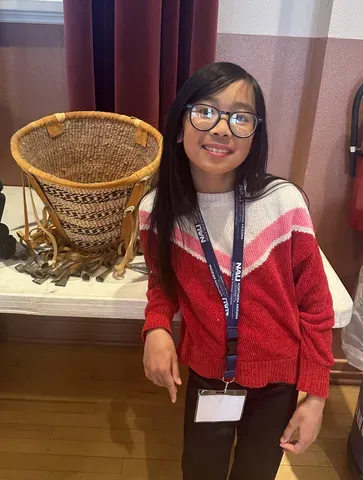
Arielle Pineda is an incoming seventh-grade student at Blue Ridge Intermediate and Junior High School in Lakeside, Arizona. She wrote this poem after reading the Pulitzer Center-supported story "As the Planet Warms, a Humble Sea Bean is Proving to Be a Promising Superfood." The story inspired her because it showed that hope and solutions can grow in places that many people overlook. As an adopted member of the Apache community, Arielle understands the importance of living in harmony with the land and finding strength in nature, even as climate change threatens the environment. The sea bean's resilience reminds her of the wisdom and perseverance of Indigenous communities, who have long relied on traditional knowledge to adapt and care for the Earth. Through her poem, Arielle connects this global story to the experiences of her own community, encouraging readers to recognize that protecting the planet also means protecting the people, cultures, and knowledge that have sustained it for generations.
Read more winning entries from the 2026 Fighting Words Poetry Contest.