Lesson Plan août 24, 2026
Truth Be Told: What Matters to Us
Pays:
Classes:

This lesson was created by Renee O'Connor, a high school educator in Miami Gardens, Florida, as part of the spring 2025 Pulitzer Center Teacher Fellowship program. It is designed for facilitation across approximately three class periods.
For more lessons created by Pulitzer Center Teacher Fellows in this cohort, click here.
When students side-eye the nightly news, they are not tuning out. They are already practicing a sharp critical literacy that asks, “Who gets the microphone and why?” Our job is to hand them sharper tools, clear ethical guidelines, and an audience that is willing to listen.
Lesson Overview
This lesson gives students a chance to talk about something they feel every day—how the news often doesn’t speak to them, or even see them. Together, we’ll dive into an article that helps students name what they already know: Much of traditional media feels out of touch with their lives, their communities, and the issues they actually care about.
By introducing the idea of hyper-local news, students will see how powerful it can be when stories are told by the people most affected—not just about them. This lesson isn’t just about reading and analyzing an article; it’s about helping students feel seen and heard, and reminding them that their voice matters in shaping the news. Through real conversations and meaningful reflection, they’ll begin to understand how media can better serve their generation—and how they can be part of that change.
Objectives
Day 1
- Students will identify key reasons for youth disengagement with traditional news media.
- Students will define and reflect on the concept of “hyper-local” news.
- Students will analyze how personal interests and social identity affect news consumption.
Day 2
- Students will identify key reasons for youth disengagement with traditional news media.
- Students will analyze a Pulitzer Center-supported article and evaluate how the themes of the article connect to issues in their own communities.
- Students will conduct research on what would motivate more youth engagement in local news.
Essential Questions
- Why are younger audiences turning away from traditional news sources?
- What role does local and hyper-local news play in making media more meaningful to young people?
- How does the way news is presented influence who engages with it?
Performance Task
- Students develop and conduct a survey of their peers to better understand how they engage with news and what topics they think are important. Here is an example of a survey developed in partnership with students in Miami Gardens, FL who participated in this lesson in spring 2025. It also includes a script students developed to introduce the survey to their peers.
- Students share survey results and engage in a conversation.
Notes on Context & Content Advisory
This lesson was created for high school students in Miami Gardens, a predominantly Black community in South Florida. Many of my students come from families that have experienced systemic inequities in healthcare and education. I intentionally chose a topic that reflects their lived realities and highlights the power of culturally competent care. The lesson is designed to be affirming, discussion-based, and grounded in local relevance. I’ve created space for students to share personal reflections while providing trauma-informed support.
This lesson contains discussions of Black maternal mortality, medical trauma, and racial disparities in healthcare. Students will encounter real-life stories of childbirth complications and systemic inequities that may be emotionally difficult or triggering for some.
Three-day lesson plan, including discussion questions, a student work packet, and a culminating performance tasks for the lesson. Download below to read the complete lesson plan.
Lesson Resources
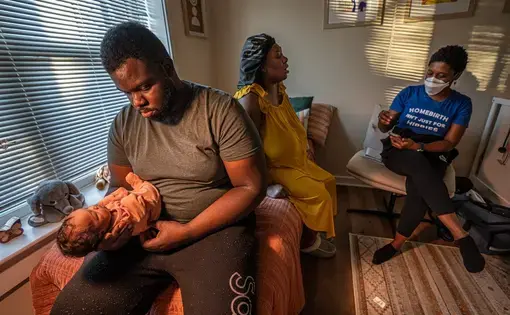
| Pulitzer Center Reporting | “‘I Just Don’t Want To Die’: Black Pregnant Women Are Turning to Midwives for Personalized Care—And a Better Chance at Survival” by Karen Kasmauski and Louis Hansen for Virginia Center for Investigative Journalism (This article was selected by the class. A different class may want to select a different Pulitzer Center article.) |
| Additional Reporting | “How hyper-local news can win back young audiences - Digital Content Next” by Richard E. Brown for Digital Content Next “Teens Tuning In | Local News Initiative” from Northwestern University The Expanding News Deserts |
| Teacher-created Resources | Truth Be Told Day 1 Graphic Organizer (.pdf) (.docx) Survey for Students to Interview Peers.pdf Sample Day 2 Graphic Organizer (.pdf) (.docx) |
Florida B.E.S.T. Standards
ELA (Grades 9–10)
ELA.10.R.2.1 – Explain how literary devices and rhetorical appeals contribute to the meaning and impact of a text.
- Students evaluate persuasive techniques and media framing in articles.
ELA.10.R.2.2 – Evaluate the central idea, implied or explicit, and its development throughout a text.
- Applied to the “Hyper-Local News” article and article reflections.
ELA.10.C.4.1 – Conduct research to answer a question, drawing on multiple reliable and valid sources and refining the scope of the question to align with findings.
- Applies to students’ article investigation and project work.
ELA.10.C.1.3 – Write to analyze and reflect on complex texts.
- Reflection and short responses throughout all three days.
Social Studies Standards – Global Studies / Civics / U.S. Government
SS.912.C.2.2 – Evaluate the importance of political participation and civic involvement.
- Explored through discussion of actionable news and youth engagement.
SS.912.C.2.10 – Monitor current public issues in Florida.
- Students select articles related to Florida or local news deserts.
SS.912.S.3.5 – Identify the impact of mass media on public opinion and behavior.
- Central to the graph analysis and media consumption discussion.
Media Literacy / Research Standards
LAFS.1112.RI.3.7 – Integrate and evaluate multiple sources of information presented in different media or formats.
- Students analyze text, graphs, and online databases.
LAFS.1112.W.3.8 – Gather relevant information from multiple authoritative sources and assess strengths and limitations.
- Used during article and database exploration.
In this lesson, students studied the various ways people engage with news sources. To start the classroom discussion, students were asked where they sourced their news and what stories stood out to them.
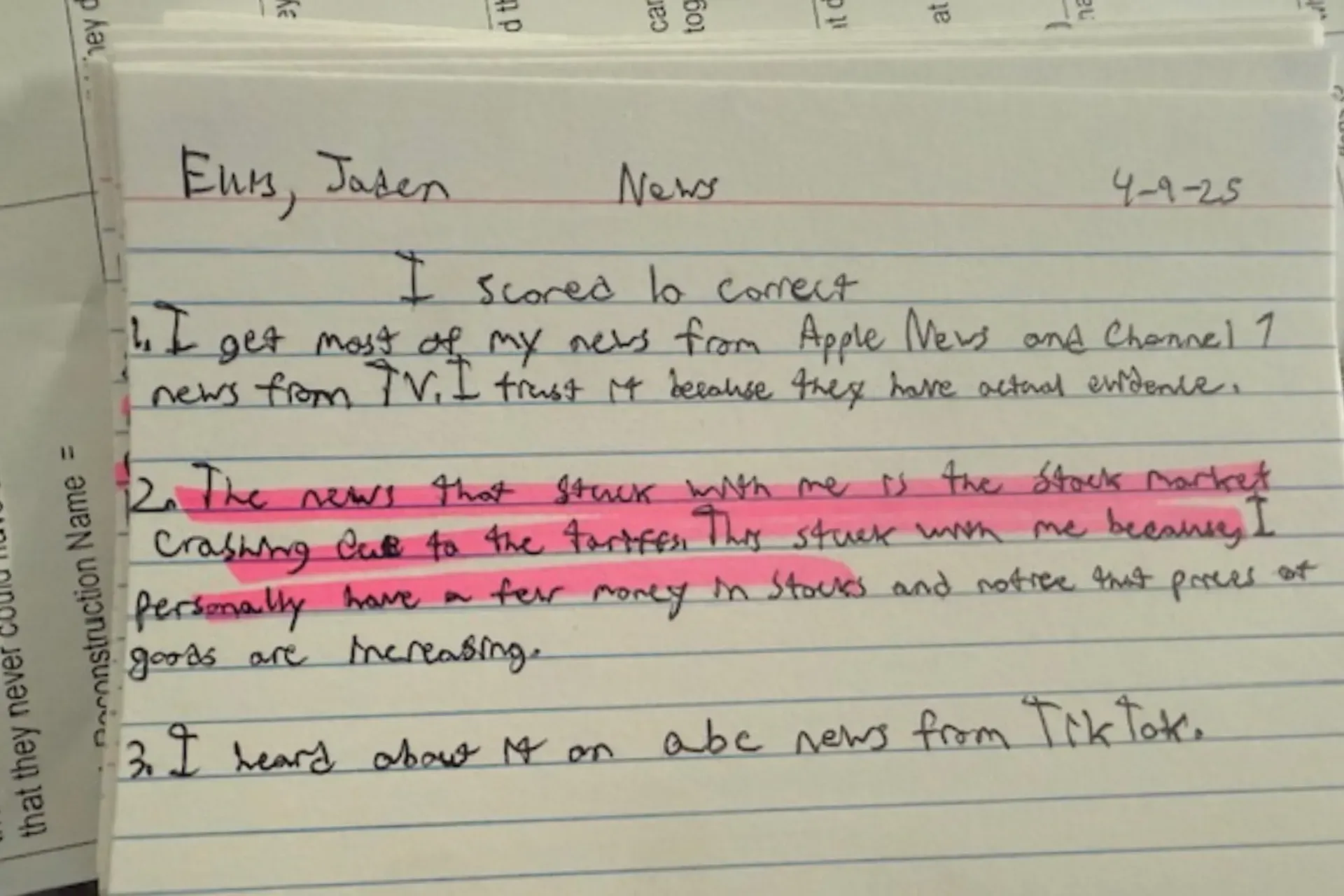
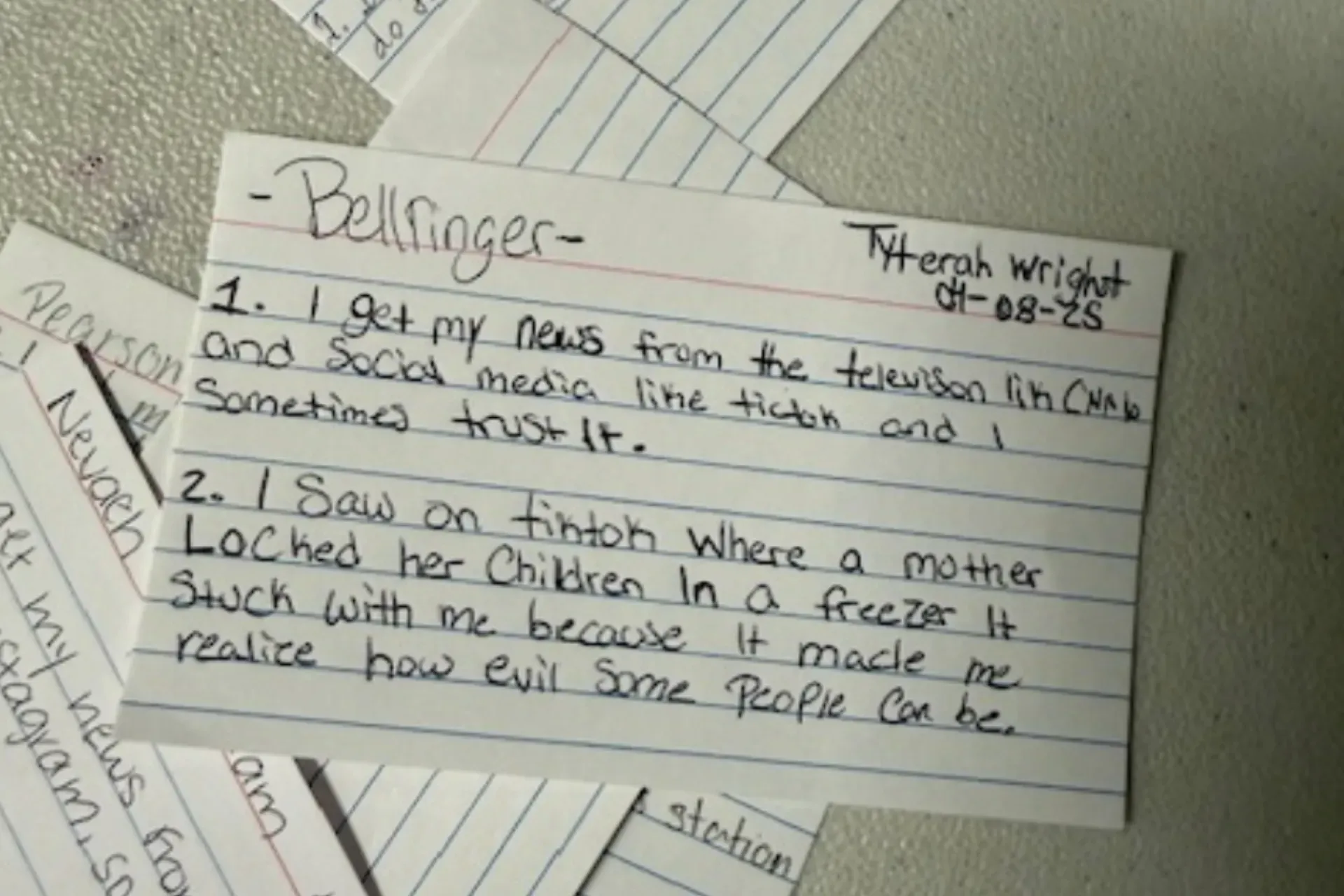
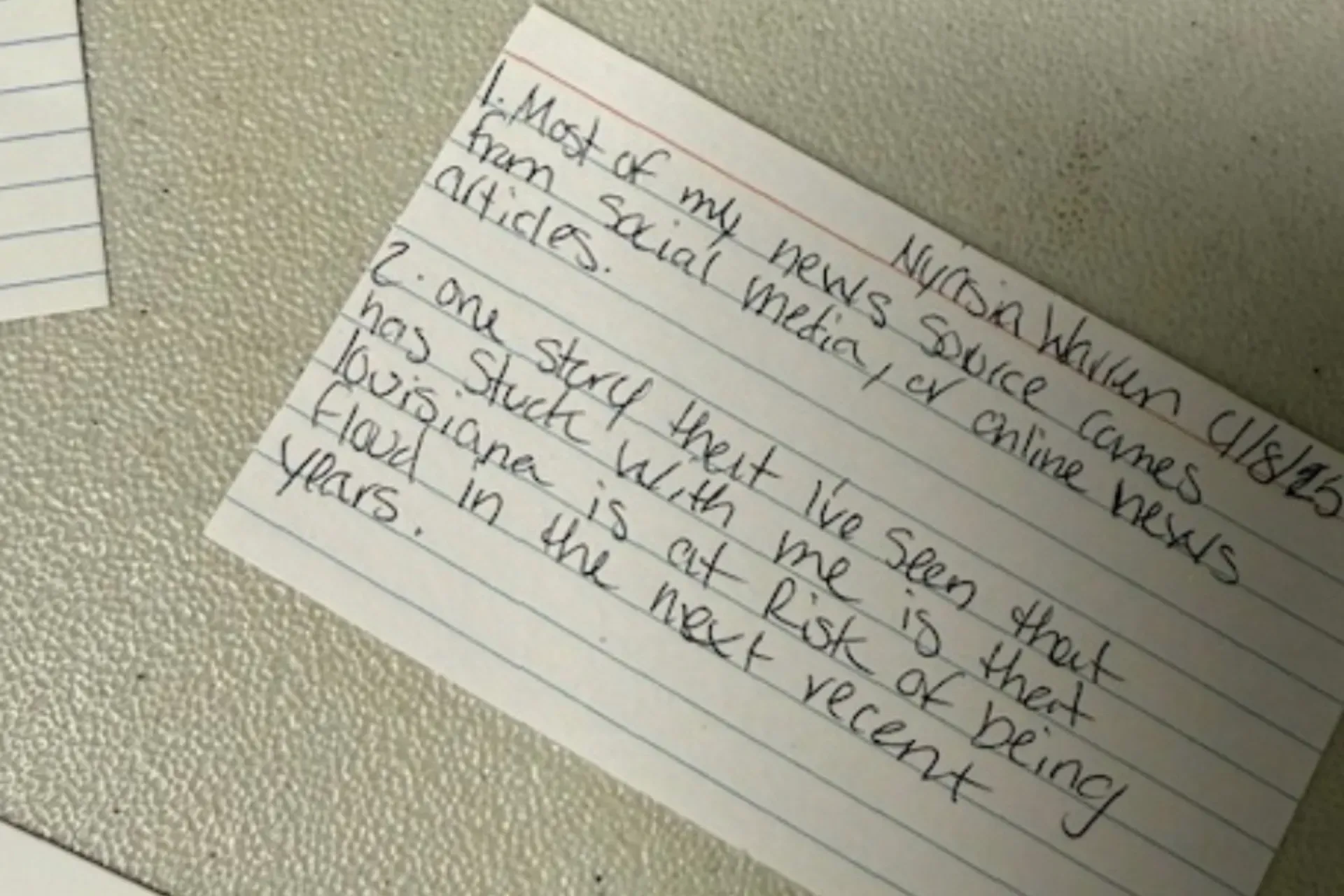
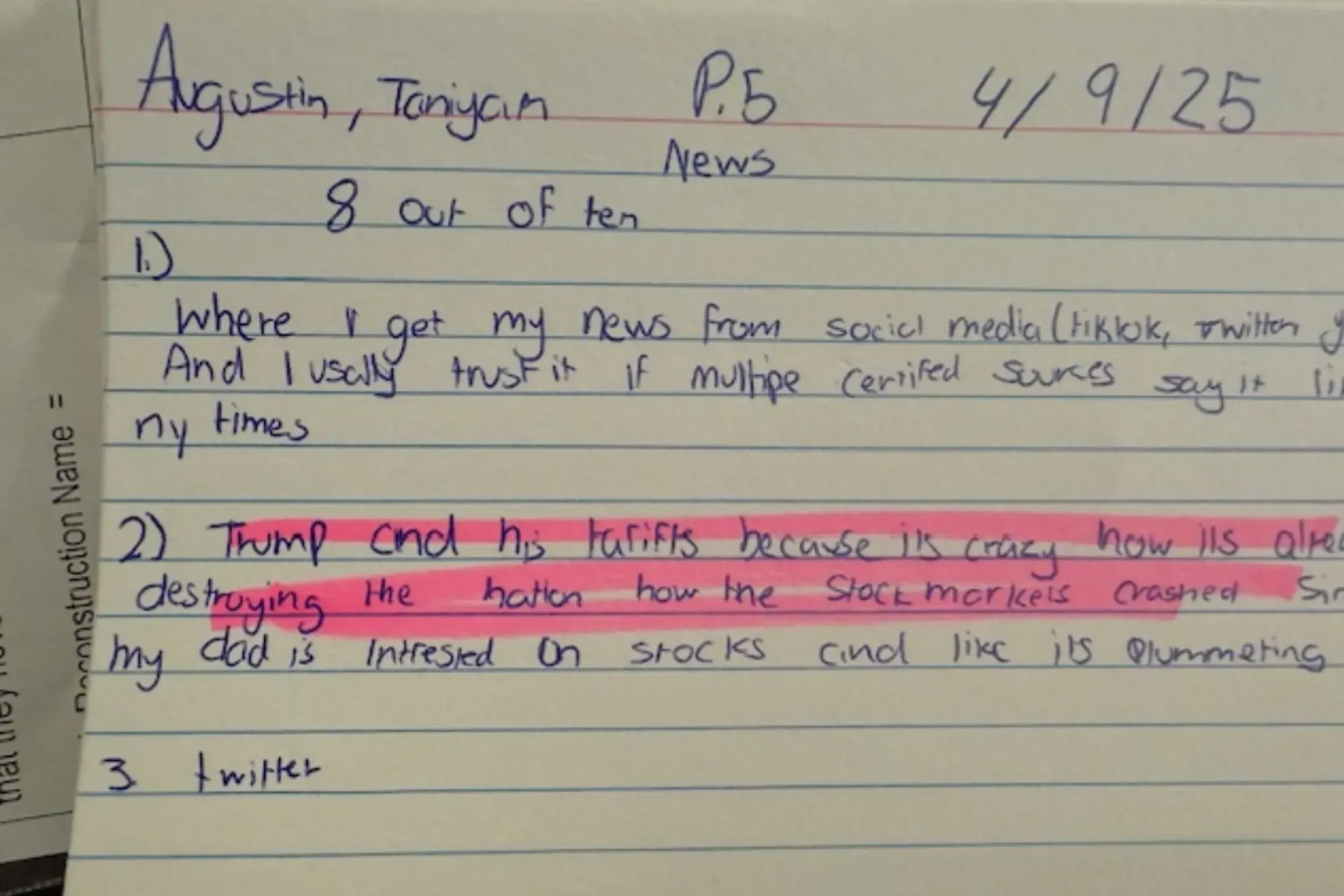
Students researched terms like "hyper-local" and "news desert," and analyzed several graphs to question how audiences consume news.
They then read the Pulitzer Center article, “‘I Just Don’t Want To Die’: Black Pregnant Women Are Turning to Midwives for Personalized Care—And a Better Chance at Survival” by Karen Kasmauski and Louis Hansen for Virginia Center for Investigative Journalism. Students drew pictures to process their reflections about the issues discussed in the article.
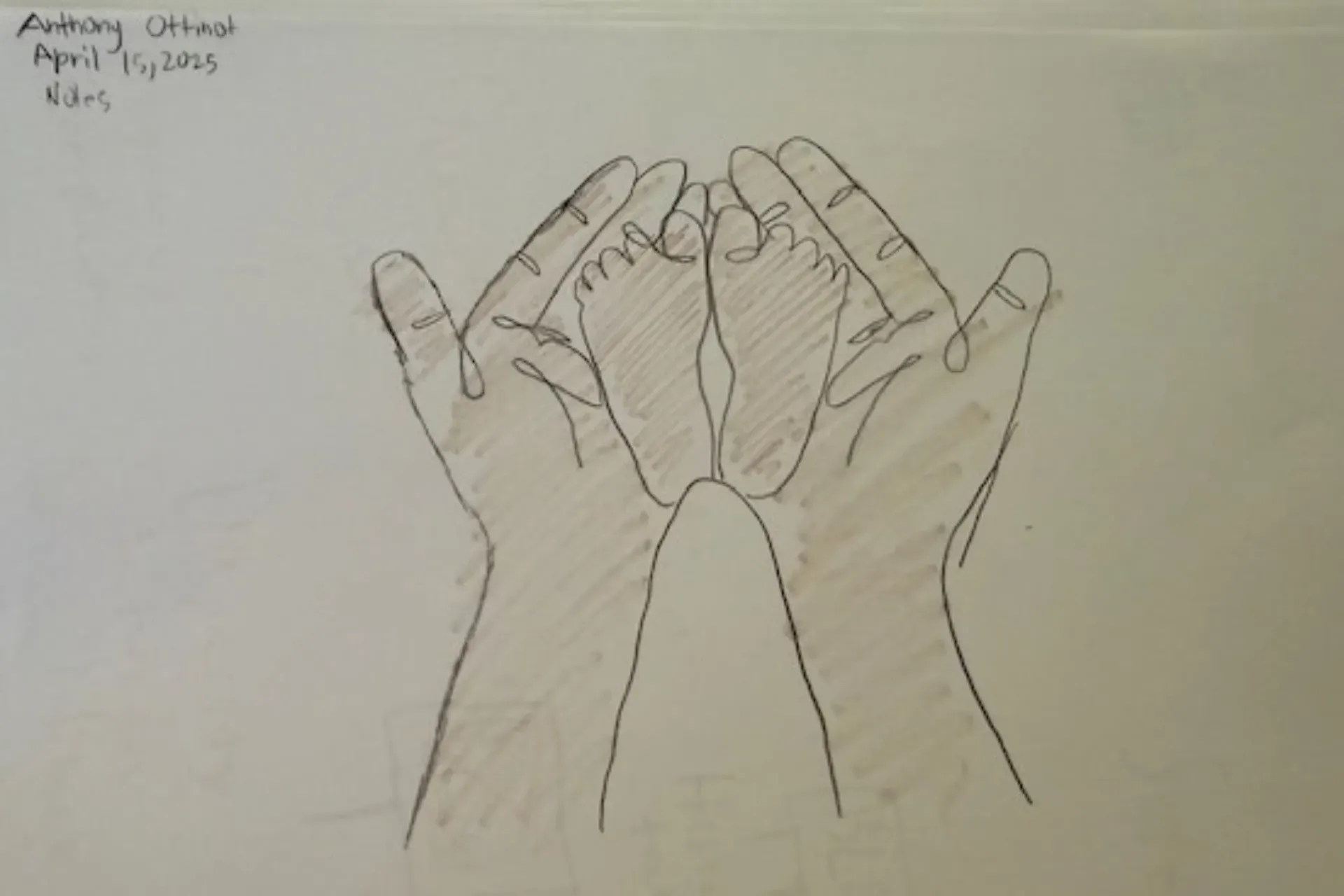
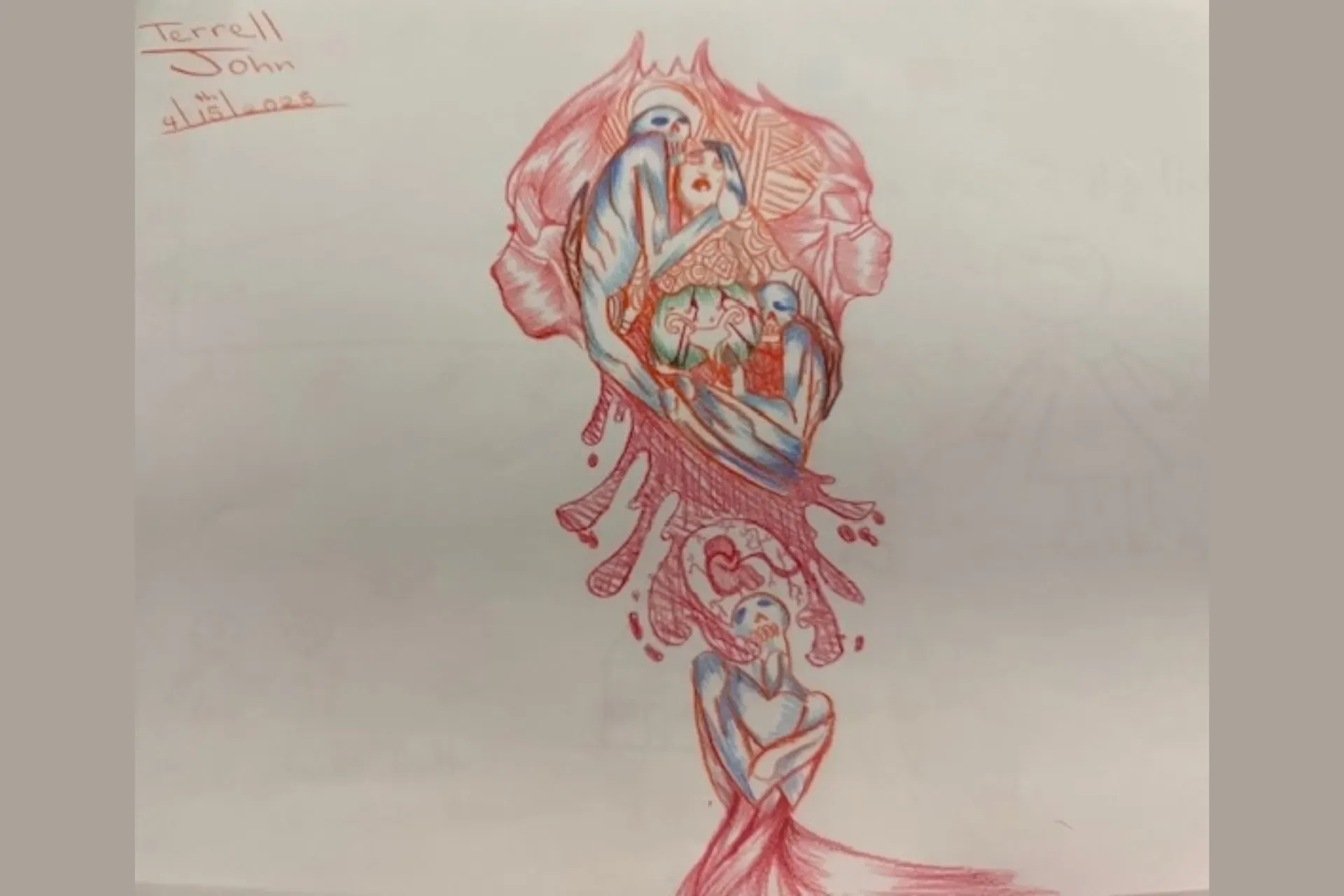
Finally, students further analyzed the article and conducted a survey among their peers at school, asking how they engaged with news.
Teacher Reflection
Renee O’Connor created the lesson plan "Truth Be Told: What Matters to Us" for her African-American Studies and English Language Arts classes at Miami Norland Senior High in Miami, FL as part of the spring 2025 Pulitzer Center Teacher Fellowship “Global Issues, Local Contexts: News for Civic Knowledge and Engagement.”
At the conclusion of the Fellowship, O’Connor shared the following reflections on his experience developing and teaching the lesson.
For fourteen years, I have taught African American History and Global Studies at Miami Norland Senior High in Miami Gardens, and every single semester reminds me that the zip code outside our windows guides the lessons inside our walls. Our students are almost entirely Black or Afro-Caribbean, with family stories that stretch from Kingston to Port au Prince. Local headlines often shrink Miami Gardens to crime statistics, yet my daily view is a mosaic of corner stores that greet kids by name, churches that double as community centers, and households where cousins span three generations under one roof. Many teens clock out of part-time jobs or finish babysitting before they ever open a notebook, so my planning has to honor both their brilliance and their real-life responsibilities.
Those truths shaped the media literacy project I designed with support from the Pulitzer Center. We started by charting our own news habits and tallying how often local outlets frame our city in hopeful or hurtful ways. That warm-up gave students something solid to compare with the deeper work to come, including content analysis of newspaper articles, surveys they built themselves, and focus group conversations that felt more like kitchen table talk than research. I introduced them as emerging scholars because their lived experience is a primary source, not just background color.
Here is the big takeaway I want fellow educators to hear: When students side-eye the nightly news, they are not tuning out. They are already practicing a sharp critical literacy that asks, “Who gets the microphone and why?” Our job is to hand them sharper tools, clear ethical guidelines, and an audience that is willing to listen. Once we did that, the classroom transformed into a buzzing research lab and a launchpad for civic action, proof that rigorous scholarship and cultural pride grow best in the same soil.
Thank you to the Pulitzer Center for once again allowing me and my students the opportunity to engage in “real-world” learning!
About Renee O’Connor
After a career in corporate America, Renee O'Connor joined Teach for America and became an educator at Miami Norland Senior High in the fall of 2011. After four years of teaching reading and English, she was finally blessed with the opportunity to teach her true passion, African American History.