Initiative
AI Accountability Network
The Artificial Intelligence Accountability Network supports and brings together journalists reporting on AI and with AI globally. Working with journalists and newsrooms that represent the diversity of the communities affected by AI technologies, the Network seeks to address the knowledge imbalance on artificial intelligence that exists in the journalism industry and to create a multidisciplinary and collaborative ecosystem that enables journalists to report on this fast-evolving topic with skill, nuance, and impact.
READ THE REPORTING | HOW IT WORKS | JOIN THE NETWORK | IMPACT | RESOURCES | PARTNERS

HOW IT WORKS
The Network supports the AI Accountability Fellowship, AI Reporting Grants, Machine Learning Reporting Grants, and the AI Spotlight Series.
Stories we support investigate the data and process involved in training AI models, the models themselves and how they are used. This includes in-depth AI accountability stories that examine governments' and corporations’ uses of predictive and surveillance technologies to guide decisions in policing, medicine, social welfare, the criminal justice system, hiring, and more.
Through the AI Accountability Fellowships, the Pulitzer Center provides journalists financial support, a community of peers, mentorship, and training to pursue in-depth reporting projects over 10 months that interrogate how these AI systems are funded, built, and deployed by corporations, governments and other powerful actors.
Over the first four cohorts, the Network has supported 35 Fellows to report in 29 countries. They have reported on themes crucial to equity and human rights, including the environmental impact of data centers, how gig workers unknowingly train AI systems used for repression, and how governments use AI in social welfare.
Applications for the 2026-2027 AI Accountability Fellowships are now closed. Sign up for our newsletter to learn when applications open again.

If you are pursuing a good story on AI but cannot commit to the requirements of our Fellowships, consider applying for our AI Reporting Grants. We support in-depth stories that explore with nuance how AI systems are designed, sold and deployed in communities around the world.
Our Machine Learning Reporting Grants support journalists seeking to use machine learning to augment their reporting capacity on big data projects. Reporters we have supported combined the use of machine learning with geospatial analysis, satellite imagery, and traditional shoe-leather reporting, among other approaches. Their stories mapped the proliferation of gold mines in the Amazon rainforest, predicted oil-well abandonment in Texas, and revealed the corporate owners that are amassing single-family house rentals in North Carolina.
Applications for our reporting grants are reviewed on a rolling basis.
The AI Spotlight Series is designed to equip reporters and editors—whether on the tech beat or any other—with the knowledge and skills to cover and shape coverage of AI and its profound influence on society. Our instructors include some of the world’s leading tech reporters and editors tracking AI and data-driven technologies for years.
Each course is designed to give you a strong grounding in what AI is and how it works as well as the tools to identify critical stories—from spot news to deep investigations—that will highlight the technology’s impacts, hold companies and governments accountable, and drive policy and community change, while avoiding both hype and unnecessary alarmism.
JOIN THE NETWORK
We encourage experienced journalists to apply for a fellowship or reporting grant with ambitious and impactful ideas that hold AI accountable. For those who may be new to covering AI and are wishing to learn more about how to incorporate new techniques in your newsroom, we recommend attending the AI Spotlight Series.
Becoming a part of the Network is more than just the immediate support for your investigation. We also foster a growing community and facilitate discussions that we hope encourages future collaborations.
If you have questions about our AI fellowships or grants you can contact our editorial team at [email protected].
IMPACT
The stories reported by our AI fellows and grantees have been cited by courts that ruled entire programs unconstitutional; sparked official investigations; and inspired other journalists to replicate their methods in their own reporting.
INFORMATION & ARTIFICIAL INTELLIGENCE IMPACT
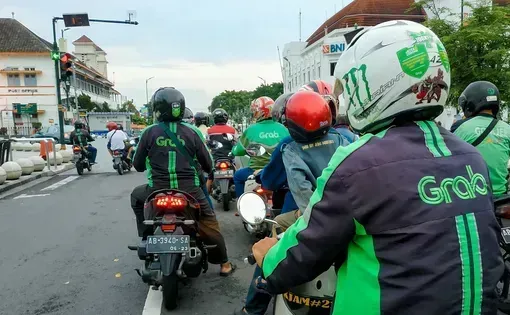
Inspired by Pulitzer Center, Student Investigates Ride-Hailing Algorithm’s Impact on Drivers
Sherlina Purnamasari, a journalism student at Universitas Multimedia Nusantara (UMN) in Indonesia, was inspired by a Pulitzer Center public lecture to produce an investigative documentary.

INFORMATION & ARTIFICIAL INTELLIGENCE IMPACT
Shareholder Sues Dating Apps Giant After Pulitzer Center-Supported Investigation Into Sex Abuse
An 18-month investigation into dating app conglomerate Match Group—in partnership with the Pulitzer Center’s AI Accountability Network and nonprofit news outlet The Markup—has resulted in a shareholder lawsuit alleging the company allowed people accused of rape and sexual assault to remain on platforms like Tinder and Hinge.

INFORMATION & ARTIFICIAL INTELLIGENCE IMPACT
Meta Removes Child Sex Abuse AI Content After Pulitzer Center-Supported Investigation
Meta's communications office in Brazil has confirmed that it has removed 14 profiles with child sexual exploitation content created with artificial intelligence from Instagram because of a Pulitzer Center-supported report by Núcleo.
RESOURCES
We believe in radical sharing of methodologies and lessons learned from the projects we support so they may serve as valuable resources and blueprints for other newsrooms, universities, and civil society organizations pursuing similar projects.




---