September 9, 2010  |  Log in
Launched June 2010
Refugees fleeing Burma's authoritarian government frequently end up in Malaysia. The promised haven is often anything but, with refugees prey to human traffickers, physical abuse and rape. This project tells their story.
Launched June 2009
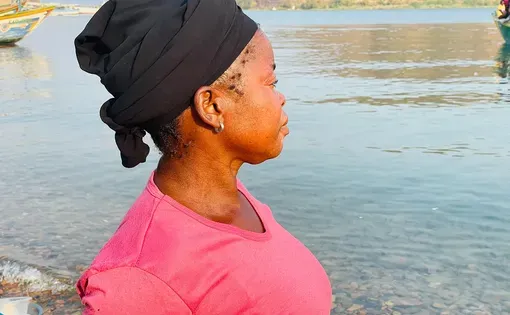
Sub-Saharan Africa, the poorest region on Earth, is a place where more than 600,000 women die in pregnancy or childbirth every year due to lack of proper care and only 30 percent of the population has access to health care at all. The situation in Guinea-Bissau is among the worst in the region.
Launched May 2009
When Bill Clinton Hadam’s refugee family was approved for resettlement in the U.S., the boy's parents faced a "Sophie's Choice" dilemma: him or his sister. After escaping slaughter in Congo and Rwanda, the family waited in a Tanzanian camp for nearly a decade. Rape was common there, and Bill's teen sister Neema was a victim. Afterward, she ran away. Her mother and...
Launched March 2009
The 2006 election in the Democratic Republic of Congo was supposed to usher in a new period of peace and stability for the beleaguered, exhausted Congolese people. Instead, it made one of the country’s most intractable problems worse. After the election, the small but powerful Tutsi community in Eastern Congo saw their representation in the national government disappear and as a result,...
Launched February 2009
Every year, thousands of women and young girls migrate from Ghana’s poorer, Muslim north to the major cities of the Christian south. Known as Kayayo, they travel to work as porters in city markets, and spend their days carrying heavy loads for meager wages. Due to a shortage of employment opportunities and money for housing, many end up sleeping on the streets or being coerced into sexual...
Launched January 2009
Every January, 83-year-old Olga Murray of northern California goes to southwestern Nepal for the annual Maghe Sankranti winter festival. That’s where she can find impoverished Tharu farmers selling their daughters to higher caste families to work as domestic slaves. In the illegal trade, families get about $50 for what is supposed to be a one-year-contract, but the girls are often sold into...
Launched October 2007
Child slaves make up about 10 percent of the youth population in Haiti. Driven out of economic depravity, many parents are sending their children to live with others and serve as indentured servants in order to secure their survival. In a short documentary, Dane Liu and Carmen Russell explore the lives of these young children as they are forced to leave their families, sacrifice their education...
Launched September 2007
During the 14-year civil war that tore apart Liberia, children were taken from their homes and sent to fight in an adult war. When the fighting ended in 2003 the Liberian government began trying to demobilize the youth, offering cash and counseling programs aimed at rehabilitating the young people and preparing them to return to their communities. Sometimes they were sent back to their villages....

This section is currently under construction. To explore the Pulitzer Center's online educational resources, please visit pulitzergateway.org. Learn more

Stories of the particular misery faced by women and children are often overlooked.

Play introduction

In crisis areas, it is often women and children who suffer most. Countries with underdeveloped economies and countries at war face countless difficulties, but stories of the particular misery faced by women and children are often overlooked - resulting in far-reaching human, social and economic consequences.

Women, Children, Crisis pulls from a number of reporting projects around the globe that illuminate the adversity and outright crimes endured by women and children.

The United Nations estimates that over 200,000 women have been raped in the Democratic Republic of Congo. Armed groups use rape to spread disease and wreck or uproot communities, with shame turning victims into outcasts. These women suffer first by their rapists and secondly by husbands and family members who find it socially unacceptable to associate with them.

Aid agencies and international organizations recognize this mass-rape as a weapon of war. Another effect of war-torn countries where the duration of conflict eclipses generations is the use of child soldiers. Boys as young as seven are targeted by military leaders, given weapons and coerced into killing. There are an estimated 250,000 child soldiers in the world today, and some 30,000 former child soldiers in Liberia alone. In Sudan, boys that escaped the fate of becoming child fighters are returning to their villages to survey the damage wrought by war. Many ex-soldiers have dedicated themselves to rehabilitating their countries and with a unique photography program, working to regain respect of their communities as peacemakers.

In Nepal, an estimated 15,000 - 20,000 girls, some as young as 6 years old, work in indentured servitude. Poor families belonging to the Tharu community, an indigenous ethnic group in southern Nepal’s Terai, send their daughters to cities as domestic servants in exchange for money. These girls are known as ‘Kamlaris.’ Besides labor exploitation abuse is rampant and girls are often sexually abused, raped, starved and beaten. “Olga’s Girls,” is the story of one woman’s mission to end the practice and rescue these girls.

Our new Web platform is currently in beta. We ask for your patience as we complete the migration process. Learn more