Event
Washington University, St. Louis - Food Insecurity Event, 10/1
Event Date:
October 1, 2009 | 7:00 PM EDT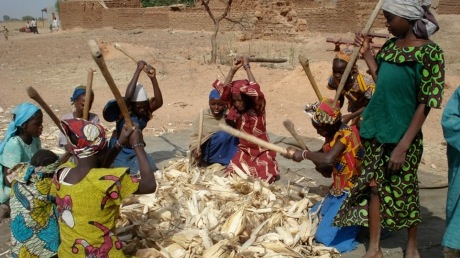
Fred de Sam Lazaro presents a series of reports from around the world, examining the intersections...

Thursday, October 1 at 7:00 p.m.
Seigle Hall, Room L006
Washington University
One Brookings Drive, St. Louis, MO
View Campus Map
(Harry and Susan Seigle Hall is in quadrant F-3, #92)
Please join us for an evening discussion of the mounting threats to the global food production system and the challenge of reporting them. Journalists will present new documentary footage, featuring reporting from Nigeria, India and East Africa, and a local expert will share his work on humanitarian product development activities in Africa.
Moderated by Pulitzer Center Executive Director Jon Sawyer
Fred de Sam Lazaro, director of the Project for Under-Told Stories at St. John's University, Minnesota. He is a PBS/NewsHour correspondent and has reported from 35 countries. Fred's Pulitzer Gateway on Food Insecurity work includes reports from India, Nigeria, Malawi and coming soon, Australia.
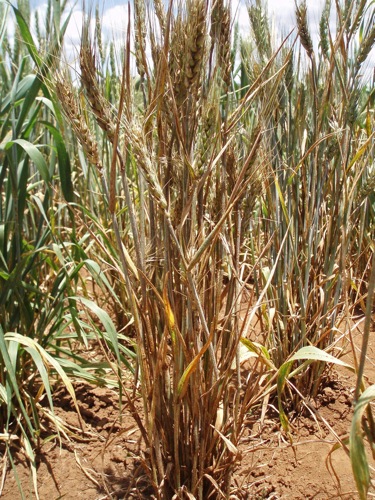
Sharon Schmickle is an award-winning freelance journalist with 27 years of experience. Through mid-2007, she was a reporter for the Minneapolis Star Tribune, most recently as a foreign correspondent. Her Pulitzer Gateway on Food Insecurity work includes reports from East Africa on a deadly fungus threatening the world's second largest crop, wheat.
Dr. Paul Anderson is Director of International Programs at the Donald Danforth Plant Science Center in St. Louis, providing leadership in product development and support services to develop improved crops for subsistence farmers in developing nations. The Danforth Center is a non-profit research institute with a mission to improve the human condition through plant science.
Jon Sawyer is founder and director of the Pulitzer Center on Crisis Reporting. He served for 31 years with the St. Louis Post-Dispatch, and his reporting was selected three years in a row for the National Press Club's award for best foreign reporting. His work has been honored by the Overseas Press Club, the Inter-American Press Association and the School of Foreign Service at Georgetown University.
Presented by the Pulitzer Center on Crisis Reporting and International and Area Studies at Washington University, in partnership with the Project for Under-Told Stories
Project
Stalking a Wheat Killer
Ug99, a virulent fungal disease, could create a major food security crisis by attacking the world's...